




Japanology Plus — Season 4
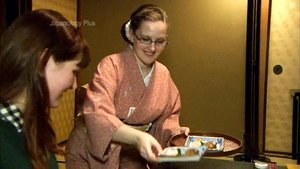
The interview begins with a nakai, a server at an upscale Japanese establishment. In a conversation with Peter Barakan, Carine Lafitte of France discusses the difficulties inherent in her exacting, traditional profession.
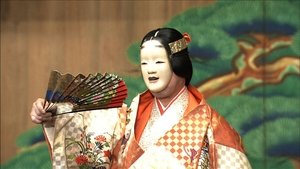
Noh theater, believed to be the world's oldest continuing performing art, has endured for six centuries. It weathered periods of national upheaval, sustained by the patronage of samurai warlords, and thrives to this day. This episode of Jap…

Where land is scarce and property expensive, homes in Japan, particularly in urban centers, are often compact. Navigating bulky furniture through narrow hallways and stairwells demands specialized skill, a testament to the expertise of Japa…
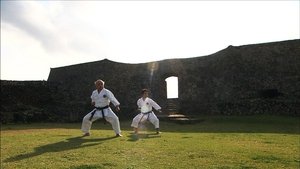
Practiced by over sixty million individuals worldwide, karate originated in Okinawa. Okinawan karate, the most traditional style, is renowned for the forceful impact of its strikes. Yet, this power is developed with the understanding that i…
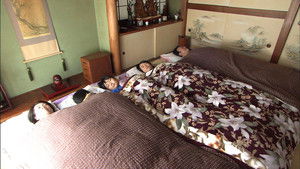
The Japanese, on average, obtain less sleep each night than populations in many other nations—a phenomenon likely rooted in a culture of constant activity and a deeply ingrained dedication to work. This heightened awareness of the need for …

Tokyo's rail system commands a global reputation for reliability, consistently delivering safe and punctual service. Trains adhere to schedules with remarkable precision, often down to the second. What underpins this outstanding performance…

Jeans rank among the most widely worn garments globally, and Japanese denim enjoys a distinguished reputation. Japanese jean makers blend time-honored craft traditions with skillful handwork and cutting-edge technology to achieve a nuanced …
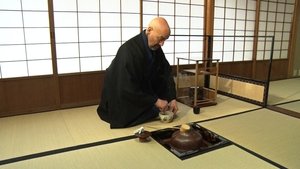
Randy Channell Soei earned the title "Soei" from his teachers, signifying his attainment of mastery in the Way of Tea. He is among the few foreigners authorized to teach the entirety of the tea ceremony, a delicate choreography of precise m…

Zoe Vincent, based in the United Kingdom, works for a tourism organization dedicated to Fukushima. She journeys throughout the prefecture, uncovering traditional customs and local events, documenting her discoveries in online articles and i…

The butsudan, a Buddhist altar, is a common presence in Japanese homes. Within its presence, family members kneel in supplication, seeking wisdom from the path to enlightenment and honoring the memories of those who have passed. Many butsud…

In Japan, the path to a driver's license typically begins at a driving school. These schools feature dedicated courses complete with simulated railway crossings and inclines, designed to prepare students for any road condition. Some offer l…

Curry holds a cherished place as a favorite dish in Japan. The rich, Japanese-style curry sauce distinguishes itself significantly from its Indian counterparts. The nation's enduring affection for curry stretches back fifteen decades and co…
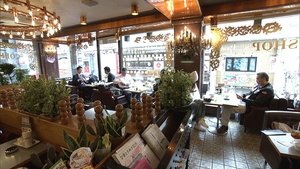
Coffee first arrived in Japan during the 17th century, but its popularity didn't truly blossom until the 19th. The widespread embrace of Western culture at that time included coffee consumption, leading to a proliferation of cafes throughou…

In Kyoto, Yoram Ofer, an Israeli, operates a bar dedicated to the exploration of nihonshu, or Japanese sake. He specializes in junmaishu, a pure form of sake unadulterated with added alcohol. When he first arrived in Japan, nihonshu was alr…
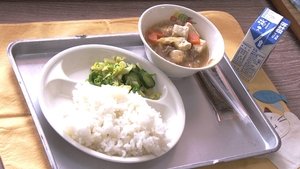
In Japan, the school lunch forms a vital cornerstone of a child's nutritional intake. These meals are carefully crafted to provide balanced nourishment and promote well-being. Beyond sustenance, school lunches also serve an important educat…
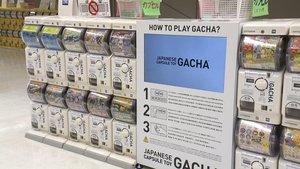
Small toys dispensed from vending machines, known as capsule toys or gachapon, are remarkably inexpensive. Yet, their meticulous detail and crafted quality belie their low price. Join Peter Barakan and Matt Alt as they journey to Japan to m…

Across Japan, approximately sixty thousand buses follow established routes, stopping at designated points and adhering to fixed schedules. Each year, four point one billion passengers rely on these fixed-route services for daily commutes, s…
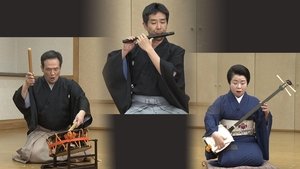
Japanese contemporary music finds itself shaped by Western influences, both in its instrumentation and its stylistic approaches. Yet, the nation possesses a rich musical heritage of its own, a history spanning over a thousand years. This ep…

For generations, the practice of playing traditional Japanese instruments was preserved through apprenticeships. However, this tradition of music has often remained distinct from contemporary musical styles. Today, young performers are ende…

From the Democratic Republic of the Congo, architect Nsenda Lukumwena has established a distinctive presence within Japan's demanding construction industry. He distinguishes himself by prioritizing collaboration, engaging directly with the …

In 1872, the opening of Japan's first railway line, connecting Yokohama and Tokyo, coincided with a population of less than a million in the capital. Now, over a century and a half later, that figure has grown to exceed thirteen million, an…

Amidst the drone of cicadas, the gentle chime of wind bells, and the sharp crack of baseball bats, few things capture the essence of Japanese summer quite like the spectacle of fireworks. Across the nation, literally thousands of fireworks …

Across Japan's cities, a profusion of signs and posters depict characters imbued with human qualities. This inclination appears deeply rooted in cultural sensibilities and perhaps even the national character itself. This installment of Japa…
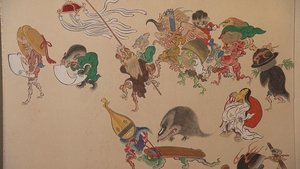
Across countless aspects of daily life in Japan—from businesses and government agencies to individual interactions—anthropomorphized 2D characters are frequently employed to enrich communication. Building on a recent Japanology Plus explori…

From swimming and soccer to gymnastics and beyond, a growing number of Japanese children are embracing athletic pursuits. Sports-centered kindergartens are gaining considerable popularity, alongside after-school programs designed to cultiva…
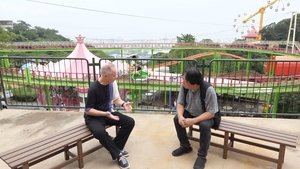
Across Japan, the neighborhood amusement park remains a vital cornerstone of childhood for many. Yet, these local havens now grapple with considerable pressures: fierce competition from sprawling international theme parks, the proliferation…
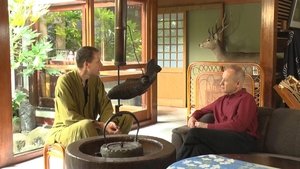
This installment of "Japanophiles," a feature within Japanology Plus that highlights the remarkable lives of foreigners residing in Japan, introduces Tyler Lynch, an American who operates a traditional inn, or ryokan, in Nagano. Beyond obse…

The title of this edition of Japanology Plus might provoke a moment of surprise, but you've landed precisely where you should be. Particle physics research, it turns out, is as deeply ingrained in Japanese culture as sushi and sumo wrestlin…
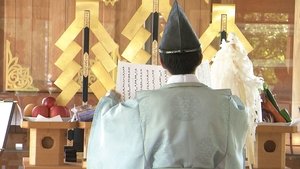
A stroll through any Japanese neighborhood will likely lead you to a Shinto shrine, the heart of the nation's indigenous religion. Many who visit Japan are drawn to these sacred spaces by their tranquil ambiance and exquisite architecture, …

Japan faces a constant threat from natural disasters – earthquakes, typhoons, tsunamis, and others. Yet, the nation also boasts some of the world's most highly skilled and prepared special rescue units, the subject of this installment of Ja…

At Japan's busiest airports, a flight can arrive or depart with remarkable frequency – roughly every two minutes. Yet, Japanese airlines consistently rank among the world's most punctual carriers. This impressive reliability stems from deep…
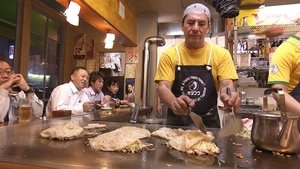
Fernando Lopez, a native of Guatemala, operates an okonomiyaki restaurant in Hiroshima. This savory dish, originating in western Japan, is crafted on a hot griddle and resembles a thin crepe, generously filled with cabbage, pork, soba noodl…

While much is said of Japan’s cultural offerings – its cuisine, music, cinema, and more – perhaps its most significant contribution to the world, measured by sheer quantity, is its automobiles. The country churns out approximately ten milli…
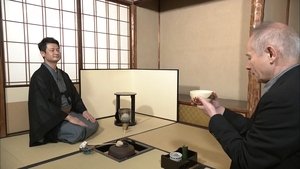
Whether termed tea ceremony, tea gathering, the way of tea, *cha-no-yu*, *chado*, or *sado*, this refined, centuries-old practice is frequently considered essential to understanding the Japanese concept of *omotenashi*—the attentive and sel…
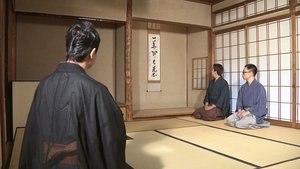
This special two-part edition of *Japanology Plus* explores the intricate performance of the tea ceremony, delving into its nuanced protocols and its enduring connection to contemporary Japanese society. Within modern Japan, the tea ceremon…