
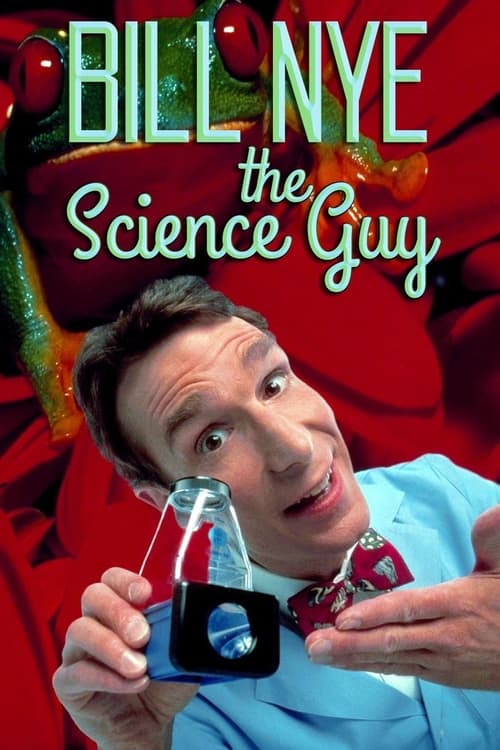




Bill Nye the Science Guy — Season 5

Forensic scientists endeavor to determine the details of past events – specifically, crimes: the who, what, when, where, and why. The majority work within police laboratories, meticulously gathering evidence from crime scenes and subjecting…
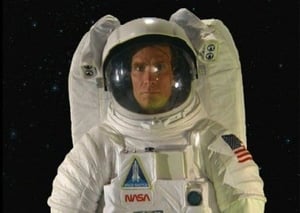
The vastness of space presents a formidable challenge to exploration. Distances are so immense that we rely on specialized instruments simply to observe celestial objects. Telescopes, for instance, magnify distant solar systems, planets, an…

The hue of your eyes, the form of your nose, and the texture of your hair are all determined by your genes. Not by circumstance, but by those intricate strands of chemicals within your cells. Genes serve as a blueprint for your being, and y…

From humble dwellings to soaring skyscrapers, the creation of any structure demands careful planning. Architects are the visionaries who conceive of buildings and the spaces that surround them, typically rendering their designs on computer …

Long before food reaches our kitchens, even before it arrives at the market, it begins its journey on a farm. Nearly everything we consume originates from these cultivated landscapes, spaces dedicated to raising both animals and plants. Mod…

"My, how you've grown!" Your Auntie's familiar remark is hardly news, yet expansion is an inherent part of existence. Indeed, it forms a fundamental thread in the tapestry of human life, a pattern woven from the moment of your birth. These …

The practice of scientific inquiry begins with a question, followed by careful observation, a proposed explanation—what scientists term a hypothesis—and then experimentation. Often, questions arise from noticing something peculiar. Consider…

Atoms are incredibly small, beyond the reach of unaided sight. It requires approximately ten million of them lined up to span a single millimeter. Indeed, atoms represent the fundamental units of matter, the smallest particles still conside…
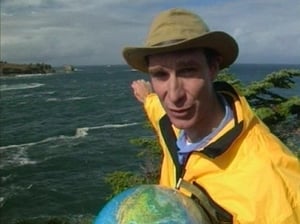
The endeavor to explore the ocean is a perilous one, demanding constant innovation given humanity's inherent inability to thrive beneath the waves. For centuries, and particularly in recent decades, we have devised increasingly sophisticate…
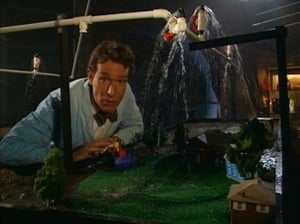
A large void in the earth, coupled with water, yields lakes and ponds. These bodies of water share a fundamental origin: they arise when a basin, essentially a hole, develops and subsequently fills with water. Such formations can be sculpte…
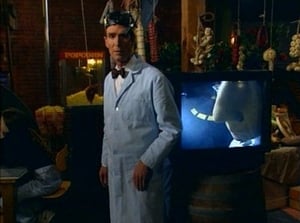
The mechanism of smell begins with the release of minuscule molecules from objects into the surrounding air. When these enter the nasal passages, they dissolve in the mucus lining. Certain molecules then interact with specialized receptors …
The varied origins of caves result in an astonishing array of forms and dimensions. Explorers of these subterranean realms have developed a rich vocabulary to describe the cave's features – delicate soda straws, formations resembling fried …
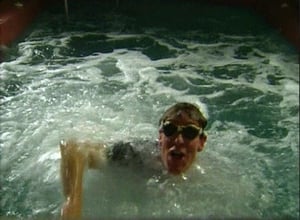
Liquids possess a captivating fluidity, a gentle yielding and flow. They readily adopt the form of their vessel; milk poured into a pitcher conforms to its curves, mirroring its shape. Similarly, liquid in a glass takes on the glass’s conto…

Fragments of earth – dirt, sand, and rock – are constantly swept, carved, broken, consumed, and dispersed across the globe. A hill that exists today may be a level plain tomorrow. The planet’s appearance is vastly different from its state w…

The void beyond our world teems with matter. It’s not merely planets and moons that populate the cosmos; countless smaller particles drift and occasionally collide with these larger bodies. Comets and meteors represent the more substantial …

Storms are characterized by their intensity, often marked by rain, snow, sleet, or hail. The origin of these formidable, sometimes destructive, and essential weather events—tornadoes, hurricanes, and thunderstorms—lies in the collision of v…

Consider this: the Concorde, a marvel of engineering, travels three hundred thousand times faster than a land snail. Or picture a giant redwood, its height rivaling that of a thirty-five-story building. These comparisons are possible only b…

With each glance, each sound, each touch, each scent, and each taste, the mind gathers a fragment of understanding about the world. These impressions often coalesce into a personal archive of memories. Yet, the sheer volume of sensory input…
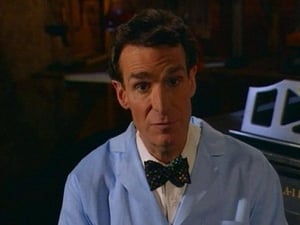
Music is the art and science of conveying ideas and emotions through sound. A mournful melody can often express feelings more profoundly than words, while a well-known tune can unite a crowd in shared joy. Regardless of the sentiment, music…

Motion is not always as it seems. An object can appear still while actually in movement, and conversely, something at rest can give the impression of being in motion. It is all a matter of perspective – relative motion, specifically. The wa…














