



Japanology Plus — Season 6

The roofs of Japanese homes are instantly recognizable, and it is their tiles that contribute most to this distinctive appearance. These intricate pieces, a fixture of the Japanese landscape for over a thousand years, are the product of ski…

From France, Thomas Bertrand is the owner of a bento box shop nestled in Kyoto. His establishment offers hundreds of designs, spanning both time-honored traditions and contemporary aesthetics. He ships his creations to customers worldwide a…
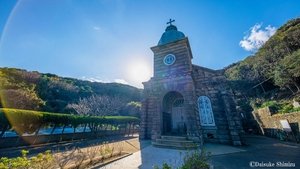
With the initial opening of trade between the West and Japan, religion became a significant commodity alongside other goods. Introduced by foreign missionaries, Christianity gained a foothold, particularly in Nagasaki, the port that served …

For nearly two centuries, from the seventeenth to the nineteenth, Christianity was outlawed in Japan. Those who adhered to the faith endured appalling persecution. Yet, many clung to their beliefs, finding clandestine ways to worship, frequ…
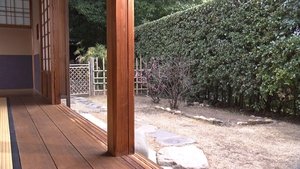
Forests and woodlands blanket seventy percent of Japan's land. For centuries, wood has served as the essential material for furniture, buildings, and tools. This installment of Japanology Plus explores the cultural significance of this endu…
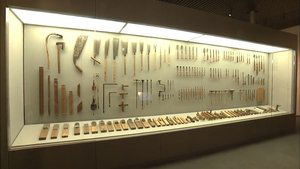
Forests blanket seventy percent of Japan's landscape. For centuries, the Japanese have relied on wood as a fundamental building material, and the nation boasts the world’s oldest surviving wooden structures. Their remarkable endurance stand…

Oussouby Sacko, hailing from Mali in West Africa, found himself with little familiarity in Japan upon his arrival. Nearly three decades later, in April of 2018, he assumed the presidency of Kyoto Seika University. In this conversation with …
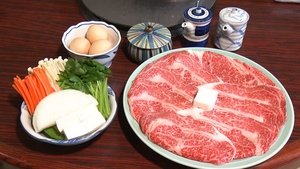
Japanese cuisine boasts a remarkable array of meat dishes, from the exquisite tenderness of wagyu beef to the simple pleasure of chicken skewers. Yet, these celebrated culinary traditions are relatively recent; for over a millennium, meat c…
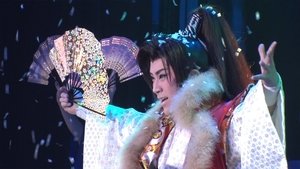
"Taishu engeki," or popular theater, offers lively and accessible entertainment designed to captivate a broad audience. Performances often depict historical dramas, recounting tales of samurai and their martial prowess. These productions ty…
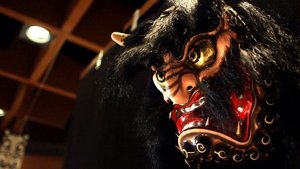
In Japanese folklore, the oni—often depicted as creatures caught between human and animal form, bearing horns and fierce expressions—hold a significant place. While rooted in ancient tales, these figures remain deeply embedded in modern Jap…

Japan boasts six dog breeds indigenous to the islands, among them the Akita and Shiba Inu. Each has evolved to suit its specific region, yet they share common traits: pointed ears, a curled tail, and an unshakeable devotion to their human c…

Following studies in English literature and philosophy, Peter MacMillan relocated from Ireland to Japan to pursue a career as a university lecturer. He achieved recognition for his comprehensive English translation of the *Hyakunin Isshu*, …

The term "konamon" broadly describes flour-based cuisine, but in Osaka Prefecture it most commonly refers to two distinct dishes: takoyaki – savory batter balls filled with octopus – and okonomiyaki, a savory pancake incorporating cabbage. …

Frozen food is now a global phenomenon, yet Japan remains at the forefront of its innovation. Contemporary products closely mimic fresh counterparts in both texture and nutritional profile. This episode of Japanology Plus explores the world…

Slippers are a ubiquitous sight within Japanese homes, schools, and offices – a deeply ingrained custom. But the origins of this practice, and its current trajectory, remain intriguing questions. This episode of Japanology Plus explores the…
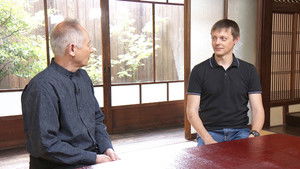
Kyogen is a venerable tradition of Japanese theater, a form of comedy distinguished by its bare stage and reliance on inventive movement and witty dialogue. It was at the age of twenty-one that Ondrej Hybl, a native of the Czech Republic, f…

Once dubbed the "city of water," Tokyo has largely obscured its rivers and waterways beneath modern development. This episode of Japanology Plus explores the multifaceted relationship between water and Japan's capital. Master brewer Shunich…
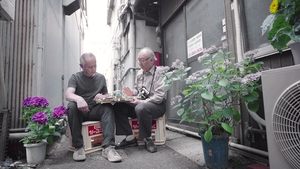
Tokyo pulses with a vibrant energy, a constant hum of activity. Yet, just beyond the well-trodden avenues, a quieter character emerges. This episode of Japanology Plus ventures into the hidden heart of Japan's capital, exploring its backstr…
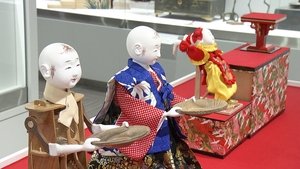
Mechanical dolls, or *karakuri-ningyo*, represent a fascinating form of traditional robotics. The ingenuity underlying their construction remains relevant and even practical in modern times. This episode of Japanology Plus explores the worl…

Swordsmanship frequently features in Japan's historical dramas. Yet, the Japanese sword, the katana, was far more than a mere weapon. It played a role in ceremonies and served as a symbol of social standing. Now, it is largely appreciated a…

In Japan, the bathing ritual holds a significance beyond mere hygiene; it is woven into the fabric of daily life. More than a place for cleansing, the bath offers a sanctuary for relaxation, a moment for personal reflection, and a cherished…

For many years, David Atkinson, a respected financial analyst from the United Kingdom, practiced his profession in Japan. His career trajectory shifted unexpectedly when he became CEO of one of the nation's oldest restoration firms. This co…
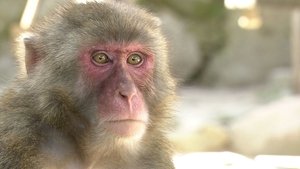
The Japanese macaque, a monkey found only on the islands of Japan, is a familiar presence in the nation’s forests and mountains. Often regarded with affection for their animated faces, these primates are sometimes even viewed as sacred bein…

Japanese banknotes boast some of the world's most sophisticated security features: intricate watermarks and nearly invisible microtext. This installment of Japanology Plus focuses on currency. Researcher Takashi Uemura, a former employee of…

For centuries, plasterwork has been an integral element of Japanese architecture, adorning the walls of castles, storehouses, and homes alike. With simple trowels, artisans transform surfaces into gleaming planes and elaborate reliefs. This…

Wolfgang Loeger emigrated from Austria to Japan in 1987. Following nearly thirty years as a ski instructor, he relocated to Tokyo and embarked on a career as a taxi driver. Foreign drivers are a rarity in Japan, yet Loeger’s insight and pas…
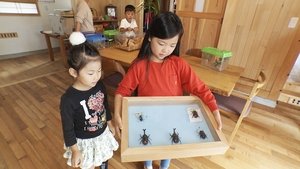
Japan possesses a deep connection to the world of insects. The varied lifecycles of these creatures serve as a natural calendar, marking the passage of the seasons. Across generations, people have found pleasure in collecting insects from t…
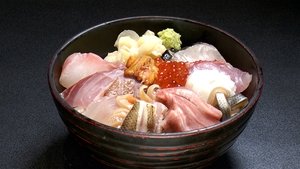
A donburi is a comforting Japanese dish: a bowl of rice topped with an assortment of ingredients. Its speed, affordability, and deliciousness have cemented its place as a beloved staple. The variety is astounding, spanning from the familiar…














