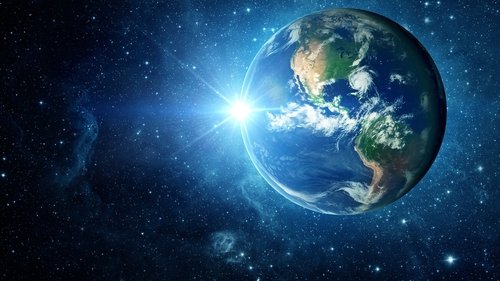





The Universe — Season 4
The fourth season delves into the final stages of stellar life: the dramatic processes by which stars transition into supernovas, and, on occasion, unleash the universe's most powerful explosions as gamma-ray bursts (GRBs). One such dying s…
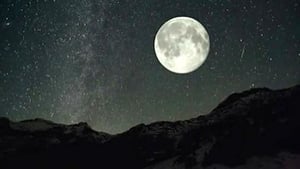
Absent the moon, Earth would be a profoundly altered, desolate world. Days would measure only four hours of light, followed by unending nights. Relentless winds, sustained at a hundred miles per hour, would generate colossal hurricanes, end…
Each year, countless objects – both of earthly origin and forged in the vastness of space – descend through our atmosphere, impacting the planet's surface. These dramatic arrivals offer scientists invaluable glimpses into the cosmos' natura…
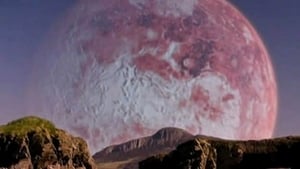
This work explores the universe’s most cataclysmic explosions and blasts, delving into the impact that formed the Chicxulub crater in Mexico's Yucatán Peninsula. It also considers the role of gamma rays and offers insights into the Big Bang…
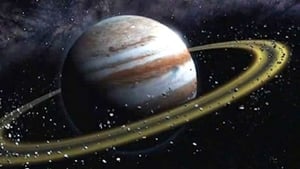
The rings of Saturn are breathtaking, lethal, and perpetually surprising. For centuries, countless scientists have been mesmerized by their stunning beauty. Within the rings, particles the size of houses travel at 53,000 miles per hour, ens…
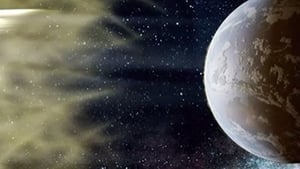
Scientists have explored theoretical methods for Earth's destruction, proposing scenarios as dramatic as engulfing the planet in a black hole, detonating it with antimatter, or flinging it toward the Sun. Other concepts involve simply nulli…
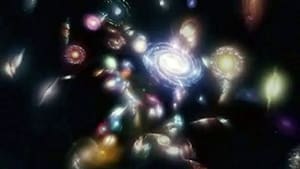
These stellar clusters offer a singular opportunity to study the nature and diversity of stars within the Universe. Distinctive in their composition, the stars within a cluster all ignited from the same primordial material at roughly the sa…
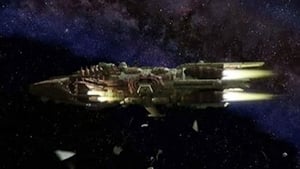
Space has long been integral to America’s capacity for warfare. The military relies heavily on satellites for vital functions—communications, surveillance, and targeting data. Yet, no nation has yet deployed weaponry in orbit, though both t…
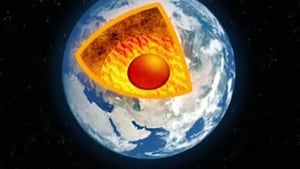
On worlds beyond our own, they fall from the heavens as searing iron. On distant moons, even where temperatures plummet hundreds of degrees below zero, they flow in untouched lakes of methane. They can blanket entire planets in oceans of el…
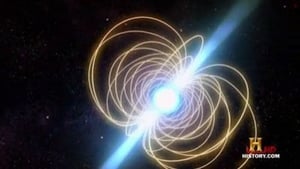
While often perceived as similar, pulsars and quasars represent vastly different celestial events. Pulsars are remarkably small, spanning perhaps only a few miles, yet rotate with the speed of a high-powered blender. This rapid spin causes …
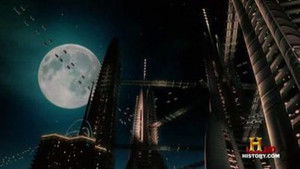
The hallmarks of science fiction—warp speed, transporters, wormholes, and lasers—have long populated our imaginings in books, films, and television. Yet, the fantastical future is rapidly becoming the present. Though instantaneous travel re…

The cosmos is a realm of boundless energy, manifested in the violent jets from black holes and the incandescent heart of our Sun. Yet, the total energy within the universe remains in perfect balance; no energy can be created or destroyed. C…














