




Bill Nye the Science Guy — Season 3

Each planet possesses a distinct character. They vary greatly in size, from Pluto's diminutive stature to Jupiter's immense bulk. Their appearances also differ, painted with a spectrum of hues. Mars, for instance, wears a coat of rust, lend…

Force applied to an object manifests as pressure, a phenomenon determined by two factors: the magnitude of the applied force and the area over which that force is distributed. A concentrated push against a small surface generates greater p…
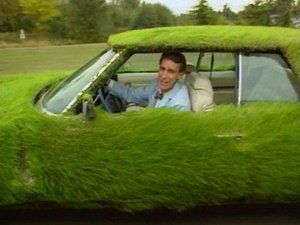
A plant's sustenance relies on a simple formula: sunlight, carbon dioxide, and water. As they create their nourishment, plants release the very air that sustains animal life – oxygen. Without this vital gas, creatures like ourselves would …

Our world is built upon stone – the Earth's very surface. These stones fall into three primary categories: igneous, sedimentary, and metamorphic, each born from a distinct process. Igneous rocks originate from cooled lava flows. Sedimentary…

Energy is capable of transformation. Within the human body, the energy contained in food is converted into a usable form that fuels our actions. Hydroelectric dams harness the kinetic energy of falling water, converting it into electricity …

The very essence of life resides in genes, intricate sets of instructions akin to blueprints. These genes contain the information that dictates features like eye color, the form of one's nose, and the texture of hair. When organisms reprodu…

Water blankets nearly seventy percent of our planet, a vast expanse largely unchanged since Earth's earliest days. Consequently, the water in your glass today might have quenched the thirst of a creature from the age of dinosaurs. This cons…

Friction is a force that opposes motion, converting kinetic energy into heat. When surfaces contact and rub, as occurs between a bicycle tire and the road, friction generates resistance, slowing the vehicle. This resistance also exists with…

It's not cause for alarm, but microorganisms are ubiquitous. These include bacteria, viruses, protozoa, and fungi—minute, single-celled entities. Fortunately, your skin acts as a formidable barrier, preventing most of these from penetrating…

The world boasts a remarkable variety of climates. Deserts are characterized by warmth and aridity, while temperate forests experience coolness and moisture. Tropical rainforests thrive in warmth and humidity. Flora and fauna have adapted …
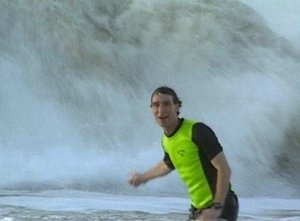
Energy, encompassing phenomena like light, heat, and sound, propagates as waves. One has likely observed these waves in the ocean, or the ripples that spread outward when a stone disturbs a still pond. The conveyance of energy is distinct f…
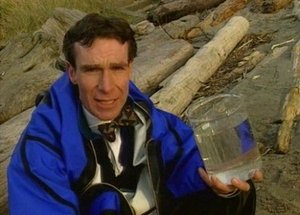
The ocean teems with life. Fish, sharks, whales, and squid are familiar inhabitants, alongside vibrant sea flowers, anemones, and otters. Yet, the majority of marine life exists in forms too small for the naked eye. These microscopic plants…
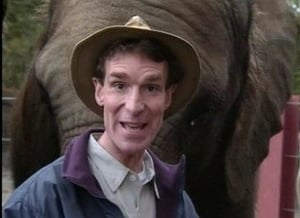
Mammals – often large, frequently covered in fur, and always warm to the touch. From humans to moose, from cats to rats, Bill Nye explores the characteristics that define this diverse group of creatures.

Many things are in constant motion – the wheels of a bicycle, a football in flight, the platters within a computer, and even our planet itself. All rotating objects possess inertia, a tendency to maintain their motion unless acted upon by a…
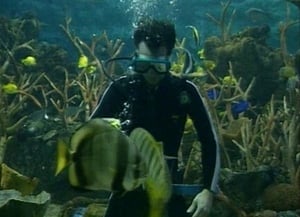
The world's oceans, lakes, and rivers teem with over twenty-two thousand distinct species of fish, displaying an astonishing variety in form and dimension. Their diets range from aquatic plants to their fellow fish, with some, like lampreys…

Movement is the essence of transportation, a means of conveying both people and goods. From foot and bicycle to automobile and train, countless methods exist for traversing distances. Since our arrival on Earth, humankind has been in consta…
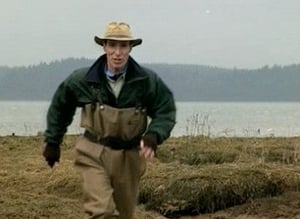
More than simply habitats for diverse flora and fauna, wetlands play a vital role in regulating floods and maintaining the purity of Earth's waters. The intricate network of vegetation and sediment within wetlands naturally slows the flow o…

The prevailing scientific view holds that birds descended from reptiles. Sharing the characteristic backbone and reproductive strategy of laying eggs with their reptilian ancestors, birds have nonetheless evolved a singular trait distinguis…

For survival, all populations require sustenance and shelter. When multiple populations of living organisms occupy a limited territory, resources like food and space become contested. Consider, for instance, a flock of birds and a community…

Certain creatures possess wings, granting them the freedom of flight and effortless hovering. Others rely on legs – ranging from a pair to over two hundred – to navigate the world, whether by a steady walk, a swift gallop, or a full-out run…














