






American Experience — Season 14
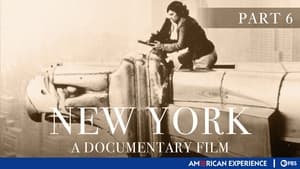
The period from 1929 to 1945, often called the "City of Tomorrow," centered on Mayor Fiorello LaGuardia. Leveraging his relationship with Franklin D. Roosevelt, LaGuardia transformed the city into a vast experiment in civic renewal. Histori…

The narrative of "The City and the World" opens in 1945, a period when New York, according to historian David McCullough, stood "at the pinnacle." By 1975, however, the sentiment had shifted dramatically, as a Daily News headline declared, …
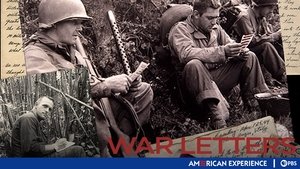
Fifteen actors, including Joan Allen, Edward Norton, Kevin Spacey, and Courtney B. Vance, bring to life war letters spanning from the American Revolution to the Gulf War. Interspersed with archival footage, home movies, and carefully crafte…
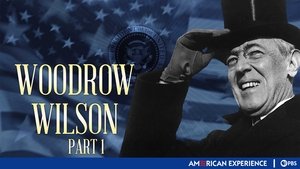
This two-part portrait of Woodrow Wilson weaves together newsreel footage, evocative recreations of the past, and readings – with voices provided by Rene Auberjonois and Blair Brown as Wilson and his first wife, Ellen, respectively – alongs…

The conclusion of this two-part portrait finds Woodrow Wilson entering the Great War with a sense of obligation, driven by the ambition to "make the world safe for democracy." Though victorious in the conflict, he would find defeat in the s…
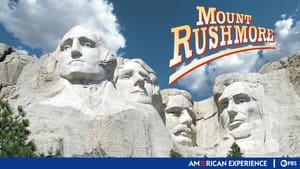
The following passage recounts the sixteen-year endeavor (1925-1941) to carve Mount Rushmore into the Black Hills of South Dakota, and profiles Gutzon Borglum, the sculptor who conceived it. Borglum was sixty years old when the project was …
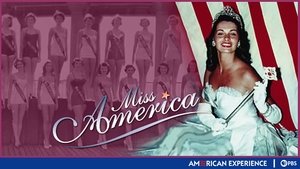
The Miss America Pageant, spanning eighty years, has long served as what narrator Cherry Jones describes as "a barometer of America’s evolving perceptions of womanhood." This exploration includes recollections from eight former Miss America…
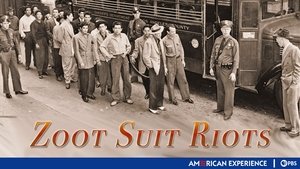
"Zoot Suit Riots" recounts a week of violence that convulsed Los Angeles in June of 1943, a conflict between Mexican-Americans and Anglos, many of whom were servicemen. Hector Elizondo chronicles the events of that hour, employing evocative…
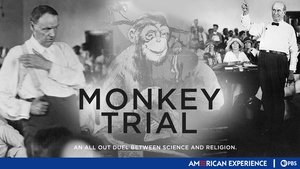
This account revisits the celebrated clash surrounding evolution in 1925, a confrontation between fundamentalist champion William Jennings Bryan and the secular lawyer Clarence Darrow. The narrative also examines the curious aspects of the …
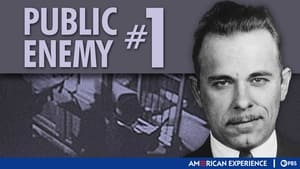
Though branded "Public Enemy No. 1" throughout 1933 and 1934, John Dillinger did not universally inspire hatred in the American populace. This program examines the reasons for this nuanced perception as it charts the course of his fourteen-…

Ric Burns’ portrait focuses on the photographer whose ties to Yosemite are so profound that a mountain within the park bears his name. Adams (1902-1984) first encountered Yosemite at the age of fourteen, an experience, according to William …
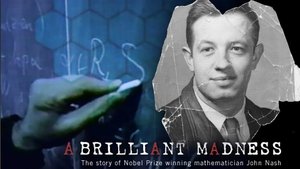
The celebrated mathematician John Nash, whose struggles with schizophrenia were brought to vivid life in the Academy Award-winning film *A Beautiful Mind*, recounts his experience. He is accompanied by his wife, Alicia; their son, John Stie…
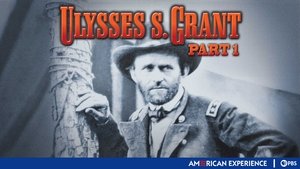
This two-part biography charts the life of Ulysses S. Grant (1822-1885) with a somber eye. The first section, "Warrior," offers a swift account of his largely unremarkable existence before the Civil War, concluding on Good Friday, 1865, wit…
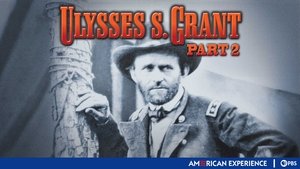
The biography of Ulysses S. Grant (1822-85) concludes with a look at the final two decades of the life of a figure historian Donald Miller has dubbed "the most popular man of the 19th century." It was not his presidency (1869-77) that defin…