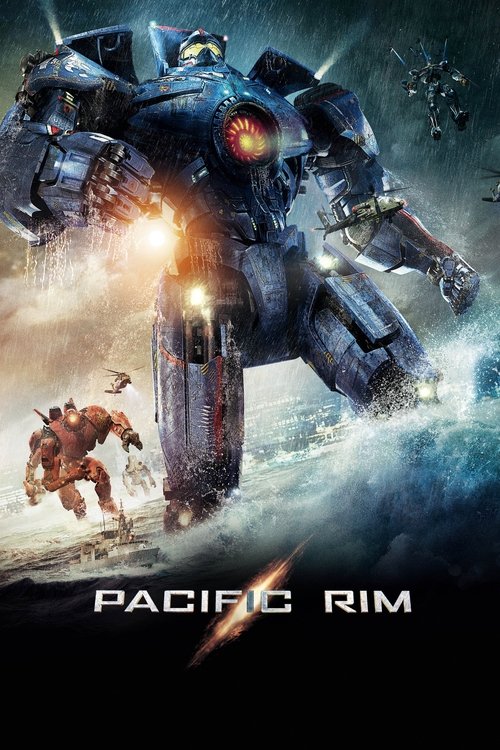




When enormous creatures, referred to as "kaiju," begin emerging from a rift at the bottom of the Pacific Ocean with destructive intent, humanity unites to construct colossal mechas called jaegers. These machines are piloted by two individuals whose minds connect through a neural link known as “The Drift.” As the kaiju grow more powerful and an overwhelming surge of these creatures appears imminent, the fate of humankind hangs in the balance, prompting a final effort to save the world using the remaining jaegers. Following a lengthy five-year period marked by setbacks and delays (similar to those experienced with projects like The Hobbit and At the Mountains of Madness), Guillermo del Toro has finally released his most ambitious film to date. The acclaimed filmmaker returns to the inspirations of his childhood, drawing from classic kaiju movies—such as Godzilla, Gamera, and Mothra—and anime to create a contemporary monster movie that many didn't realize they desired. As someone who appreciates genre films, I can say del Toro’s work combines intelligence found in the best science fiction, fantasy, and horror with a distinctive visual style. His understanding of what makes these fantastical narratives resonate deeply is central to his abilities as both writer and director. His imagery evokes a genuine sense of wonder. It's this feeling of wonder, that playful excitement, that contributes significantly to Pacific Rim’s success. This is a large-scale film crafted by an artist at the peak of their career, but while any number of directors could have handled the technical aspects, del Toro infuses each movie with his own unique perspective. His passion for the material shines through every scene. It's this complete sincerity that makes his films so enjoyable to watch; even when massive creatures are battling on screen, there’s no trace of the cynicism or irony often found in other blockbusters. The cast delivers solid performances, including Idris Elba (from TV’s Luther) as Stacker Pentecost—a name I particularly liked—the resolute leader of the jaeger program, Charlie Hunnam (from TV’s Sons of Anarchy) as former pilot Raleigh Becket, who has overcome a personal tragedy and must be persuaded to return to service, and Oscar-nominated Rinko Kinkuchi (Babel) as Mako Mori, another individual impacted by the kaiju, ready to unleash her fury. While these characters might seem familiar, it’s a stroke of genius from del Toro and original writer Travis Beacham that we immediately connect with them onscreen. With so many concepts being explored—monsters, mechas, neural bonding, kaiju culture, among others—the straightforward characterizations provide a solid foundation for the audience, making them instantly relatable through their shared humanity. The film’s apparent goal was to emphasize “texture.” Del Toro has created an unparalleled visual experience that avoids the appearance of a polished advertisement. Every frame is filled with rain, snow, scuffs, smoke, and debris—details that convey the weight and scale of these colossal combatants. Unlike the overly slick (and emotionally detached) Transformers films or most contemporary big-budget action movies, this world feels gritty, realistic, and lived-in, much like the original Star Wars trilogy. In fact, describing a film as “this generation’s Star Wars” has become so commonplace that it's lost its meaning. Yet Pacific Rim embodies that sentiment. It evokes those rare emotions often missing from modern studio films: wonder, awe, and pure enjoyment. Do you recall the feeling of seeing a Star Destroyer for the first time? Discovering a brachiosaurus on Isla Nublar? Witnessing the landscapes of Middle Earth? This film captures that same sense of amazement. Few can build worlds like del Toro does, and here he demonstrates his mastery, inviting viewers to join him in his imaginative playground.
On September 26, 2026
#360▲ 1
360th by Pulse movie online54.9PULSEPulse MeterOur daily Pulse Meter measures public activity and popularity signals across the web.How it works →














