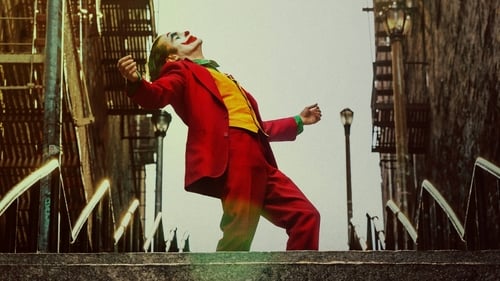





The character of the Joker has existed since 1940, accumulating so many different interpretations and origins that it feels nearly impossible for an actor to convincingly portray him. It’s a daunting task for any filmmaker to synthesize all those elements into something new. Todd Phillips faced a significant challenge, bringing in Joaquin Phoenix, one of the finest actors working today, to tackle the role. Together, they created a film intended for broad appeal that ultimately falls just short of greatness. The movie is appropriately unsettling and intensely focused on its central character. The narrative perspective remains detached, observing the descent into madness rather than fully immersing itself within it—like a news reporter covering a fire from a safe distance. It avoids truly delving into the depths of Joker’s psyche. The film doesn't tell his story; instead, his story is presented to the audience, anchored by figures representing normalcy like detectives and asylum staff. This ultimately diminishes the film’s impact. Given the extensive material already available on the Joker character, I initially hoped to view this film as a standalone study of a man loosely inspired by the Batman universe. However, that proved difficult. My thoughts kept shifting between considering it within the context of Batman's world and evaluating it independently. When viewed alongside Batman, the Joker exists in familiar territory. There have been many previous depictions, and Heath Ledger’s remains particularly vivid. I anticipated Arthur would eventually utter lines like, "Introduce a little anarchy. Upset the established order, and everything becomes chaos. I'm an agent of chaos..." However, Ledger’s portrayal lingered in my mind, making it hard to find a clear progression for Arthur from mentally unstable individual to calculating anarchist. The film left me searching for that transformation. To truly earn his title as Batman’s greatest adversary and the crown prince of crime, mere mental instability isn't enough; he needs greater intelligence and cunning. These qualities are occasionally visible, but I felt the foundation upon which his later persona would be built was incomplete. It reminded me of Cameron Monaghan's Jerome Valeska, another Joker iteration. My understanding of the character lies somewhere between Jerome’s cruelty and Arthur’s pitiable delusions. The film also didn't need a moment lifted directly from Batman lore. I felt it relied on Batman's story as a safety net, an artificial support provided by the producers. However, when considered as its own self-contained narrative, the film proved more satisfying. It evokes those somber stories where misfortune relentlessly plagues the protagonist. Arthur’s life is marked by unrelenting hardship, poverty, and a unique medical condition that elicits pity. This parallels Rani Mukharjee's performance in *Hichki*, specifically regarding the character’s medical condition. While the settings and genres of the two films differ significantly, I've often observed how such disorders can lessen the narrative burden. In Joker’s case, combining his disorder with a constant string of bad luck, an unstable upbringing, and volatile social conditions creates a potent mix. As a standalone story, it works well, benefiting from a remarkable performance. It also raises awareness about mental health issues. But stripped of all Batman references, it remains a competently acted but ultimately average story. Unfortunately, the film seems torn between these two approaches. It strives to establish its own identity, and eventually does so, but that ground isn't particularly groundbreaking. The movie feels somewhat hesitant, unable to fully embrace the richness of Batman lore like *Gotham* did—a series featuring Bruce Wayne but not Batman. At the same time, in its attempt to portray a psychologically troubled protagonist intended for mass appeal, it plays it safe. I thought of *American Psycho* and *The Machinist*, both starring Christian Bale, who previously played Batman. Those films plunge you into the minds of their protagonists, immersing you fully in their experiences—like stepping directly into that burning Amazon rather than observing from a distance. Joker doesn’t attempt such immersion. I lack the expertise to comment on the acting performances. Joaquin Phoenix is present throughout every scene, and his transitions between emotions are both terrifying and impressive. His Tai Chi practice to maintain composure and the menacing glare he adopts as he fully embraces the Joker persona are chilling. He embodies the character with remarkable dedication. However, he lacks the same level of writing support that Heath Ledger had, which inevitably prevents him from surpassing Ledger’s iconic portrayal. Considering Todd Phillips' previous work, this film represents a genre shift for him. Aware that Joaquin Phoenix was his greatest asset, he avoided risks, keeping the focus squarely on the actor and ensuring the cinematography generally served him well. The one exception is Robert De Niro, who is given considerable freedom to carry his scenes independently. I believe Phillips relied on both of these performers to elevate their respective roles. Sadly, the print and screen at the theater where I watched it were subpar, so I’ll need to see it again to fully appreciate the cinematography. I realize I've written extensively, exceeding a thousand words. If you've read this far, thank you. To summarize, *Joker* resonated with me and I enjoyed it, but I don’t consider it the definitive depiction of the iconic comic book villain. Perhaps even better portrayals are yet to come.
On September 24, 2026
#410▲ 38
410th by Pulse movie online55.5PULSEPulse MeterOur daily Pulse Meter measures public activity and popularity signals across the web.How it works →