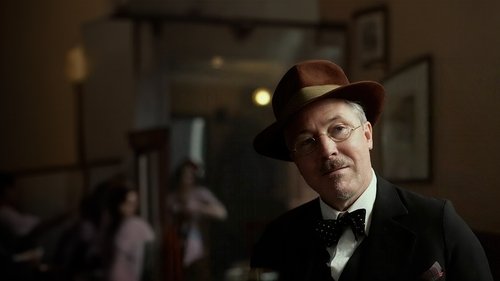





Gabriel Byrne’s performance as Nobel Prize winner Samuel Beckett feels underwhelming from the start, beginning with the moment he accepts his award and then moves to a space above the theater where he encounters himself—wearing a polo neck—and they attempt to figure out what to do with the money. This conversation sets the stage for a look back at Beckett’s life. We see his upbringing with an affectionate father and a more emotionally distant mother; a period (depicted by Fionn O'Shea) in Paris where he meets the celebrated James Joyce (Aiden Gillen) and his daughter, “Lucia” (Gráinne Good), before the arrival of the Nazis prompts him to join the French resistance and meet "Suzanne" (Sandrine Bonnaire), after which Byrne returns for a final scene with her alongside BBC producer Barbara (Maxine Peake). It’s evident that Beckett led a life brimming with events, and he was certainly not a boring person—yet the film's slow speed ultimately diminishes any potential enjoyment. There are moments showcasing the sharp humor of both Joyce and Beckett, and I did appreciate O'Shea's take on the younger man, but mostly it’s an uncomfortable, self-absorbed examination as this individual reflects upon a life filled with regret and very little happiness. The film seems more concerned with providing fleeting views of those who were significant in his life than with offering any insight into his character or explaining why we should be invested. It might accurately represent his life, but it’s ultimately quite tedious to watch—even though the visuals are appealing. There's some pleasant ragtime jazz music, at least.

On September 20, 2026
#20233▲ 4377
20233rd by Pulse movie online23.5PULSEPulse MeterOur daily Pulse Meter measures public activity and popularity signals across the web.How it works →