



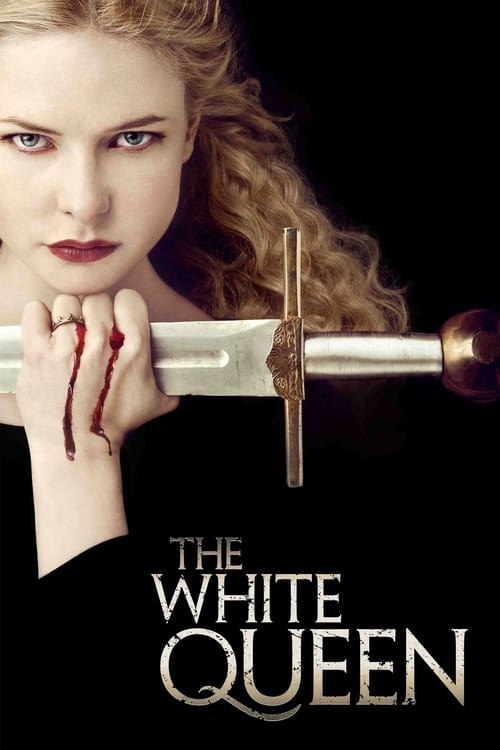
This miniseries offers a look into women's roles amidst political turmoil during a specific period in history. I’ve encountered several series set in past eras, and they often share similar qualities or shortcomings. I recall _The Tudors_ and another, less popular one, _The Borgias_, among others. These shows seem to follow predictable patterns, even though they depict different times, places, and individuals. Some have suggested, and it’s easy to see why, that this miniseries—a single season with ten episodes—could be considered a precursor to _The Tudors_. While the cast and crew are distinct, such a connection isn't entirely out of the question. The roughly thirty-year span covered begins with Edward IV’s ascension to the throne following the removal of King Henry VI and the initial phase of the Wars of the Roses. The series largely centers on the charismatic and determined monarch and his military leader, Richard Neville, Earl of Warwick. However, a key focus is on the women and their influence: the king's controversial marriage to Isabel Rivers clashes with Warwick’s interests and sparks rivalry between the Neville and Rivers families. Subsequently, “the kingmaker” travels to France, where he seeks support from Margaret of Anjou, Henry VI’s wife, who leveraged her connections within French royalty to gather funds, allies, and troops for the House of Lancaster. During a time when powerful nobles possessed both the financial resources and the ability to equip their own armies, the backing of high-ranking families significantly shaped events. The series illustrates this through the Stanleys—brothers strategically aligning themselves with opposing factions—and the Nevilles, who provided Henry VI with the means for a brief restoration that culminated in his death within the Tower of London, along with Richard Neville’s demise at the Battle of Barnet. This effectively diminished the family's power as their daughters married York princes, dispersing their inheritance and placing it under Crown control. True to the work of novelist Philippa Gregory, the series highlights these women, especially Anne Neville, who marries a Lancastrian heir before later becoming Richard III’s wife. I have reservations about this portrayal; evidence suggests that she was more of a pawn than an influential figure as depicted in the series. The story concludes with the defeat and death of Richard III at the hands of Henry Tudor's forces. I apologize if my analysis of historical details seems excessive, but as a historian, I felt it necessary to address them. However, much of this information is readily available online or in standard English history texts. While the series is good and engaging, there are noticeable inaccuracies that seem odd: women appearing without head coverings, nobles fighting on foot without helmets, and breeds of dogs that didn’t exist at the time. These details often reveal a production's commitment to historical accuracy. Even so, the series fared somewhat better in this regard than _The Tudors_. The acting is generally strong, although occasionally feels out of place (characters speaking and behaving like modern people) and the dialogue can be clichéd. Rebecca Ferguson deserves recognition for her convincing performance, as do Max Irons, Aneurin Barnard, David Oakes, Tom McKay, Rupert Graves, and James Frain. The actors clearly invested themselves in their roles and strived for authenticity, despite not always having the best material to work with. Amanda Hale’s portrayal is over-the-top, bordering on fanaticism, while Faye Marsay does her best but incorporates increasingly contemporary mannerisms. Janet McTeer's performance was enjoyable, though I would have preferred a French actress in the role given the character’s origins. Technically, the series is well-crafted and makes excellent use of the Belgian locations—Ghent, Bruges, and Ypres—where it was filmed. The costumes are generally appropriate for the period, with one notable exception: the conspicuous absence of hats or veils, which were essential elements of fashion at the time as clearly shown in paintings. The cinematography and special effects are well-executed, the opening credits are stylish, and the soundtrack is reasonably good.
On September 20, 2026
#1128▲ 49
1128th by Pulse TV show online16.8PULSEPulse MeterOur daily Pulse Meter measures public activity and popularity signals across the web.How it works →