




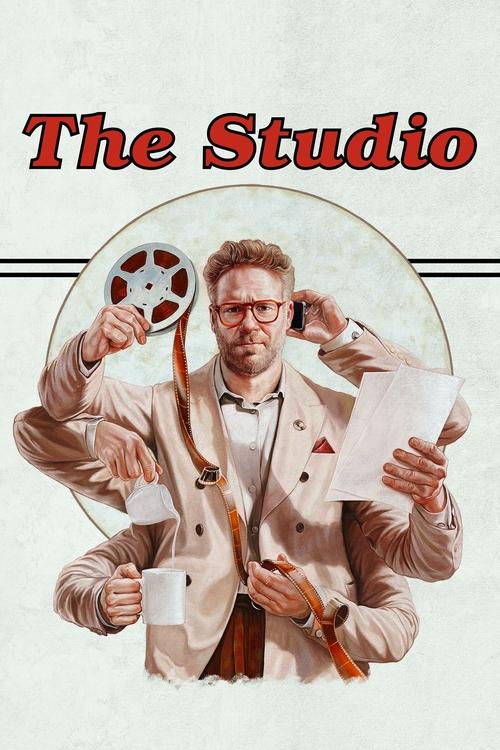
I first encountered this show through a discussion on my local radio program (ABC Local in Australia’s Nightlife), which played an audio clip from an episode about the production of a zombie film with a peculiar method of spreading infection. Oddly, that specific episode wasn't available until weeks later, making me wonder how the radio show obtained it. I decided to give the series a try, partly because I happened to have a free trial for Apple TV (likely acquired through an Apple gift card purchase). The show initially felt like an old-fashioned screwball comedy—a genre I'm still trying to fully understand, as my research suggests it only partially aligns with what I expected. Seth Rogen portrays Matt Remick, a senior executive at the fictional Hollywood studio Continental Studios and essentially a man-child on the verge of becoming head of the company. He’s about to discover that his new position won't be quite what he envisioned, creating internal conflict between his appreciation for film as an art form and the pressure to generate substantial profits for the corporation. The supporting cast primarily serves to highlight different aspects of Remick's personality; they don’t seem like fully developed characters with their own distinct traits, unlike in acclaimed sitcoms such as *Seinfeld*, *Cheers*, *Yes Minister*, or *Fawlty Towers*. Perhaps this reflects the types of people who hold these positions within the industry, or maybe it indicates a lack of depth in the show's writing beyond Remick’s character. They come across as energetic but lacking substance. Like *The Office* by Gervais, this is very much cringe comedy, with Remick at its center, and it largely works well. I noted some lines from the show that resonated with me, such as Remick’s observation in episode 1: “I got into all this ‘cause, you know, I love movies but now I have this fear that my job is to ruin them.” Episode 2 features a character who describes Remick by saying "His film boner is at full mast." The show does contain stronger language and one brief sex scene, so viewers sensitive to such content should probably avoid it. In the same episode, I found humor in Remick's statement “I’m trying to support women,” given his peculiar way of demonstrating that sentiment. A notable aspect of the series is the inclusion of real-life industry figures playing themselves for comedic effect. While some were recognizable, others were harder to identify—I would have needed multiple-choice options! I didn't recognize many of them, as I haven’t been deeply immersed in film lately. It would have been amusing if the show had used actors portraying these real people, as I wouldn’t have known the difference anyway. However, I did immediately spot Ron Howard. Here are a few thoughts on specific episodes from my notes: Episode 1, “The promotion,” is well-constructed with a satisfying conclusion and features Martin Scorsese. Remick finds himself in predicaments and attempts to escape them. It would be interesting to learn how much the series draws upon actual industry practices versus real-world events. One part of this episode reminded me of the news story about individuals with damaging claims against Donald Trump having their stories purchased by magazines like *The National Enquirer* and *US Weekly*, a practice referred to as “catch-and-kill,” which essentially helped him get elected. Episode 2, “The oner” mentions a figure of $800,000 for the use of a Rolling Stones song in a film—is that accurate? Episode 3, “The note” includes a character’s remark about Ron Howard's film: "He should not be burdening audiences with his catharsis. Go to therapy, save us 45 minutes of fucking runtime.” I thought the scene where Howard has an outburst at the film poster meeting was a ruse to get the film to Patty instead of Continental. Regardless, it felt like the episode should have ended there! Episode 4, “The missing reel,” is presented in a film noir style and was the weakest episode initially; it became more enjoyable once the mystery was resolved. Episode 6, “The paediatric oncologist” stands out as the worst episode of the first series. The portrayal of the doctors felt implausible—they’re sitcom characters—and I wasn't particularly entertained by them. Episode 8, “The Golden Globes” had me cringing when Zöe Kravitz’s character (playing herself) approached Remick backstage to try and take credit for her film, but they quickly managed to turn the scene into something amusing (I have a low tolerance for cringe). This moment is reminiscent of *The Office* by Gervais. Episodes 9 and 10 felt like the actors weren’t convincingly portraying stoned characters—though that might be a positive thing; was I expecting them to go all “method”? This marks my first real experience with streaming television, and one frustrating aspect was how the closing credits were shrunk and moved to a corner to accommodate advertisements for other Apple TV programs. I repeatedly fought to restore the full-screen credits so I could read them! The beginning of each episode also includes a promotional spot for another program on Apple TV, which thankfully can be skipped. I don’t typically pay for television, so I'll likely cancel my subscription before my free trial expires. I’m not particularly eager to continue with further seasons of *The Studio*. Hopefully, it won’t follow the pattern of many traditional network shows that are dragged out indefinitely until they eventually fade away—like *The U.S. Office*? Gervais had a better sense of how long to keep a series going. I was considering awarding this first season a score of 75% or higher, which would translate to an 8/10 rating. I’ll drop the "+" sign, though, and give it a final score of 7/10 stars. I found the series entertaining, and those closely following Hollywood will likely gain even more from it, seeing familiar faces playing exaggerated versions of themselves.
On September 22, 2026
#575▼ 46
575th by Pulse TV show online24.1PULSEPulse MeterOur daily Pulse Meter measures public activity and popularity signals across the web.How it works →














