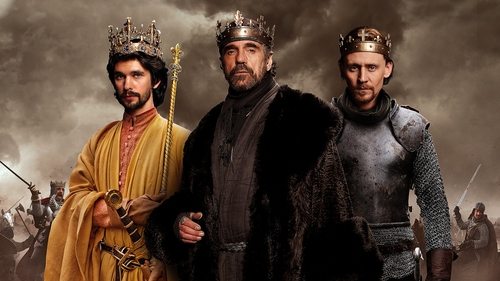




Having lost almost all English territory in France, the unwell and mentally fragile Henry VI (Tom Sturridge) returns home with his French wife Margaret (Sophie Okonedo). They arrive at a court as full of scheming as the one they left behind. The King has been on the throne for some time now, but that won’t stop Warwick (Stanley Townsend) from pushing Edward's (Geoffrey Streatfield) claim to the throne, arguing it is more rightful because of his family connection to the previously removed Richard II. What holds back this act of treason is York’s (Adrian Dunbar) sense of fairness; he has the power to take the crown but agrees to let Henry remain king if he promises that the succession will go to York's heirs. This doesn't sit well with his wife, who quickly makes sure the truce falls apart. Edward and Warwick then imprison the King while she and her son escape to the court of King Louis XI (Andrew Scott). To solidify his position as a power broker, Warwick follows soon after and suggests a political marriage, unaware that his new boss has become deeply infatuated with Elizabeth Woodville (Keeley Hawes). Feeling deceived and let down, he changes sides once more and vows to reinstate Henry VI. We know how that turned out, and also just how brutally menacing Shakespeare liked to portray the true villain of this story—Richard (Benedict Cumberbatch). This production makes frequent use of outdoor locations, and the battle scenes are well-staged, offering a sense of both the environment and conditions as well as the power of the weapons used at that time – there aren't any easy victories here. The acting is only passable overall; Sturridge does a decent job showing how he gradually loses his grip on events, though he isn’t often seen in the role of king, and I didn’t find Townsend’s deceptive Warwick or Dunbar’s ambitious York to have quite the impact that I was hoping for. Cumberbatch hints at what's coming, but otherwise he has a relatively minor part in this story about the War of the Roses, which quickly moves through the decline of one king and the rise of another. I realize some of this pace was due to Shakespeare himself, but it still felt somewhat superficial at times and a bit too focused on dates and events. Nevertheless, it’s an impressive piece of television theater that effectively shows how the crown can be empty, especially when the person wearing it is even more so.
On September 24, 2026
#2421▲ 229
2421st by Pulse TV show online7.0PULSEPulse MeterOur daily Pulse Meter measures public activity and popularity signals across the web.How it works →