



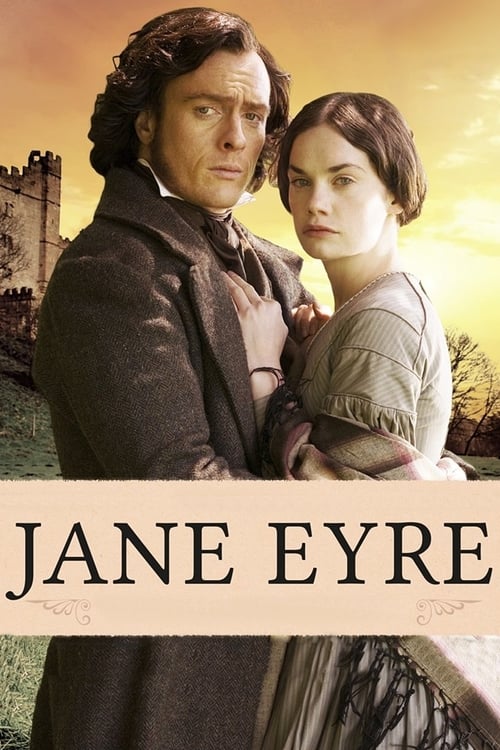
This performance marked Ruth Wilson's first role outside of drama school, and producer Diederick Santer recounted that they ceased their search for actresses the moment she entered the audition room—a sentiment quickly confirmed upon seeing her on screen. Adapting *Jane Eyre* is a difficult undertaking; it requires a number of skilled actors in smaller parts. Consider how much Pam Ferris contributes as Grace Poole, or the impressive work done by Hester Odgers and Georgie Henley with limited screen time. Crucially, you also need a Rochester who embodies a brooding intensity, capable of attracting diverse affections and inspiring devotion in one of literature’s most significant heroines. Previous versions have featured notable Rochesters, including William Hurt and Ciaran Hinds, as well as famous portrayals by Orson Welles and George C Scott. Toby Stephens now joins that lineage. However, Ruth Wilson delivers a truly memorable Jane Eyre—an actress who possesses striking beauty without being conventionally pretty. She conveys bleakness and emptiness, believably portrays innocence, yet simultaneously holds the potential for a passionate love story. Her poise and control are remarkable; subtle shifts in expression suffice to communicate shifting emotions held just beneath the surface. This allows the story to unfold naturally over four hours because she can convey lengthy passages of text with minimal changes in her demeanor. There are countless exceptional moments between the two leads, not solely during the dramatic scenes. Observe Wilson’s impressive performance in the stairwell as she gathers the courage to enter the tower room and tend to Mason, contrasted by Stephens' concern and his subsequent decision to trust her. Or witness his petulance when welcoming her return from Gateshead, transitioning into joy at Jane's happiness of being home. Note how much they can communicate even with their backs turned. The final episode is particularly powerful—a high point in television production. Wilson has since achieved significant recognition and success in a wide range of challenging roles, most recently as an exceptional Hedda Gabler at The National. And more than ten years later, it remains rewarding to see her talent paired with Toby Stephens’s in this early role. While the script deviates from the original text, it is consistently excellent—a standard we've come to anticipate from Sandy Welch. Though she may alter plot points, she never strays from Brontë's essence for a moment. A close examination of Welch's adaptation of the pivotal meeting in Hay Lane reveals how faithfully it captures the spirit of Brontë’s original work. Furthermore, Susanna White’s direction is nearly flawless and Rob Hall composed one of the decade's finest scores. No other version so effectively portrays Jane’s pioneering fight for independence, respect, and morality based on personal principles rather than societal norms. Wilson kept a copy of the novel with her throughout filming, pointing out that it eliminates any guesswork about Jane’s thoughts because the book explicitly states them. This dedication shines through in the finished product. If you've ever struggled to understand why Jane rejected Rivers and returned to Rochester after initially leaving him, the answers can be found here—Welch understood, Stephens understood, and Wilson understood.
On September 20, 2026
#3203▼ 623
3203rd by attention TV show online3.7Attention ScoreAttention ScoreOur daily Attention Score measures public activity and popularity signals across the web.How it works →