




How the Universe Works — Season 1
The program explores the origin of the Universe, tracing its emergence from a state of apparent nothingness. It details the cosmos's expansion from an infinitesimally small point, smaller even than an atom, to the expansive structure observ…
Black holes, the universe's most potent destroyers, remain among its most enigmatic features. Once mere theoretical constructs, modern astronomy is now demonstrating their terrifying reality, revealing a potential influence on the very fabr…
From diffuse clouds of frigid gas adrift in the cosmos thirteen billion years past, galaxies have evolved into the immense, gravitationally bound structures we observe today.
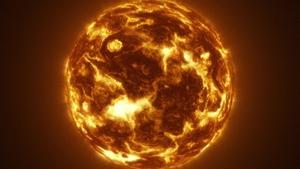
The genesis of stars, and the profound alteration of the cosmos wrought by their emergence—a transformation that ultimately paved the way for planets and, eventually, for life itself.
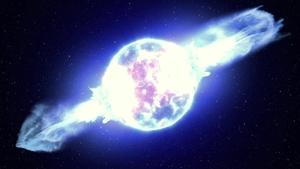
Stars do not endure forever; they meet their end in cataclysmic explosions known as supernovas. Second only to the Big Bang in scale, these events represent a convergence of creation and destruction. It is only recently that we have begun t…
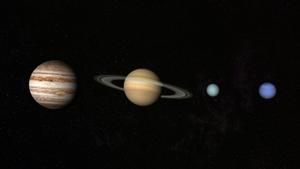
Our solar system contains a mere eight planets, yet the Milky Way galaxy may harbor a hundred billion worlds. This series chronicles the evolution of planets, charting their transformation from humble particles of dust into the remarkably v…
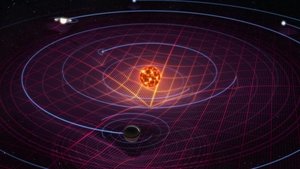
Does our solar system stand apart? Since the initial detection of a planet circling a star other than our sun, roughly two hundred and eighty alien solar systems have been found. It is only by examining systems distant from our own that we …
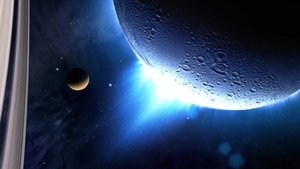
Moons manifest in a breathtaking array of forms and dimensions. These celestial bodies harbor remarkable natural wonders—towering geysers and immense volcanoes—and represent perhaps our most promising avenue in the search for extraterrestri…














