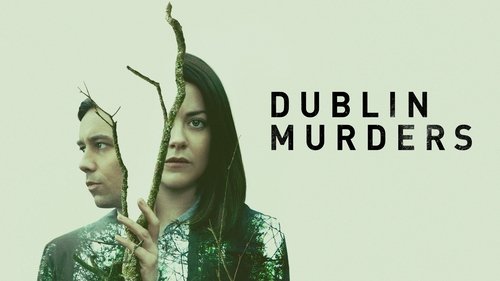





_Dublin Murders_ adapts the first two novels in Tana French’s _Dublin Murder Squad_ series—_In the Woods_ (2007) and _The Likeness_ (2008)—and airs on BBC One in the UK and Ireland, and Starz in North America. The show's biggest issue stems from a questionable decision to present the narratives of both novels concurrently, with each case influencing the other. This approach doesn’t quite work; the storyline involving _The Likeness_ feels underdeveloped and ultimately distracts from the stronger elements within _In the Woods_. It’s disappointing because _In the Woods_ had the potential to be a compelling five or six-part series, but instead it's an extended eight-parter weighed down by what seems like unnecessary material. Despite this significant flaw, there are many positives; the acting is strong, and the cinematography, production design, art direction, editing, and directing all contribute to a polished product, as does much of Sarah Phelps’ writing, which successfully captures the tone and themes of French's lengthy, introspective novels. The story begins in 2006 with the discovery of twelve-year-old Katy Devlin’s body near Knocknaree, a fictional housing estate in Dublin. Detectives Rob Reilly (Killian Scott) and Cassie Maddox (Sarah Greene) are assigned to investigate, an inquiry that resurfaces memories of three children who disappeared in the same woods twenty-two years earlier. One child was found shortly after his disappearance with a torn shirt and shoes filled with blood, claiming he had no recollection of events. That boy, Adam, left Ireland with his parents and seemingly vanished; however, Rob is actually adult Adam, secretly returned to Ireland under an assumed identity, intending to use the Devlin investigation to explore the 1985 case. Simultaneously, Cassie is approached by her superior, Frank Mackey (Tom Vaughan-Lawlor), regarding a peculiar murder requiring an undercover operation. The show’s aesthetic qualities are noteworthy; it blends genres—a traditional whodunit with elements of _Chinatown_ and a vaguely supernatural atmosphere reminiscent of _Twin Peaks_. While the 2006 events unfold chronologically, flashbacks are used extensively, skillfully edited to maintain clarity and establish connections between past and present. The one exception is the opening scene of the first episode, which occurs at the story’s conclusion—a deliberate choice intended to set the tone and introduce the psychological conflicts within Rob. The cinematography and production design create a sense that something isn't quite right in Knocknaree and the Devlin home. The world feels authentic, with its inhabitants possessing distinct quirks. The visuals subtly maintain an off-kilter feeling, sometimes suggesting hidden knowledge or unspoken truths. Small details, like a ladybird crawling across Katy’s face and the discovery of ants on her body, add to the atmosphere. The performances are also impressive; Scott and Greene share strong chemistry, and as the series progresses, both actors reveal darker aspects of their characters' personalities. Leah McNamara shines as Katy’s older sister, Moe Dunford is reliable as Cassie's boyfriend, Conleth Hill portrays an unapologetic and blunt head of the DMS, and Peter McDonald delivers a compelling performance as Katy's father, whose behavior raises suspicions. Like _In the Woods_, the show explores the impact of lingering trauma. Nearly every character carries emotional scars, but Rob’s are particularly profound; he was never able to fully move past the events of 1985 and uses the Devlin case as a means of revisiting his own past. This is highlighted by his question to Cassie: "_what if the killed are the lucky ones_?"—a recurring theme suggesting that those who survive trauma may be forever trapped within it. Ultimately, this brings us to the show’s central problem. Much of what has been said pertains to the Devlin case/_In the Woods_, rather than the undercover operation/_The Likeness_. The latter feels underdeveloped and serves primarily as a distraction from the more compelling murder investigation. Phelps struggles to integrate the two plots effectively, with the characters involved in Cassie's case lacking depth compared to those in Rob’s storyline. Whenever the narrative shifts to the undercover operation, the desire is simply to return to the murder case. This becomes especially apparent during the reveal at the end of the undercover plotline, which feels anticlimactic and underdeveloped due to a lack of character development and established relationships. Dividing the show's focus diminishes both plots—in the novels, each case benefits from immersing the reader in the protagonist’s perspective, shaping the narrative through their subjective experience. Constantly switching between storylines disrupts this immersion and implies an artificial connection that doesn’t exist. Despite these criticisms, I did find the series enjoyable overall. The acting is strong, the visuals are striking, and the writing related to the murder case is well-crafted. A shorter run focused solely on that case would have been preferable, but it's still worth watching, although be prepared for frustration when the undercover operation begins to dominate the narrative.
On September 20, 2026
#2489▼ 14
2489th by Pulse TV show online6.6PULSEPulse MeterOur daily Pulse Meter measures public activity and popularity signals across the web.How it works →














