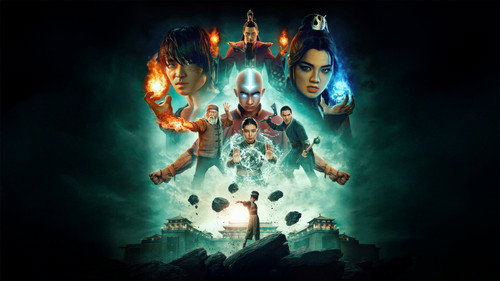





The main thing I’ve come to think about after watching this series is that the only way to do a live-action remake of Nickelodeon's *Avatar: The Last Airbender*—a show that happens to be my favorite television series, and honestly my favorite piece of media ever—is to recreate it precisely, with a shot-for-shot approach and minimal changes. I know this is usually considered an unwise strategy for adaptations; it was the main criticism leveled at this year's live-action *Moana*, for example. But in the case of *The Last Airbender*, the original is so fundamentally perfect that any alterations inevitably make the remake inferior. That being said, Netflix’s *The Last Airbender* has shown itself to be an attempt at a faithful adaptation of Nickelodeon's animated series while still respecting its core themes and spirit. It doesn’t always succeed, and it never quite reaches the profound emotional impact or stunning visuals that define the original, but there are moments where those qualities shine through. After the disastrous live-action film directed by M. Night Shyamalan in 2010—which is easily one of the five worst movies I've ever seen—it’s refreshing to see an adaptation that largely honors the source material and does its characters justice. That earlier movie was so flawed on every level that it’s not worth discussing how much this series improves upon it; the difference in quality is immense. Simply put, the Netflix series is superior to Shyamalan's film in every conceivable way. The casting of this show is a mixed bag—some choices work well, others don't. I think they nailed the roles of Iroh and Zuko, with Paul Sun-Hyung Lee’s portrayal of Iroh being particularly strong. He doesn't imitate the late Mako’s iconic performance, but he clearly understands what makes the character so great at his core, bringing the right energy to the role in this version of the story. I feel similarly about Dallas Liu’s interpretation of Zuko; I hope to see him in more projects. The actors playing Aang, Katara, Sokka, and Toph generally do justice to their animated counterparts, but they don't quite capture them completely, and the reasons vary for each character. Ian Ousley portrays Sokka well, looking and sounding like the part, and largely getting his energy right. However, the writing changes Sokka’s personality significantly; he’s presented as more melancholy and less goofy and silly than in the original. As a result, this version of Sokka is considerably less entertaining. In fact, if I had only seen this adaptation, I might not even consider him an asset to the series. The casting for Princess Azula and her companions Ty Lee and Mai was the weakest part of the production. Elizabeth Yu, despite being a talented actress, simply isn’t my idea of Azula. She lacks the intimidation factor that makes the animated character so compelling; I never felt like she was the dangerous threat to humanity or the formidable adversary that she is in the original series. Azula is the best villain in the original show, and they really missed the mark with her portrayal. The animal companions are unremarkable—they’re just obviously CGI characters, so they don't have the same charm as their animated versions. A considerable amount of time, especially in season 2, is dedicated to new plotlines and characters, and even elevating previously minor characters like the inventor. With a shorter episode count, this inevitably means that important storylines from the original are either cut entirely or significantly shortened. Some of the best parts of the original were left out. As the series progressed into its second season and naturally diverged further from the source material, I came to accept that this would be a different story, and I was willing to judge it on its own merits as an engaging adventure. The core plot of *The Last Airbender* is inherently entertaining when handled with even basic competence. While the omission of some of the best parts of the original makes the quality drop-off noticeable, especially considering the storylines that were replaced, judging the series independently reveals it to be a reasonably compelling adventure drama that’s enhanced by these new plotlines. Many of these new additions—like Toph's family business or expanded lore surrounding the White Lotus secret society—seem intended to connect *The Last Airbender* more directly with contemporary issues, which I appreciate. It may be practically impossible for a live-action *Last Airbender* adaptation to ever match the greatness of the original, but enough elements are present and handled well enough to make this particular adaptation worth watching. What doesn’t work about this adaptation isn't bad enough to ruin the overall experience, and the new material added does, to some extent, contribute to the broader themes of the world—even if I would have preferred that time was used to adapt some of the most essential moments from the original that ended up on the cutting room floor. Netflix’s *Avatar: The Last Airbender* is a good television show; I'd give it a solid B- to a soft B.
On September 24, 2026
#534▲ 5
534th by Pulse TV show online24.4PULSEPulse MeterOur daily Pulse Meter measures public activity and popularity signals across the web.How it works →