




Nature — Season 15
The NATURE program *Sperm Whales: The Real Moby Dick* documents the work of researchers like Jonathan Gordon, whose investigations into the whales’ physical nature, methods of communication, and social behaviors deepen our comprehension of …
The story follows a dwindling pride of lions, known as the Crater Lions, inhabiting Tanzania's Ngorongoro Crater. It details their struggles for survival: fierce hunts against buffalo, a vulnerable cub’s perilous encounter with jackals, and…
A troop of mandrills, those vividly colored primates, are followed deep within the West African rainforest, revealing the intricacies of their lives. The narrative explores the struggles of a dominant male defending his position against a c…
George Page dubbed pigs "the world's most cosmopolitan characters," and this exploration reveals their remarkable ability to thrive in diverse settings. The program examines this adaptability through various lenses, including the surprising…
In Kenya’s Amboseli National Park, we followed a family of elephants through the rhythms of their lives. The narrative encompasses the momentous occasion of the matriarch’s birth, her courageous rescue of a daughter taken by predators, and …
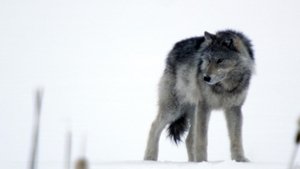
In the heart of the Canadian wilderness, Jeff and Sue Turner spent two years documenting the primal clashes between wild buffalo and gray wolves. Their film captures the dramatic rituals of these ancient adversaries, unfolding against the s…
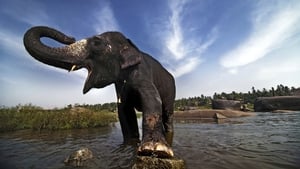
The text explores the lives of mahouts in southern India, those who possess the remarkable skill to tame and train wild elephants. It follows them on journeys north, where they intervene to halt herds of elephants that are devastating crops…
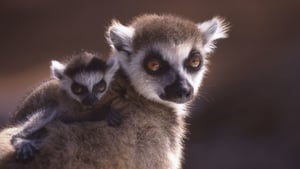
Within the thorny forests of Madagascar dwell troops of ring-tailed lemurs, the island's most captivating and sociable primates. This film chronicles the journey of five young lemurs as they navigate life. Through an unprecedentedly intimat…

Stories of canine devotion to people, particularly those depicting dogs locating avalanche victims, enrich the experiences of incarcerated individuals and provide a form of solace for seriously ill children. Furthermore, dogs are employed t…
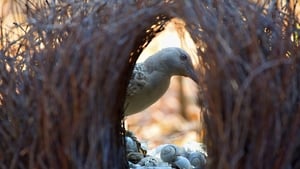
The bowerbird, a remarkable architect of the Australian rainforest, constructs intricate bowers from sticks as a lure for a mate. The film also features the spiny echidna, which subsists on termite mounds; a vibrant blue crayfish; and the p…
"Spirits of the Jaguar," presented in four parts, delves into the intertwined histories of Central America and the Caribbean—both human and ecological. The first part examines the region's diverse flora and fauna, tracing its origins back t…
The second part of "Spirits of the Jaguar" journeys to the "Forests of the Maya," a region where, 1200 years ago, an exceptional civilization flourished within the Central American jungles. The narrative encompasses Mayan ruins, exotic crea…
In the third part of "Spirits of the Jaguar," the narrative traces the development of the Taino people. These were the original inhabitants of the Caribbean, present there approximately two thousand years ago. Their culture and existence we…
The final segment of "Spirits of the Jaguar" recounts the history of the Aztec empire, a civilization that in the 1500s dominated much of modern-day Mexico, its reach extending from the Atlantic to the Pacific. The program features images o…