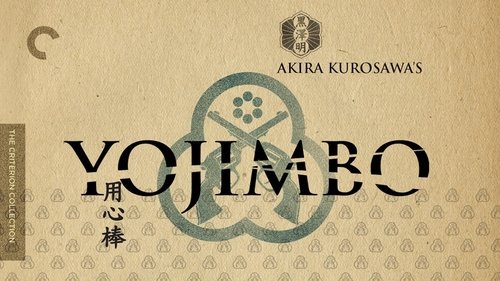





Akira Kurosawa’s YOJIMBO, released in 1961, is a Japanese historical drama that demonstrates how cleverness can be just as valuable as skill with a sword. The story unfolds during the late Edo period—several years before its conclusion in 1868—in a town troubled by two rival gangs who have established a criminal enterprise centered around prostitution and gambling. Even those in positions of authority are accepting bribes. A nameless samurai (played by Toshiro Mifune) then arrives on the scene. After witnessing his swordsmanship, both sides attempt to enlist his services, but he chooses instead to manipulate them against each other while liberating the town’s innocent residents from their control. In Kurosawa's earlier movies, he often utilized Mifune's talent for exaggerated expressions of laughter and fear. However, in this film, the samurai maintains a stoic demeanor, with the criminal bosses and corrupt officials providing the comic relief. Ikio Sawamura portrays a town constable who constantly tries to please the gangsters, while Isuzu Yamada delivers a memorable performance as a brothel owner with a sharp tongue. Following a trend established in Japanese historical dramas, the numerous henchmen within the gangs appear to have been selected for their unusual appearances—each sporting distinctive and worn clothing—and one of these thugs is portrayed by an actor who has gigantism. The film combines dark humor with intense violence. Although audiences may have found it shocking in 1961 to see the samurai defeat his enemies using realistic sword sounds and depictions of injuries, there are only a few fight scenes, and they conclude quickly. One notable aspect of Mifune’s acting is how rapidly he executes his sword techniques. While Kurosawa clearly enjoys showing the criminals receiving their punishment, he avoids dwelling on graphic displays of blood. It has been frequently noted that this Japanese film served as an inspiration for Western films produced in America and Europe (Sergio Leone's A FISTFUL OF DOLLARS being a direct remake). However, it’s also interesting to observe how the film incorporates influences from Western culture. Kurosawa drew his initial concept from an American crime story by Dashiell Hammett; the samurai’s walk down the main street is reminiscent of John Ford's films and others; the musical score blends Japanese music with Western instruments like the harpsichord; and Tatsuya Nakadai’s appearance seems to be inspired by Hollywood actors. Overall, I was very impressed by this film. Every element—from the writing and visual style to smaller details such as the wind, dust, and set decorations—suggests a great deal of care and skill, all working together to create an impact on the viewer. Like Kurosawa’s RASHOMON, it remains engaging even after its components have been repeatedly borrowed by other film and television projects over the past fifty years.
On September 24, 2026
#3525▲ 255
3525th by Pulse movie online48.9PULSEPulse MeterOur daily Pulse Meter measures public activity and popularity signals across the web.How it works →