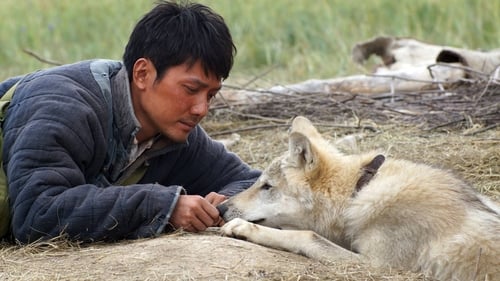




The story explores a point where human actions and the natural world intersect. This semi-biographical adventure drama from China was directed by a French filmmaker known for 'Seven Years in Tibet'. He was chosen because many Chinese filmmakers declined the project due to its demanding nature. The film highlights what happens when the cultures of Mongols and Han people clash with the environment. It had the potential to be as good as 'Siberia Monamour', but some elements held it back. The narrative resembles 'Embrace of the Serpent', centering on a person who travels to a remote location with one purpose, only to discover something else—particularly appreciating the value of native people and their land and traditions. The main character is reminiscent of Brad Pitt's role in 'Seven Years in Tibet' and proves quite inspiring. True understanding isn’t gained from observing from a distance; you must immerse yourself and connect with a place to truly learn about it, needing to experience things through the eyes of those who live there to understand its true nature. The story begins in the late 1960s during China's Cultural Revolution. Two young students from Beijing are sent to a remote area of Inner Mongolia to teach local people how to read and write. However, one student becomes fascinated by wolves and decides to study them by raising a cub. During that time, the conflict between wolves and human expansion into their habitat determines the future of the grasslands. The ultimate confrontation concludes with an emotional impact. As one character observes, "The problem for us Mongols is that our history wasn't written by us, but mostly by our enemies." When you are not a part of a place, it’s best to avoid interfering with its natural order. China's history reveals a pattern of land acquisition, whether the current South China Sea dispute or the situation in Tibet and countless other instances. This is a film produced within China that exposes these wrongdoings. It demonstrates how different Mongolian culture, especially nomadic traditions, are from those of the Han-Chinese—they view nature with differing intentions. Imposing one group's rule on another doesn’t work, which is the central message of the film. It’s disappointing that the film wasn’t more realistic given its basis in a true story. The visuals were strong, especially the locations, which were used effectively to tell the narrative. However, the animal behaviors seemed unrealistic, like something out of a children's story. There is also evidence that animals were harmed during filming, creating discomfort in several scenes and making it unsuitable for children who are very fond of animals. The film’s rating doesn’t reflect this aspect. If you prefer lighter fare, you should probably avoid it because, although the violence isn’t explicitly shown—it's sometimes graphics or makeup—you will still feel the pain; it is a disturbing movie. There were moments where I felt sadness for what Mongols regret regarding allowing the Han people to inflict harm on their land, despite having once held a position of greater power. The film concludes on an optimistic note, thanks to changes made to the screenplay from the original, controversial book. It was initially selected to represent China at the Oscars but was quickly replaced to prevent international embarrassment. I don’t believe the film is terrible, but straying from the source material was a problem. It's difficult to recommend; it may upset you for various reasons, so choose carefully. 6/10
On September 24, 2026
#14005▼ 1630
14005th by Pulse movie online23.2PULSEPulse MeterOur daily Pulse Meter measures public activity and popularity signals across the web.How it works →