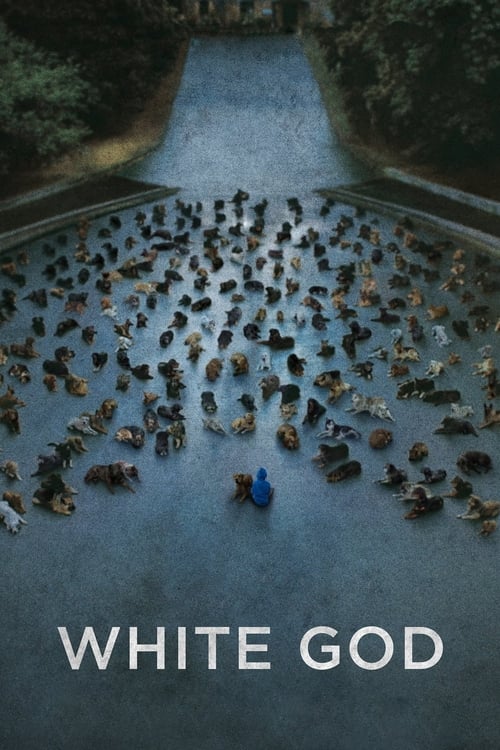





This film presented a challenge, as it’s not universally accessible or enjoyable. With readily available computer graphics these days, it's unusual to see practical effects still being employed in filmmaking. It must have been difficult coordinating so many dogs during filming, but I don’t think there’s much significant CGI beyond the bluescreen work. If you decide to watch this movie, hopefully this review will offer some insight; be warned, it may contain spoilers of an undefined magnitude. Hungary's submission for last year’s Oscars tells the story of Lili, a young aspiring musician, and her mixed-breed dog Hagen. When circumstances separate them, they each embark on individual journeys. The girl rebels against her father, while the dog distances himself from human society, like a piece of metal pulled away from a magnet. Will they reunite? That’s what unfolds in the film's impressive second half. This dark fantasy (or perhaps dark comedy) feels reminiscent of older films—the black-and-white monster movies similar to 'King Kong,' where animals possess human-like thought and action, but it isn’t a fairytale or science fiction. Sci-fi relies on theoretical possibilities and animal psychology, while fairytales involve magic. This film occupies a space between those genres, likely an adult fantasy tale. Comparing it to ‘The Birds’ doesn't quite work, because the birds’ behaviors were never explained; however, 'Conquest of the Planet of the Apes' is closest in concept, and Hagen can be compared to Caesar. My thoughts turned to last year’s screenplay ‘Lucy,’ as I found a parallel between the two films. The film centers on dogs, yet the title is oddly pronounced “God.” My interpretation is that Hagen was given cocaine (a white powder), similar to the substance in 'Lucy,' which triggered a change in his personality. This explains how the "White God" came about and sets the stage for a story of revenge, leadership, and ultimately, revolution. > "It's hard to lose someone you love. > Things don't work out the way we imagined." Off record: Most people know that dogs are descended from wolves, but they’ve lost much of their freedom compared to centuries ago when they roamed freely in human settlements. Today, every dog needs an owner or faces being put down rather than being kept and fed indefinitely in a shelter. I think this film suggests the dogs suffer more than apes do and deserve a revolution. The movie highlights animal abuse and explores what would happen if animals took over. It’s one of the strangest films I've seen this year, but it is also unique and worthwhile. Anyone who has owned a dog will recognize their adorableness, even in violent scenes—they often appear to be simply playing; however, that may not be the case for children or those unfamiliar with dogs. Every scene featuring dogs was cleverly filmed, and the results are very convincing. I understand the filmmakers used two brothers to portray Hagen, and they were both excellent, as good as any of the human actors. Approximately 250 mixed-breed stray dogs participated in the film's production, and most were adopted afterward. I believe it’s a good movie, but some people may struggle with its unusual theme. It won several awards at Cannes, including one for Hagen's performance. To achieve international recognition, the Hungarian film industry should learn from this success and consider making a sequel with a larger cast. Experimental films like this are increasingly welcomed by audiences worldwide. A compelling story with striking visuals and dialogue could draw attention to Eastern Europe. I recommend it, but don’t expect a Hollywood-style production; it forged its own path to create an enjoyable film. 8/10
On September 26, 2026
#7939
7939th by Pulse movie online30.1PULSEPulse MeterOur daily Pulse Meter measures public activity and popularity signals across the web.How it works →