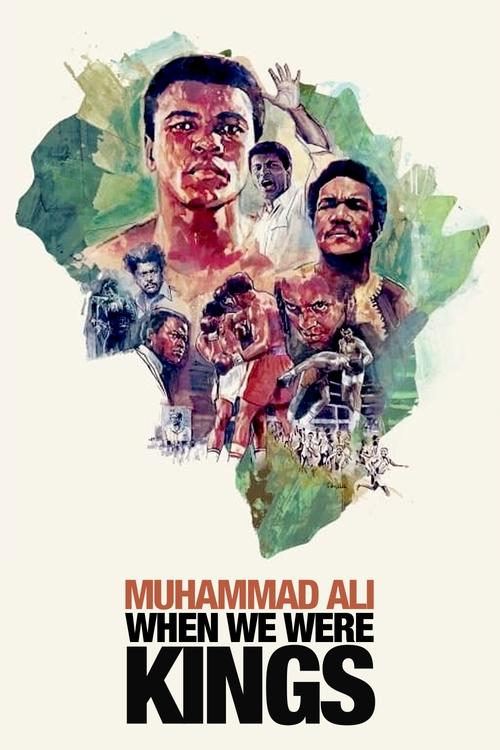





The heavyweight championship fight between Muhammad Ali and George Foreman in Zaire on October 30, 1974—dubbed “The Rumble in the Jungle”—stands among the most significant sporting events of the century, also holding cultural and political importance. Planeloads of performers were flown into Kinshasa for an event likened to "African Woodstock," alongside TV crews, Howard Cosell leading a group of international sports journalists, celebrity observers like Norman Mailer and George Plimpton, and the two fighters: Ali, still controversial due to his conscientious objector stance, and Foreman, now known for his friendly commercials but then perceived as intimidating. Ali told reporters, “I'm young, I'm handsome, I'm fast, I'm strong, and I can't be beat.” Few believed him. Foreman had defeated George Frazier, who himself had previously beaten Ali. Foreman was younger, larger, and possessed a powerful punch that Mailer recalled left a depression in a punching bag after use. Ali was 33 and considered past his prime; the odds were stacked against him at 7-1. Zaire at the time desperately needed foreign currency and an improved image. Under Mobutu Sese Seko, described by Mailer as “the archetype of a closet sadist,” the former Belgian Congo had become a repressive police state; rumors circulated that the newly built stadium contained political prisoners in its underground chambers. Fight promoter Don King secured the fight for Mobutu and raised $5 million for each fighter. The "African Woodstock," featuring performers like B.B. King, James Brown, and Miriam Makeba, was intended to help cover those costs. For Ali, the fight represented a chance to address criticism he'd received in America for refusing military service. Foreman’s situation was more complex; he noted that the intense support for Ali was so great that people were surprised to see him, a Black man, arrive as well. He questioned why there was such animosity towards him. Leon Gast’s “When We Were Kings,” now an Oscar-nominated film, is a remarkable record of a past event; the original footage remained unseen for years due to legal and financial issues. Spike Lee, along with Mailer and Plimpton, offers commentary on the 1974 footage, pointing out that many young people today are unaware of Ali’s immense fame and importance. Ali once remarked that when he flew in an airplane, he felt like he was the only person everyone below could identify. He insisted it wasn't boasting to state a simple truth. The film initially started as a concert documentary before Foreman suffered an eye injury, delaying the fight. The concert proceeded, with fighters, their teams, and journalists waiting for the main event. Few anticipated Ali’s victory—perhaps even Ali himself, who seemed introspective in some private moments, though publicly he predicted success. How could he possibly win? Hadn't his prime years ended because of his refusal to fight in Vietnam ("I ain't got no quarrel with the Viet Cong")? Wasn't Foreman bigger, faster, and stronger? History remembers Ali’s “Rope-a-Dope” strategy—simply enduring Foreman’s attacks until the eighth round when Foreman was exhausted, allowing Ali to unleash a flurry of punches that ended the fight. However, was this truly a planned strategy? "When We Were Kings" suggests Ali struggled in the first round and adopted the Rope-a-Dope almost by chance. He may have believed he was in better shape than Foreman and could outlast him if he remained standing. Regardless, few in Zaire that night—even Cosell—thought Ali had a chance; his unexpected triumph became part of his legend. “When We Were Kings” reveals both Ali’s public persona and private determination. As heavyweight champion during the Vietnam War, he could have easily avoided combat by performing at military bases. Despite being labeled a coward and draft dodger, it likely took greater courage to follow his chosen path. Yet, he remained remarkably cheerful and willing to be playful, poetic, an activist, as well as a fighter. Watching the film now evokes mixed emotions; we compare the younger Ali with the aging legend and consider how this fight may have contributed to the physical decline that followed. It’s also interesting to see the young Foreman alongside today’s beloved figure—he too has matured considerably. When the movie was made, these changes were still in the future; a palpable tension exists as the two men enter the ring, even though we know the outcome.
On September 29, 2026
#17998▼ 3691
17998th by Pulse movie online2.7PULSEPulse MeterOur daily Pulse Meter measures public activity and popularity signals across the web.How it works →














