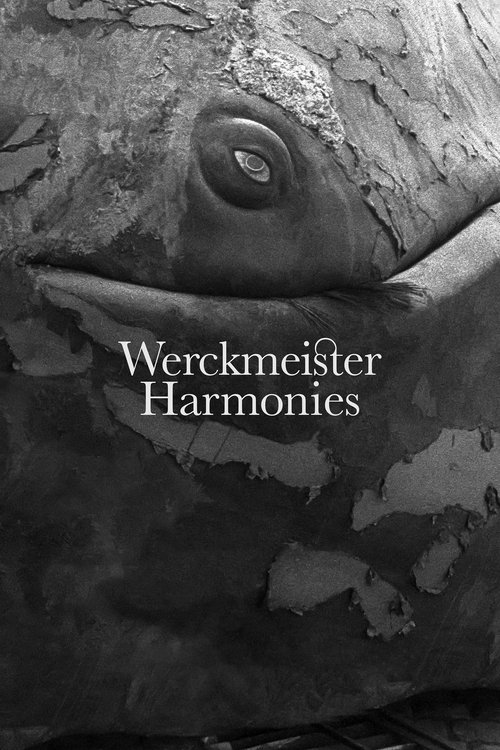




Béla Tarr’s 2000 film *The Werckmeister Harmonies* centers on unsettling occurrences within a small community located on Hungary's eastern plains. The movie begins with a scene where János, a man of limited intellect, shows a group of inebriated patrons how the Earth and moon orbit the sun, using three elderly men to illustrate his point. Afterward, he continues his route early that morning. Announcements posted around town herald the arrival of an enormous whale accompanied by a Prince. This traveling spectacle, however, doesn’t inspire excitement among the residents; rather, it generates anxiety. When the Prince finally arrives, chaos erupts. Adapted from László Krasznahorkai's novel *The Melancholy of Resistance*, the film’s storyline functions as an obvious symbolic representation of Hungary during the 1930s and 40s: a nation struggling to maintain stability and susceptible to the persuasive tactics of fascism, which ultimately led to its lengthy period under Soviet control. Tarr has remarked in a peculiar way that he isn't presenting us with a historical allegory. I can only assume this means he’s transforming the allegory into a parable, employing a reference to mid-20th century Hungary as a method for investigating broader themes. A key conflict within the film seems to be between a natural system—one of joyful collaboration among individuals who are free—and a system imposed by someone in authority who is manipulating things. I won’t reveal any specific events, but Tarr's portrayal of an unrestrained crowd is disturbing. I was deeply affected by this movie during my initial viewing, and subsequent viewings have revealed many worthwhile details. Nevertheless, I believe the film suffers because of Tarr’s choice to cast German actors in two primary roles. Lars Rudolph, portraying János, and Hanna Schygulla, who embodies the ominous "auntie Tünde," deliver powerful performances physically, but they were apparently speaking in German during filming, and their dialogue was awkwardly dubbed into Hungarian; there is no matching of their lip movements with the voices.
On September 26, 2026
#4542
4542nd by Pulse movie online36.1PULSEPulse MeterOur daily Pulse Meter measures public activity and popularity signals across the web.How it works →