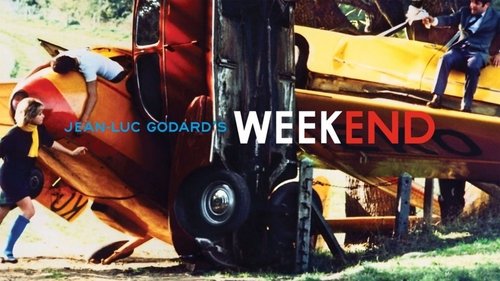





As Jean-Luc Godard continued his career in the 1960s, he maintained a distinctive, experimental style that had established him as a key figure in the French New Wave. However, his work increasingly reflected a growing awareness of political issues, particularly concerning the rise of consumerism during that decade. He believed that those with wealth were becoming excessively self-serving, and felt it was unfair for others to passively accept this situation. Godard seemed convinced that society was on the verge of collapse, and his 1967 film *Weekend* presents a bizarre vision of just such a breakdown, all within an hour and forty-five minutes. This isn’t a good place to start with Godard; those unfamiliar with his films should first watch *Breathless* or *Le Mépris*. However, it serves as a remarkable culmination of his work from the previous decade, after which he largely withdrew from filmmaking to focus on more overtly political projects alongside Jean-Pierre Gorin under the banner of the Dziga Vertov collective. The film follows Roland (Jean Yanne) and Corinne (Mireille Darc), a married couple traveling from Paris to visit Corinne's parents, whose father is dying, so they can secure their inheritance. Their relationship with her parents is purely motivated by money, and both Roland and Corinne are having affairs, each planning to abandon the other once they’ve found someone new. As they drive, it appears that civilization has disintegrated: people erupt into violent arguments over trivial matters, traffic outside of Paris becomes a chaotic gridlock of honking and shouting, and the roadside is littered with wrecked cars and their victims. *Weekend* offers a stark portrayal of human failings, comparable to Dante’s *Inferno*. Even when Corinne and Roland encounter a group of idealistic hippies who oppose the capitalist system, they display considerable cruelty. Godard demonstrated remarkable foresight: not only did he film this before the events of May 1968, seemingly predicting a youth revolt, but he also anticipated that these young people would perpetuate the same flaws as the society they were trying to overthrow. Visually, *Weekend* is striking, reminiscent of the pop art aesthetic prevalent in Godard’s other color films from this era. Godard and cinematographer Raoul Coutard had a keen eye for color, particularly red, white, and blue—the colors of the French flag—but all the hues are bold and vibrant. The film includes several impressive long tracking shots, such as the extended traffic jam sequence. There’s an undeniable poetry to these images; I found myself deeply moved by a scene featuring a pianist playing a Mozart suite for a group of farmers in a barnyard, while Anne Wiazemsky (in a silent role) approaches to listen—a moment that resonated with me just as powerfully as anything from Tarkovsky. By this point in his career, Godard’s films assumed an audience familiar with intellectual and literary traditions, people who were aware of contemporary political debates and those stretching back to the 18th century. Consequently, while Corinne and Roland are lost near their eventual car crash, they encounter Saint-Just from the French Revolution (played in one of two amusing roles by Jean-Pierre Léaud), who recites passages from his writings while dressed in period clothing. They also meet Tom Thumb and Emily Brontë. Near the film’s climax, two representatives from the Third World—African and Arab sanitation workers whom our protagonists hitch a ride with—recite a lengthy excerpt of revolutionary Marxist text. One scene, where Corinne recounts a sexual encounter to her lover, is a parody of Ingmar Bergman's *Persona*. Criterion’s re-release of *Weekend* on Blu-ray is very welcome. The pop art visuals characteristic of Godard’s 1960s color films are rendered more vividly in this higher resolution format than they were on previous DVD releases. Criterion’s supplementary materials are also enjoyable and informative, including a twenty-minute visual essay by Kent Jones that explains many of the film's references and provides context about Godard’s life at the time. There are interviews with the main actors from French television recorded shortly before the film’s 1968 release; they express their appreciation for working with Godard, although it seems they hadn’t seen the finished product and might have been shocked by its anarchic pace and political messaging. "Making of" featurettes include recent interviews with cinematographer Raoul Coutard and assistant director Claude Miller.
On September 23, 2026
#17717▼ 2634
17717th by Pulse movie online26.3PULSEPulse MeterOur daily Pulse Meter measures public activity and popularity signals across the web.How it works →