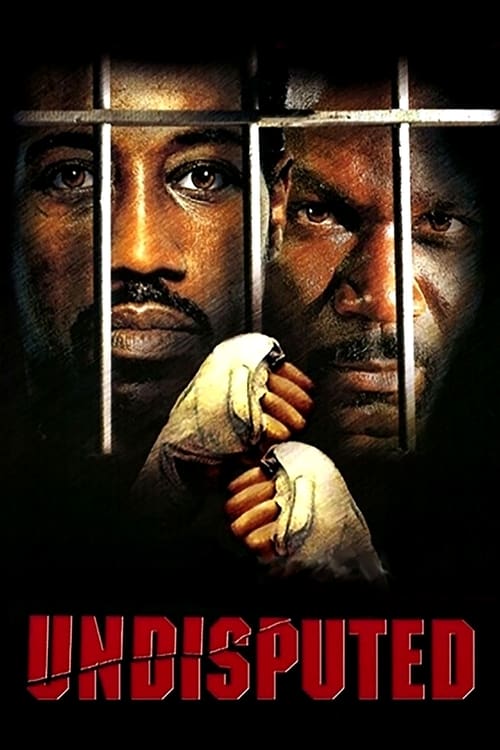





It’s disappointing that a strong film could have been made with an impressive cast including Wesley Snipes, Ving Rhames, Michael Rooker, Wes Studi, and Peter Falk; however, *Undisputed* doesn’t achieve this potential, and the responsibility lies with writer/producer/director Walter Hill. The movie initially seems to offer something more intelligent than the typical prison film. Instead of the usual staged fights or battles leading to a prisoner's freedom through a tournament-style progression, it presents an officially sanctioned, inter-prison boxing program. Sadly, *Undisputed* manages to sidestep these familiar clichés only to fall into the trap of something resembling *The Thunderdome*. Rather than a standard ring with ropes, the fights take place in a large, roofless cage surrounded by barbed wire—but the reason for this is unclear. Why establish the legality of the premise just to make the event look like a brutal Texas Death Match? George “The Iceman” Chambers (Rhames), a disgraced heavyweight champion, is convicted of rape and sentenced to 6-8 years in Sweetwater maximum security prison in California. Upon asking his cellmate Mingo (Studi) about his own situation, Chambers receives the reply that «it's not considered polite to ask why we're here. Kinda violation of the ethics. You know, the code?» I’m unsure what code he means, because it would imply that every prison movie where a character asks another about their crimes is breaking some unspoken rule. Mingo is correct; there’s no need to inquire when Hill includes captions detailing the backgrounds and offenses of every character—even those with minor roles. Why does the audience need to know that the announcer/commentator, Marvin, is a con artist convicted of larceny in 1995? Elderly mobster and boxing fan Mendy Ripstein (Falk) becomes determined to arrange a fight between Chambers and Sweetwater’s state champion Monroe Hutchens (Snipes), supposedly so he can "pull in a million dollars in bets from guards and inmates" (the film states the potential is for multiple millions; either way, that's a significant sum of money). Ripstein’s caretaker, Chuy (Jon Seda), mentions, “I talked to the head guard [Rooker]. He agrees. But the warden [Dennis Arndt] is a problem.” The issue appears to be the warden’s inability to make up his mind; he initially allows the fight as long as it occurs during his vacation, then cancels it, and finally approves it. He's not alone in his indecision; Ripstein first wants bare-knuckle fighting, but after someone objects, he quickly decides that gloves are preferable—so why bring up the idea at all? I can see why Falk was cast, but his involvement feels unnecessary given how easily Burt Young could have handled the part. Rooker and Studi, meanwhile, are given underdeveloped roles—which is strange considering that a sadistic, racist guard (Rooker) and a mystical mentor (Studi) practically write themselves; even these familiar character types would be preferable to what they receive. That leaves Snipes, who does his best with the role of a Zen Warrior (though he spends much of the film in solitary confinement), and Rhames, who has the most compelling character and makes the most of it—a man struggling between the desire to regain his freedom and career by behaving as a "model prisoner," and his compulsion to be respected and feared through violence. Unfortunately, the details surrounding Chambers’s rape conviction remain vague. He is presented as the antagonist, and Rhames delivers such a convincing portrayal of villainy that it's difficult to believe his claims of innocence. Therefore, either Chambers is innocent in this regard but generally a terrible person, or he is guilty and manages to avoid consequences because, in exchange for fighting Monroe, Ripstein uses his influence to secure Chambers’s release on "special parole." It’s puzzling that someone with such obvious power wouldn't use it for their own benefit. We are meant to believe that the humiliation of losing to Monroe constitutes sufficient punishment; Chuy narrates at the end that “The Iceman and his manager denied that the fight with Monroe ever happened and the story that he lost was just a big rumour.” Why would they deny it, though? It’s their word against the testimony of 700 inmates and prison staff, not to mention, as Marvin points out, “our friends from Las Vegas, here to witness this competition and report to various cities across our great country. A lot of bookmakers want to know what's coming."
On September 25, 2026
#4012▲ 5898
4012th by Pulse movie online45.1PULSEPulse MeterOur daily Pulse Meter measures public activity and popularity signals across the web.How it works →