





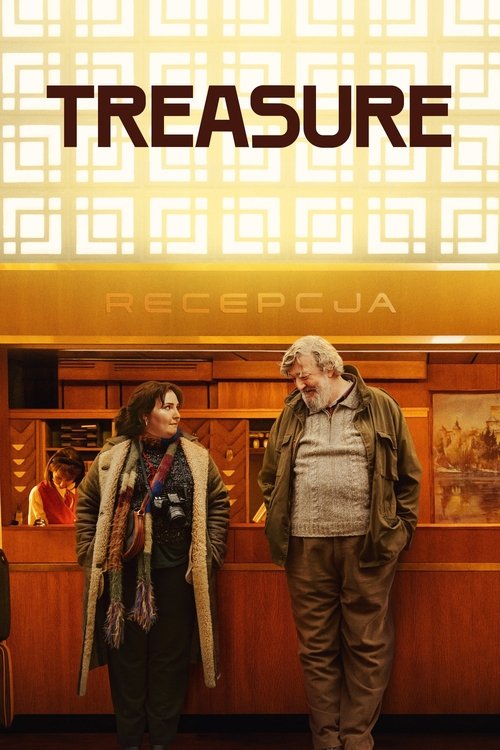
The American journalist Ruth, portrayed by Lena Dunham, had been looking forward to traveling from the United States to Poland and visiting the home of her ancestors; however, her lively father, Edek, played by Stephen Fry, unexpectedly decided to accompany her. He’s someone who speaks easily and possesses a somewhat irritating enthusiasm as they begin touring popular destinations, but that isn't really what she desires. Her goal is to reach their family estate in Łódź, where they had been a thriving industrial family before the Nazis seized their assets and property and sent Edek and his wife to Auschwitz. It’s apparent that her father isn’t thrilled with this plan, nor does he enjoy traveling by train—and the rest of the film follows them on a familial journey that will broaden Ruth's understanding while stirring up painful memories for her father. The movie makes a decent attempt at injecting some humor into what is fundamentally an emotional subject, particularly when their trip eventually leads them to his former prison, where he’s confronted with a rush of recollections and a powerful need to shield himself from the trauma of reliving that experience. Fry occasionally pushes the accent too far, but he does manage to convey something about the terrible experiences he endured and how his mind tries to block out revisiting those memories. Dunham also performs adequately as his self-sufficient daughter, providing support for his increasingly troubled portrayal. It's a rather touching drama that prompts us—especially with the 80th anniversary of D-Day still recent—to consider the atrocities inflicted upon the Polish people by the Nazis and to recognize that, in many instances (the story is set in 1991), their homes and businesses remained largely as they had been left in 1941—though now run down and occupied by impoverished families. I appreciated the ending; it raises a rather compelling question about what one might do under similar circumstances. While it may not necessarily require a theatrical release, the cinematography at that now-silent extermination camp remains deeply disturbing.
On September 20, 2026
#29328▼ 8764
29328th by Pulse movie online17.7PULSEPulse MeterOur daily Pulse Meter measures public activity and popularity signals across the web.How it works →