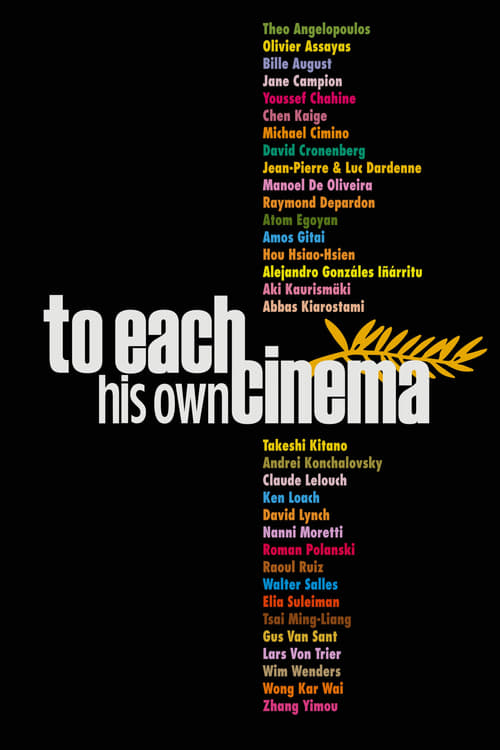




TO EACH HIS OWN CINEMA is a 2007 compilation featuring thirty-six directors from around the world, each contributing three-minute shorts exploring their personal perspectives on cinema. Filmmakers often incorporate references to classic films into their work, but in this collection, many of the shorts are actually set inside cinemas, depicting audiences seated and watching. A solid understanding of art house cinema is helpful for appreciating this project. It's interesting to observe how frequently French New Wave films appear in the background of these stories, regardless of the directors’ origins. The compilation begins with Raymond Depardon’s "Open-Air Cinema," showing Egyptians viewing a film outdoors in Alexandria; despite the unconventional narrative and women wearing veils, they seem relatable. Zhang Yimou later presents a similar scene in a Chinese village. One striking aspect is the recurrence of shared concepts. Several stories involve thieves targeting purses within darkened cinemas. Others focus on blindness and how individuals experience cinema without sight. Many reflect on childhood memories or earlier periods in life. Hou Hsiao-Hsien’s short recreates 1950s Taiwan with detailed sets to portray a typical trip to the movies during his youth. Amos Gitai's contribution contrasts viewers of Yiddish films from the 1930s—a vibrant tradition lost due to the Holocaust—with a contemporary Israeli audience experiencing wartime, and Youssef Chahine recalls his first visit to Cannes forty-seven years prior. Certain shorts tackle serious political issues: Amos Gitai addresses Israeli-Arab relations, David Cronenberg explores anti-Semitism, and Bille August examines Danish–immigrant relationships. However, there are also several humorous entries, such as Takeshi Kitano’s short, where a man's opportunity to relax by watching a movie is repeatedly disrupted by projector malfunctions. In Lars von Trier's segment, Jacques Franz portrays an irritating businessman boasting about his success, although the subsequent extreme gore and violence create a darkly comedic effect. Elia Suleiman’s contribution utilizes physical comedy reminiscent of Buster Keaton in a modern setting. Some shorts echo established aesthetic patterns from the directors’ previous films. Kaurismäki's short maintains his characteristic style—a seemingly contemporary setting paired with 1950s rock music and stoic working-class characters. Abbas Kiarostami's "Where is My Romeo?" builds upon his experimental film SHIRIN, which showcased numerous women’s faces as they viewed an Iranian love story; here, the focus shifts to these same women watching “Romeo and Juliet.” Overall, this was a consistently captivating experience; the two-hour running time passed quickly. Almost all of the shorts were enjoyable, with Jane Campion's unusual short—featuring an adult woman portraying an insect that bothers a projectionist—and Gus Van Sant’s film depicting a teenager entering the projected movie being the only exceptions in my view. Nothing here feels like an essential classic, but if you appreciate some of these directors’ work, you are likely to find this collection rewarding.
On October 3, 2026
#27796
27796th by Pulse movie online2.2PULSEPulse MeterOur daily Pulse Meter measures public activity and popularity signals across the web.How it works →