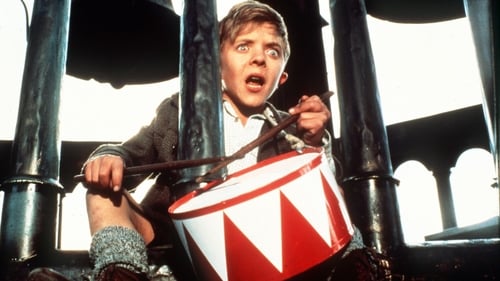





This film succeeds thanks to David Bennent’s portrayal of the central character. Oskar is a young man living in Germany during World War II who stopped growing after an incident when he was three years old, intentionally injuring himself to halt his development. His refusal to grow and holding onto his drum seems like a clear representation of resisting the Nazi regime, which becomes even more apparent when he finally decides to mature and release the drum following the Nazis' defeat. The Tin Drum is adapted from a well-known novel by German author Gunter Grass. Director Volker Schlöndorff brings it to life with impressive artistry and clever humor. Created in 1979, during a period of renewed activity in German filmmaking, this movie mocks the Nazi regime while also presenting an unforgettable and often humorous narrative. The story begins in the late 1800s when Oskar’s grandmother helps his grandfather escape from German soldiers by hiding him beneath her clothing. It's also where Oskar's mother Agnes (Angela Winkler) is conceived. Agnes experiences growing up during World War I and marries a man named Alfred Matzerath (Mario Adorf). She then begins an affair with her cousin Jan Bronski, while Oskar gradually becomes aware of their relationship. David Bennent’s performance as Oskar is truly remarkable. He was approximately 12 years old when filming, portraying Oskar from childhood into his twenties. Though Oskar's physical appearance remains unchanged, we witness his aging through Bennent’s acting; his movements evolve and he begins to mature and learn about the world around him. Bennent conveys the character with a striking degree of realism and intellectual depth. The Tin Drum brought to mind one of my favorite films, Forrest Gump. Both movies feature main characters who have physical and mental limitations, and both offer an engaging life story. They also unfold against the backdrop of significant historical events, with each protagonist becoming involved in them. While The Tin Drum isn’t quite as impactful as Forrest Gump, it still managed to fascinate and engage me from start to finish. The Tin Drum includes some disturbing scenes. One example is when a fisherman uses a dead horse's head as bait for eels, pulling them out one by one while Agnes reacts with disgust. However, the film also has moments of genuine happiness; I especially liked the sequence where Oskar’s drumming influences a band to change their music from a German march to Strauss’ The Blue Danube. A Nazi officer expresses his displeasure, but the crowd comes together and dances. I appreciate films that are smart and satirical. I found myself laughing out loud several times throughout this movie and enjoyed its rich storyline. It explores numerous themes, including warfare, infidelity, and religion. Some viewers might find it a bit lengthy at 140 minutes, but in my opinion, no good film is too long. The Tin Drum features stunning visuals supported by exceptional acting.
On September 24, 2026
#5825▼ 125
5825th by Pulse movie online44.5PULSEPulse MeterOur daily Pulse Meter measures public activity and popularity signals across the web.How it works →














