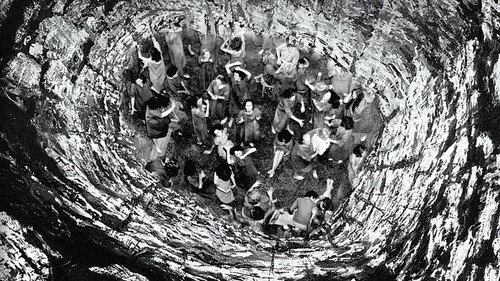





I'll tell you where it's gonna end, Miss Somerville... When there are more sick ones than well ones, the sick ones will lock the well ones up. The Snake Pit was directed by Anatole Litvak and adapted for the screen by Frank Partos, Millen Brand, and Arthur Laurents from a novel by Mary Jane Ward. The film features Olivia de Havilland, Mark Stevens, Leo Genn, Celeste Holm, Glenn Langan, Helen Craig, Leif Erickson, and Beulah Bondi. Alfred Newman composed the music, and Leo Tover was in charge of cinematography. Olivia de Havilland portrays Virginia Stuart Cunningham, and the movie follows her experiences and treatment at Juniper Hill Mental Institution. "It was strange, here I was among all those people, and at the same time I felt as if I were looking at them from some place far away, the whole place seemed to me like a deep hole and the people down in it like strange animals, like... like snakes, and I've been thrown into it... yes... as though... as though I were in a snake pit..." It remains one of the most powerful and significant cinematic depictions of mental illness and its treatment. Supported by an extraordinary performance from de Havilland, Litvak and initially skeptical Darryl F. Zanuck (head of 20th Century Fox) spearheaded an effort to present this subject matter to audiences with a stark sense of realism. It’s frequently disturbing as entertainment, showing Virginia's fractured mind exposed under the pressure of treatments now considered outdated. It is accurate to say that certain aspects of the narrative rely on simplistic motivations and methods, which are a product of the time when the film was created. However, because Litvak and his key collaborators researched the topic extensively, the final result is an impressive combination of dramatic suspense, emotional depth, and glimmers of humanistic hope. As Virginia navigates this complex landscape of psychological turmoil, with flashbacks continually adding layers to her character, Litvak offers a compelling look at life in an asylum and the people who lived there, both as patients and staff. Some scenes are exceptionally well-crafted, whether they expand on the story visually or provide moments of light within a dark setting. One sequence shows Litvak tracking dancing silhouettes on a wall, then pulling back to reveal Virginia in the snake pit; the effect is striking in its beauty. Another scene takes place at a dance for the patients, where a performance of Antonín Dvorák's "Goin' Home" becomes something truly lovely—a unified expression of profound optimism that resonates deeply. Leo Tover’s crisp black and white photography (The Day The Earth Stood Still) is perfectly suited to the material, and Newman’s magnificent score (Wuthering Heights) seems to float through the institution like a ghostly observer. With de Havilland delivering an outstanding performance, it's easy to overlook the excellent work of Genn and Stevens; the former provides a sense of calm authority as Dr. Mark Kik, while the latter subtly portrays Virginia’s husband Robert, creating a character that is easy to support. It needs to be considered within the context of its time, but its impact on future films and awareness of mental health treatments in reality should not be minimized. A superb production that deserves to be seen. 9/10
On September 24, 2026
#16452▲ 3476
16452nd by Pulse movie online27.8PULSEPulse MeterOur daily Pulse Meter measures public activity and popularity signals across the web.How it works →