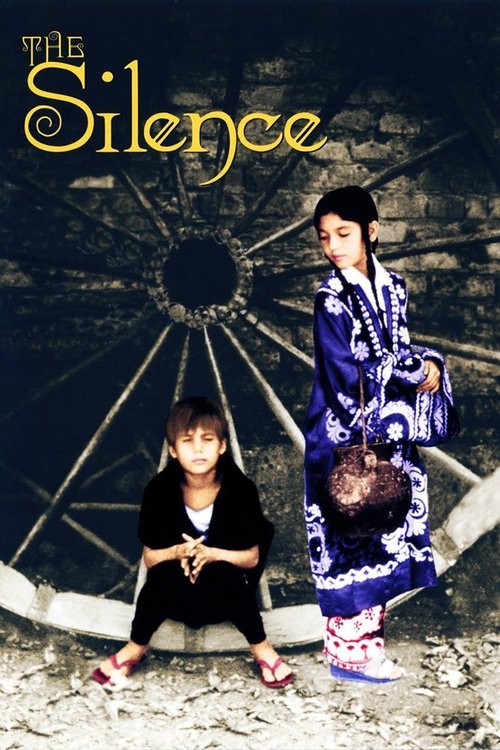




Mohsen Makhmalbaf achieved recognition with several films made in Iran during the Eighties and Nineties. With 1998’s SOKOUT ("Silence"), he chose to film in Tajikistan, a location where the local language is a Persian dialect generally understandable by Iranians, but the culture blends Central Asian and Soviet customs. The story centers on Khorshid (Tahmineh Normatova), a ten-year-old blind boy who works tuning instruments in an instrument maker’s workshop. His mother (Goibibi Ziadolahyeva), having been left by her husband, pressures him to work diligently because their landlord is demanding rent and threatening them with eviction. Khorshid frequently arrives late due to distractions along the way—the sound of music from radios or street performers. Nadereh (Nadereh Abdelahyeva), the instrument maker’s adopted daughter, attempts to keep Khorshid on track. The film carries a mystical element; Khorshid's pursuit of musical beauty represents a spiritual quest. This deeper meaning is presented delicately, and I don’t think viewers unfamiliar with the region will necessarily grasp it. What most international audiences are likely to notice are the striking visuals and soundtrack. Filming outside Iran in a place with relaxed dress codes allows Makhmalbaf to focus on women's faces and the vibrant floral patterns worn by women in Dushabe. He captures a fleeting moment of transition from girlhood to womanhood in Nadereh and another young performer. The film incorporates various Central Asian instruments, along with local folk music; notably, the dramatic opening of Beethoven’s Fifth is featured prominently, connecting this unusual setting to a broader ideal. However, it isn't all idyllic. The children’s innocence is contrasted with the harsh realities of post-Soviet Tajikistan—a nation recovering from civil war and struggling with poverty, child labor, and rising religious fundamentalism. The film has a brief running time of 72 minutes, which some might find unsatisfactory. Also, Makhmalbaf used non-professional actors, and their delivery of lines can feel somewhat stiff. It’s possible this was intentional on the director's part, as that deliberate slowness may have aided comprehension for his Iranian audience. Nevertheless, despite not being a major work of art, it is an appealing film, both visually and musically, and worth seeing for those interested in Central Asian stories (or at least one Iranian filmmaker’s perspective on them).
On September 26, 2026
#113220
113220th by Pulse movie online2.4PULSEPulse MeterOur daily Pulse Meter measures public activity and popularity signals across the web.How it works →