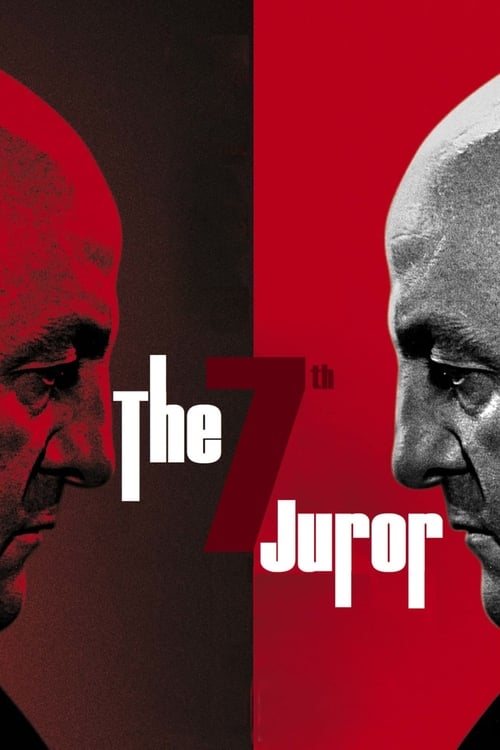




Le septième juré (The 7th Juror) comes from director Georges Lautner and was written by Pierre Laroche and Jacques Robert, based on the Francis Didelot novel. The film features Bernard Blier, Maurice Biraud, Francis Blanche, Danièle Delorme, and Jacques Riberolles; Jean Yatove composed the music, and Maurice Fellous handled the cinematography. The story begins with a shocking incident near Pontarlier. Grégoire Duval (Blier), overwhelmed by a nude woman sunbathing, assaults her and then accidentally kills her when she screams. Attempting to return to his ordinary life, he’s stunned to discover that the victim's boyfriend is being accused of murder based on circumstantial evidence. His surprise deepens when he finds himself selected as a juror for the very trial. Is this the act of a coward or someone driven insane? This French film, Le septième juré, works on several levels and is quite impactful. It functions at times as an exciting legal drama with a court case full of tension, while simultaneously exposing flaws within the justice system. At other points, it offers a critical look at small-town attitudes, class divisions, all presented in a decidedly negative light. First things first: save your own soul. The film is firmly rooted in film noir and creates a detached atmosphere. Lautner begins with an unsettling image of a lone fisherman on a misty lake accompanied by classical music that fits the scene perfectly. It’s clear from this point that viewers are in for some visual and auditory pleasures. Blier provides narration typical of classic noir as the story unfolds through bohemian architecture, smoky jazz clubs, and exclusive bars. The streets are shrouded in darkness at night, while Maurice Fellous' photography uses a muted palette during the day; it’s not a pleasant place to live—unless you belong to the secular bourgeoisie. Even Othello was misunderstood. Other striking visuals also stand out. A confession box scene is exceptionally well-filmed, achieving noir perfection; a tilted mirror used during a significant exchange between a husband and wife shows cleverness, and a sequence involving distorted reflections in a brandy glass is the highlight of the film. Disturbing moments appear intermittently, often showing Duval staring blankly at someone, while the courtroom scenes are chaotic and filled with pain, even escalating to the point where the crime is recreated at the actual murder location. Lautner frequently uses pull-away shots—and they work well. With superb acting, direction, music, and photography, this is another French film that demonstrates how, despite the decline of American film noir in the early 1960s, the French kept its spirit alive throughout the decade. From that initial misty lake scene to the surprising ending highlighted by a brilliant ambulance light sequence, this is truly exceptional cinema. Merry Christmas. 9/10
On October 3, 2026
#85504
85504th by Pulse movie online1.1PULSEPulse MeterOur daily Pulse Meter measures public activity and popularity signals across the web.How it works →