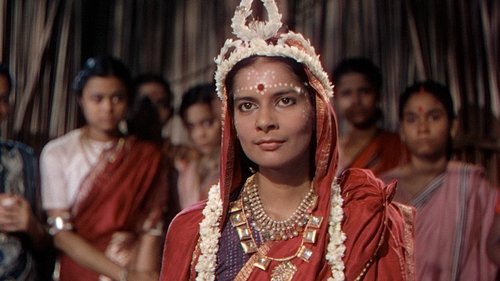





There’s something reminiscent of Rumor Godden's "Black Narcissus" in this beautifully filmed story about three young women whose lives unfold alongside the Ganges river. The narrative is partly told by "Harriet" (Patricia Walters), who leads a comfortable existence near the river with her younger siblings and mother (Nora Swinburne), anticipating their seventh child! Due to their age difference, she often spends time with her friends, "Valerie" (Andrienne Corri) and "Melanie" (Radha). "Melanie’s" background is unique; her father is British, while her mother was local, creating a more complicated situation within a society that wasn't particularly tolerant of relationships across racial lines. The girls generally get along well, appreciating the uncomplicated pleasures of their privileged lives until the arrival of handsome "Uncle John" (Thomas E. Breen), cousin to "Mr. John" (Arthur Shields)—"Melanie’s" father. This visitor bears visible signs of his wartime experiences, including a prosthetic limb, and is struggling psychologically, seeking refuge from reminders of his former abilities. He doesn't anticipate the effect these three girls will have on him. They quickly become fond of him, and as the film progresses, we witness their growing affections and rivalries against a backdrop of a vibrant Hindu community with which they interact very little beyond polite exchanges. As anticipated, the story includes occasional moments of tragedy and adopts what seems like a somewhat detached perspective regarding the worth of human life—particularly when that life isn't white. Mostly though, the narrative appears to deliberately avoid politically or socially sensitive topics as it unfolds. Ultimately, there’s not much real depth to the plot. It’s a visually stunning and aesthetically pleasing portrayal of an idealized world – although it’s not a perfect dream for everyone; even "Harriet" observes the timeless flow of the Ganges as it passes farms, fields, temples, and homes. The film is best experienced on a large screen, and if you can simply accept things as they are, you should be able to appreciate it for what it was when it was written in 1946.
On September 24, 2026
#18204▼ 1690
18204th by Pulse movie online25.8PULSEPulse MeterOur daily Pulse Meter measures public activity and popularity signals across the web.How it works →