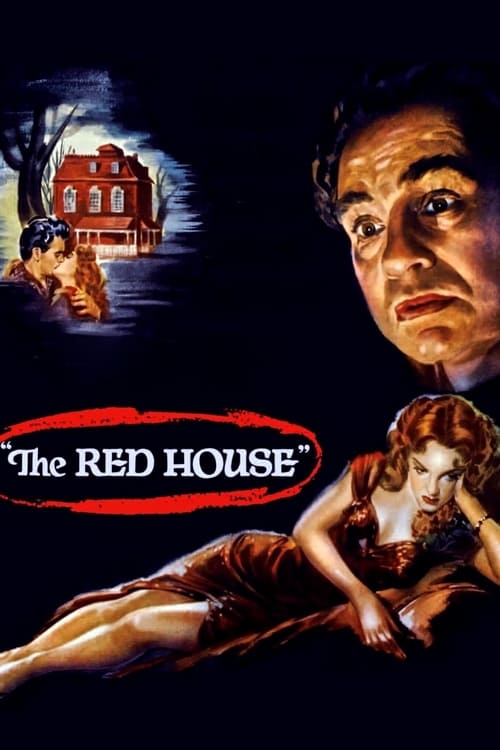





The Red House stands as an early example of rural noir. Many familiar with standard noir might be surprised to discover that so many noir stories unfold outside the usual dark, rainy city alleys. This subgenre has existed since the beginning of noir, starting with films like Among the Living, featuring Albert Dekker emerging from a swamp mansion. It continued with acclaimed movies such as Moonrise and On Dangerous Ground (which at least begins in the urban environment). As Gary notes on NoirWorthWatching, rural noir remains popular. The Red House is well-known, largely because it’s in the public domain and was once included in almost every budget film noir DVD collection. Every compilation seemed to have the same version; it looks as though the movie was salvaged from Edward G. Robinson's car after filming wrapped—a detail that isn't necessarily a drawback. This year, along with other noirs, it’s been re-released on DVD in excellent condition. However, this isn’t the strongest example of rural noir or one of Edward G. Robinson's best film noir performances. Still, it's worth revisiting due to its unusual nature. The teenage characters initially seem miscast; Lon McCallister appears too old for his role. His crow's feet and receding hairline prompted a thought that he should consider financial planning when discussing buying a house with Julie London. His scenes with his mother are unsettling, like something out of a David Lynch film—such as the moment he kisses her on the lips before urging her to enjoy her honeymoon. The script attempts to explain his age by suggesting farm boys spent extended periods in school due to family obligations. London was an inspiration for Jessica Rabbit (along with Rita Hayworth’s Gilda and Veronica Lake's signature hairstyle). Viewers will quickly recognize what aspects inspired the character when London appears nude for a swim scene with McCallister; she dominates every scene she is in. Following this, London shifted her career focus to lounge singing, interspersed with occasional acting roles. The rarely-seen film The 3rd Voice is worth seeking out. Being both an iconic figure and Jack Webb's former spouse qualifies her as film noir royalty. I remember watching her on Emergency! and never understanding why men were so eager to please the older nurse. Interestingly, London secured the role on Emergency! so producer Webb wouldn’t have to pay any more alimony. Allene Roberts plays the adopted daughter of Robinson and Judith Anderson. She possesses a breathy teenage voice common in films of that era—an affectation that can be grating. However, she does a commendable job portraying a troubled young woman coming of age. Anyone who believes the 1940s were an innocent time should watch The Red House. All the women are sexualized; Roberts wears tight sweaters and bullet bras, and she’s considered the “good girl.” Furthermore, Rory Calhoun, a man in his twenties, is pursuing London, who is still a high school-aged girl. (Calhoun is now primarily known due to an odd Simpsons reference.) As for the adult characters, Robinson and Anderson initially seem like husband and wife; they are actually brother and sister—with his sister sacrificing her own life for him. Their daughter turns out not to be their child. The filmmakers cleverly lead viewers to assume certain relationships before revealing a darker truth. Robinson’s best noir roles all occurred around this time, including films such as The Stranger, Scarlet Street, Woman in the Window, Key Largo and Double Indemnity—all released within five years of The Red House. Those are all superior films. He does display his trademark “bug-eyed crazy” acting style reminiscent of his gangster roles like Little Caesar. Anderson’s role is underdeveloped, which is unfortunate. She has one memorable moment when she demands to know if Roberts was touched by her brother. These moments are unsettling but likely not in the way the filmmakers intended. The direction (by Delmer Daves—also director of Dark Passage) feels surprisingly flat, and the music—particularly the romantic, innocent score over the teenagers’ scenes—is so generic that it suggests little thought was put into the soundtrack. The film evokes a sense similar to Blue Velvet—where everyday life is stripped away to reveal disturbing secrets and violence. However, it doesn't quite reach the same level of intensity. It’s still worth watching, and the ending is satisfying. One final note: A flawed print can actually enhance the viewing experience. I found myself enjoying this film more when watching a poor-quality copy; it added to its chilling atmosphere. While the restored DVD version is excellent, it diminishes some of the film's mystery. This applies to other films I’ve seen over the years, such as Key Largo and Foreign Correspondent—the versions I first saw appeared recovered from wreckage, exposed to the elements, processed through a broadcast chain, and transferred to video.
On September 28, 2026
#25114▼ 3233
25114th by Pulse movie online20.2PULSEPulse MeterOur daily Pulse Meter measures public activity and popularity signals across the web.How it works →