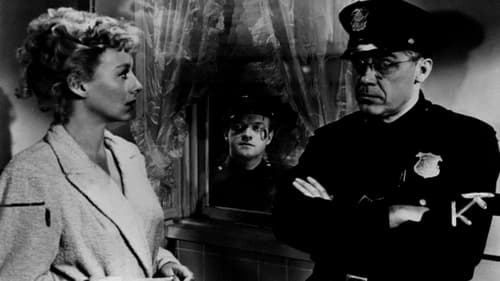




This edgy noir film deserves a far wider audience. Van Heflin portrays Webb Garwood, an unhappy and irritable police officer who’s called to investigate a possible intruder at Susan Gilvray's (Evelyn Keyes) home. From the start, Garwood is attracted to the young and appealing woman, and sensing that her marriage to a late-night radio personality isn't happy, he begins to pursue her, obsessively. This sets in motion a relationship destined for a dark path. The film commences exceptionally well with a sudden change of mood; Susan Gilvray is indulging in some personal care time in her bathroom, seen from the window, appearing content and comfortable. Lively music accompanies this scene, but then in an instant, she notices something outside (it’s the audience, apparently), screams, the music turns unsettling, and she closes the blind. This marks the beginning of Joseph Losey's disturbing film, *The Prowler*. Essentially a two-character story, *The Prowler* cleverly reverses the typical femme fatale trope. Here, the male lead is the one doing the seducing—a police officer no less, with the potential for abuse of power looming heavily over everything, like a "prowler" lurking in your backyard. It’s made clear early on that Garwood is troubled and up to no good; his snarls and shifty smiles signal that poor Susan is threatened by a man who should be protecting her. Yet, strangely, it seems Garwood genuinely does love Susan, but the bitterness within him and his distorted view of the world—and his place in it—have transformed him into a dangerous anti-hero. The filmmakers seem to be wryly observing, without lecturing, the darker side of the American dream, with the social differences between the two characters being an intriguing element of the story. Also noteworthy is the shift from the affluent setting of the Gilvray home during the first portion of the film to the finale set amongst the ghost towns in the Mojave Desert; the desolation of the landscape has rarely been so fitting within a noir context. Technically, *The Prowler* is well-made. Losey's direction is precise and keeps the viewer engaged, while Boris Leven’s art direction is excellent, especially during that initial segment as the bright Gilvray house becomes increasingly shadowed. However, the film truly shines with Heflin, and to a lesser degree, Keyes’ performances. Keyes’ character can be incredibly frustrating; her choices are irritating, and her submission to Garwood initially difficult to accept. But this is a testament to Keyes' skill—her ability to evoke these feelings in the audience demonstrates commendable work. Heflin, though, is in a different category altogether. An actor who was criminally overlooked during his time, Heflin proves here that he could convincingly play a villain, even frighteningly so. His transformation from a meek, almost puppy-like suitor into a scheming scoundrel is handled skillfully and provides film noir with one of its finest anti-heroes. Leading critics like Manny Farber and Wallace Markfield enthusiastically praised the film upon its release. James Ellroy, a master of pulp writing, has stated that it’s one of his favorite films. It's therefore surprising that it wasn't released on DVD until late 2010—a significant oversight, much like the machinations of Webb Garwood. Moody, bleak and corrosive in its storytelling, this is essential viewing for fans of noir and Van Heflin. 9/10
On September 24, 2026
#29117▲ 963
29117th by Pulse movie online17.9PULSEPulse MeterOur daily Pulse Meter measures public activity and popularity signals across the web.How it works →