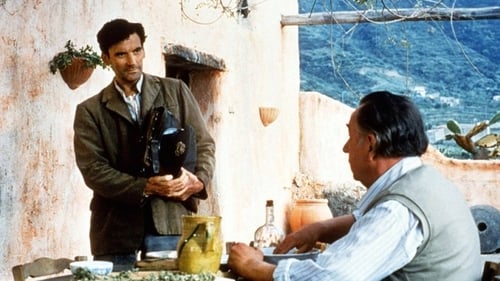




This is a lovely Italian movie. I understand firsthand how difficult it can be for a man to find the right way to express his feelings when he's looking at someone he loves. Any man who’s experienced being in love knows that choosing the perfect moment and words to convey the depth and beauty of those emotions isn’t easy. It becomes even more challenging if you're naturally reserved or inexperienced with matters of the heart—then things really get complicated! The film might suggest otherwise, but you don’t need to be a poet to tell a woman you love her. From my own experiences, it often seems that falling in love transforms us into poets almost by accident. And if inspiration strikes early on, the person we adore can easily fuel the rest of our poetic efforts. That's how poetry is created: through the joys and sorrows experienced by those who write it! The movie explores these ideas by bringing together two characters who wouldn’t normally cross paths: Mario Ruoppolo, a former fisherman turned postman because he suffers from seasickness and struggles to express his feelings for someone he loves; and Pablo Neruda, the renowned Chilean communist poet known for his political writings and romantic poems that won him the Nobel Prize in Literature. The contrast is striking—the simple, unassuming nature of an ordinary man versus the eloquence and charisma of a celebrated public figure. It's hard to say if the common man truly influenced the famous poet, even though the film tries to imply it. Massimo Troisi, who also assisted director Michael Redford, gives a wonderful performance in the lead role, portraying Ruoppolo with a perfect mix of humility, shyness, and curiosity. My only criticism of his acting is that he seems to dim when sharing scenes with Philippe Noiret, who plays Neruda very well. However, it's undeniable that the film’s strongest moments are the conversations and interactions between the two characters. The dialogue itself deserves special recognition for its quality and execution. Renato Scarpa’s performance feels forced because his character is overly focused on politics—as repetitive and tiresome as political speeches often are. If you hear one, you've essentially heard them all. Maria Grazia Cucinotta doesn't have a large part, but her presence is welcome; she is beautiful enough to make any man stop and admire her, much like the women of Italy do thanks to her natural beauty. The film has some technical strengths as well: while the cinematography isn’t particularly memorable and often appears hazy or aged, the scenic beauty of the locations and sets more than makes up for it—with plenty of space, abundant light, sunshine, sea views, stunning outdoor scenes, and truly breathtaking landscapes. The music also deserves praise; not only does it complement the film and each scene perfectly, but it’s beautiful, thoughtfully composed, and lingers in your mind afterward.
On September 23, 2026
#6650▲ 444
6650th by Pulse movie online43.1PULSEPulse MeterOur daily Pulse Meter measures public activity and popularity signals across the web.How it works →