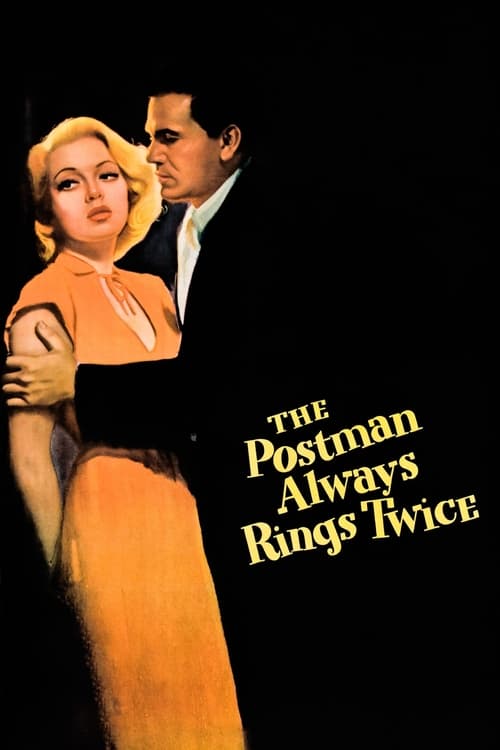




The Postman Always Rings Twice features a remarkably memorable introduction of its characters. John Garfield portrays Frank, a drifter who arrives at a roadside diner on a hot summer day to order food. The owner, Nick, briefly leaves to pump gas, leaving Frank alone. Suddenly, a lipstick mark rolls across the floor toward him. He and the camera follow it back to reveal a woman’s legs—bare from the thighs down. Then, the full figure of Lana Turner comes into view; she's dressed elegantly and radiates glamour. She flirts with Frank while feigning disinterest. Later, we see Frank outside throwing a "Man Wanted" sign into a fire—a gesture that carries a double meaning as both an advertisement for work and a desire for a man. He retrieves the sign upon learning she’s Nick's wife, but another glance at Cora (Turner) causes him to toss it back into the flames. These initial moments set the stage for the story of infidelity and murder in The Postman Always Rings Twice. While I consider it a strong film, the rest of the movie didn't quite reach the heights of that opening sequence. If you haven’t seen it yet, I suggest pausing here and watching it. The undeniable sexual chemistry between the actors was captivating, and those first few minutes are truly unforgettable. Lana Turner began her career in film in 1937, but this scene nearly a decade later propelled her to stardom. It's surprising that MGM produced the film—I had always assumed it was a Warner Bros. production. They weren’t typically known for crime or suspense films; instead, they focused on creating stars, aiming to make Turner the next Jean Harlow. Studios at the time couldn’t portray explicit content due to censorship, so they relied on suggestion rather than direct depiction of sex. Turner, with her platinum blonde hair and figure, seemed well-suited for this approach. However, she perhaps appeared too glamorous for the role. Jessica Lange, who later played the part in the 1980s remake, was better at portraying a more disreputable character. Garfield—loaned from WB—was already experienced in these types of films and his casting felt inevitable. Who else could have embodied the rebellious Frank as well as he did? Like Turner, Garfield’s appearance seemed a bit too polished for the part. The Italian film version of the story, Ossessione, released three years earlier, featured Massimo Girotti in the lead role, dressed in worn clothing. When Garfield arrives at the diner—driven there by the persistent district attorney—he's clean-shaven, wearing a suit and crisp shirt. He resembles George Clooney escaping from prison in Ocean’s 11 rather than a drifter who just jumped off a truck like Girotti. Upon rewatching, I also noticed some significant issues with the script. These flaws were likely attempts to appease censors but still felt problematic. [Spoilers ahead] The district attorney (Leon Ames) seemed overly involved—driving Frank to the diner and appearing at both deaths. Why was he so suspicious of Frank when Nick first went to the hospital? And why was he summoned there in the first place? (I couldn't help but laugh during their knowing glances at the hospital.) Cara’s plea bargain resulting in probation seemed unrealistic; I would have expected some jail time. Even if Frank is considered a suspect in Nick's death, Cora's demise clearly appears accidental and wouldn't warrant charges against him. [End of spoilers] My re-watch did remind me of details I’d forgotten and enjoyed. The legal battle between Ames and Hume Cronyn—who nearly steals the show—as they abandon their principles is clever and well-written, despite the questionable legal aspects. Garfield delivers the line “With my brains and your looks we could go places,” which becomes even more ironic when you realize Frank Chambers isn't particularly intelligent and Cora has essentially manipulated him into everything. He’s so under her control at the end that he talks to a priest and wonders if she still loves him! The roadside killing of Nick is also exceptionally well-done, with poor Nick singing cheerfully as Frank raises the bottle to strike him. (Ossessione, by the way, doesn't depict the killing—there’s an old filmmaking rule: “Show it, don’t tell it.”) The film’s middle section noticeably lags after that suspenseful death. Even Audrey Totter’s appearance fails to inject much life into it. Ossessione handles these later sections and the conclusion more effectively. Despite my criticisms, The Postman Always Rings Twice remains one of my favorite films thanks to those iconic first few minutes that are permanently etched in my memory.
On October 4, 2026
#17129
17129th by Pulse movie online2.7PULSEPulse MeterOur daily Pulse Meter measures public activity and popularity signals across the web.How it works →














