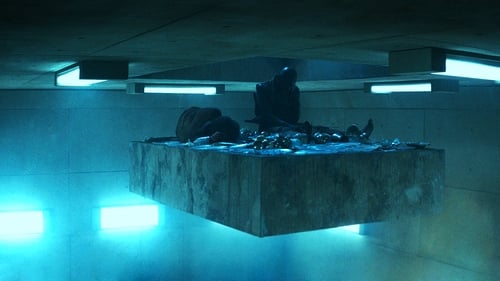





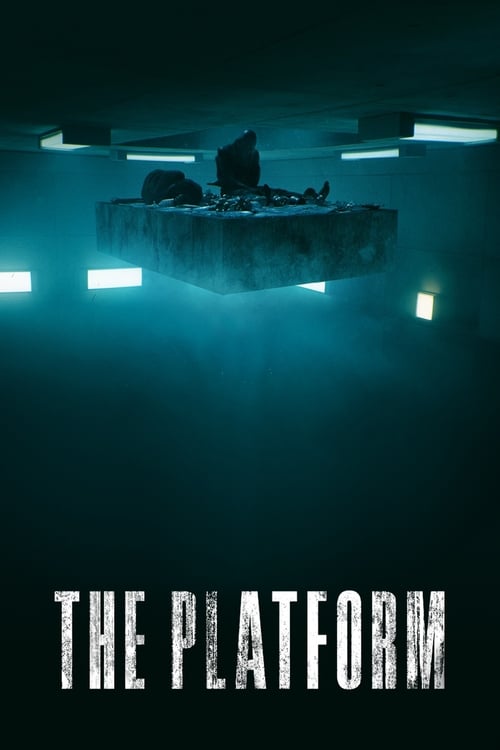
Netflix has been supporting smaller, independent films for some time now. In 2018, *Roma* helped pave the way for foreign film Best Picture nominations, and last year, Martin Scorsese’s *The Irishman* needed a streaming release because major studios were hesitant to commit to its lengthy three-and-a-half-hour runtime for theaters. Many other indie films have also benefited from Netflix's or other streaming platforms’ support. 2020 brings us a Spanish horror-thriller, the directorial debut of Galder Gaztelu-Urrutia: *The Platform* (*El Hoyo*). Since its showing at TIFF, this movie has been receiving overwhelmingly positive feedback, so I felt compelled to watch it and add it to my list. After seeing it a few days ago, I wanted to take some time to consider it because it’s likely to be divisive, particularly among general audiences. *The Platform* presents an extremely abstract narrative, overflowing with symbolism, metaphors, analogies, and allegories related to our current political, social, and economic realities. It's really not a straightforward thriller at all. It’s a tremendously intriguing concept, brought to life through captivating storytelling and a very dark tone. The film depicts a prison that mirrors contemporary society—filled with hypocrisy and selfishness. One month, you might be living comfortably on a level where food is plentiful, but still wanting more, ignoring the desperate pleas from those below. Then, the next day, you could find yourself struggling for scraps alongside your cellmate, in the same position as those who were begging just before... and suddenly needing their help? That narrative analogy to real-world events is undoubtedly my favorite aspect of the film. I've never been particularly interested in politics, so analogies and symbolism concerning that area of life don’t usually resonate with me strongly. However, it's clear that the screenwriters invested considerable effort into crafting a story with such depth. Even if you strip away the ambiguity from the screenplay, there’s still plenty to appreciate. Goreng’s journey evolves from simply trying to earn a diploma to actively attempting to save people on lower levels. His story takes the viewer through scenes of violence, blood, gore, and genuinely disturbing imagery. Therefore, viewers seeking straightforward action-packed entertainment rather than a more philosophical approach—as the filmmakers intended—will likely find it entertaining. *The Platform* also demonstrates that you don't need a massive budget to create an immersive atmosphere. The set and production design are as simple as possible, which is precisely what makes the claustrophobic prison so effective. For a first-time director, Galder Gaztelu-Urrutia does an excellent job of controlling the pacing and selecting appropriate shots for each situation. Unfortunately, my main issue mirrors that of many viewers: the ending. I’ll avoid revealing any minor spoilers by saying it simply doesn't quite work on all levels, at least not for me. As expected, it’s as ambiguous as the rest of the movie. After finishing the film, I was frustrated by numerous unanswered questions, and even after a few days of reflection, those questions remain. You won't find answers to everything, but that wasn't necessarily the goal. There needs to be a balance between reality and fiction—between what’s real and what’s merely a metaphorical symbol. It’s hard to justify *everything* as "just a representation of something else.” I can see two ways of interpreting the ending: I could either take everything literally, which would raise many unanswered questions, or try to view the story solely from Goreng's perspective. I believe the latter approach is better, even though it still presents some problems concerning the secondary characters. It doesn’t resolve every issue, but it’s the viewpoint that makes the most sense to me and helps create a more cohesive and consistent screenplay. Nevertheless, the problem I can’t seem to avoid is the abrupt shift in tone. For such a brutal, raw, bloody depiction of human behavior in a survival situation—the use of color is particularly clever—the climax feels disconnected from what comes before. The underlying themes are present from the beginning, but they're ultimately secondary messages beneath a fairly realistic story. Transitioning from horrible murders, sacrifices, and who knows what else to such a philosophical, soulful ending… it’s far from a seamless transition. Basically, if you go in expecting definitive answers about what this prison is, who controls it, and how it truly functions, you'll probably leave disappointed and frustrated. It’s one of those movies that heavily relies on how people perceive its ending and the impact it has on their overall opinion. Considering the conclusion solely from Goreng’s perspective works best for me, even if some logical questions remain unanswered. My main problem is the abrupt change in tone during the film's climax, but *The Platform* offers many positives. An extremely intriguing premise is developed through remarkably captivating storytelling, and an exceptional cast elevates the well-written screenplay. First-time director Galder Gaztelu-Urrutia and his team do a great job. The set and production design prove that a small budget can still create an immersive, claustrophobic atmosphere. Even if the ending only works partially, the symbolism and allegories of our world’s politics and social-economic situation are a brilliant and thought-provoking aspect of the screenplay. I like it more the more I think about it. Rating: B+
On September 22, 2026
#2387▲ 25
2387th by Pulse movie online51.2PULSEPulse MeterOur daily Pulse Meter measures public activity and popularity signals across the web.How it works →