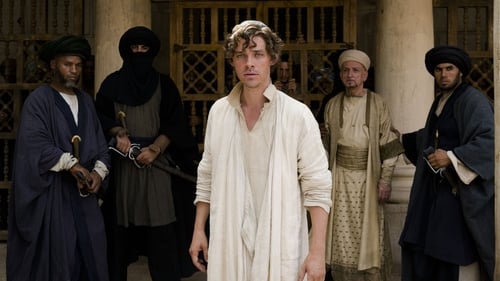




It’s a decent movie that manages to entertain, though it contains numerous minor historical inaccuracies that could have been easily corrected. As someone with a strong interest in medieval history—a field I specialized in as a historian—I appreciate films set during this period. Unfortunately, like many others, this one is full of errors. The script is well-written from an entertainment perspective: it tells the story of an English orphan raised and trained by a traveling barber who develops a fascination with medicine and healing. He recognizes his own limited knowledge, as does his mentor, and becomes even more aware when he lives among Jewish doctors who learned their craft in the East. Consequently, he decides to disguise himself as a Jew and travels to Persia to become an apprentice of the renowned physician Ibn Sina. For those unfamiliar, the film draws inspiration from real events and figures; Ibn Sina, for example, was a historical figure whose contributions are well-documented under his Westernized name, Avicenna. It's also true that during this era—around the year 1000—the Arab world possessed more advanced scientific knowledge than Europe, and Jewish people, who served as intermediaries between East and West, fostered a particular aptitude for science and medicine, which was later adopted in the West, especially during periods of religious tolerance. However, many details within the film simply don’t ring true: it would have been quite difficult for an uneducated Christian to convincingly impersonate a Jew without being discovered, nor would traveling from the British Isles to Persia have been easy. It's also implausible that people in Persia around the year 1000 would celebrate with fireworks, as that technology didn’t arrive there until two centuries later. Modern concepts of sorcery and necromancy wouldn't emerge for another three hundred years, and the Church never directly burned heretics; it declared them so and turned them over to secular authorities who might then impose such a punishment. An even more significant mistake is the inclusion of an outbreak of bubonic plague before the 14th century, when it first appeared historically. While the Shah did exist and the Seljuk Turks were indeed a threat in that region, Muslims would not have prostrated themselves before him. Other inaccuracies include the appearance of the Tower of London at the film’s end—it wasn't built for another hundred years and wouldn’t resemble its current form until the 16th century. Despite these issues, the movie is still enjoyable; it’s important to remember that it isn’t a documentary, and events were not portrayed with complete accuracy. Thomas Payne delivers a solid performance in the lead role, although he occasionally gets overshadowed by the strong and captivating performances of actors like Stellan Skarsgard and Ben Kingsley, who are both at the top of their game and give compelling portrayals. Emma Ribgy also does well, though her role is relatively small. Technically, the film boasts good cinematography, sets, and costumes. While not historically accurate, they’re visually appealing. The CGI is decent and functions effectively, even if it lacks realism. I wasn't particularly impressed by the soundtrack, but the visual and sound effects are well-executed. The pacing is also quite good; despite its length, the time passes quickly.
On September 25, 2026
#5792▼ 3270
5792nd by Pulse movie online41.8PULSEPulse MeterOur daily Pulse Meter measures public activity and popularity signals across the web.How it works →