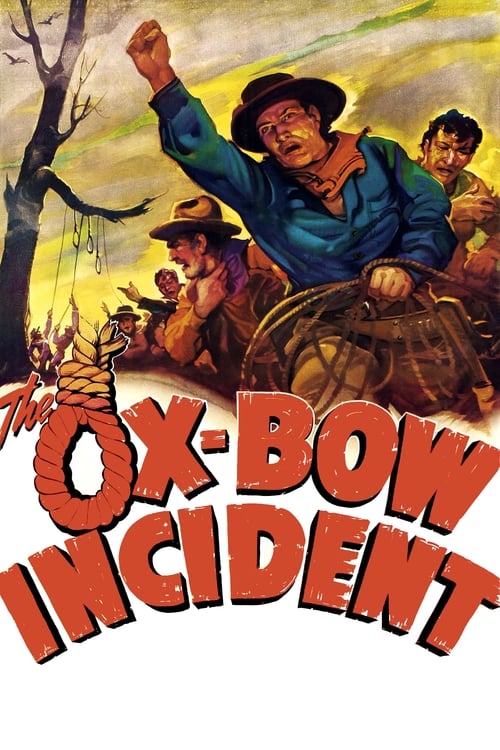





Civilization seems impossible without a shared sense of morality. William A. Wellman directed *The Ox-Bow Incident*, which was adapted by Lomar Trotti from Walter Van Tilburg Clark’s novel. The cast includes Henry Fonda, Henry Morgan, Dana Andrews, Mary Beth Hughes, Anthony Quinn, William Eythe, and Jane Darwell. Cyril J. Mockridge composed the music, and Arthur C. Miller handled the cinematography. After a long cattle drive, Gil Carter and Art Croft ride into Bridger's Wells and go to the local saloon. A man rushes in announcing that someone popular in town has been shot by rustlers. The sheriff is away, and a lynch mob quickly forms, intending to deliver what they consider quick justice. Gil and Art join the posse to avoid being suspected of the crime themselves. They find three tired workers and convince most people that these men are guilty and deserve an immediate hanging. However, there are a few who disagree...... This is a truly remarkable film—a powerful criticism of how mob mentality can take hold and cause suffering for many. William Wellman’s direction is superb, effectively managing a large group of actors in the confined setting of Ox-Bow and eliciting appropriate emotional responses from them. Henry Fonda portrays Gill Carter with quiet compassion, even though his character isn't perfect; Dana Andrews delivers a painfully realistic performance as Donald Martin, while others like Frank Conroy, playing Major Tetley, are appropriately loud and ignorant. It’s impressive how Wellman brings all these elements together so skillfully. The cinematography by Miller is excellent—the shadowy black-and-white photography suits the film's somber tone, lending it a gritty, noirish feel. Mockridge’s score is suitably mournful as well. Ultimately, the story itself stands out most; its claustrophobic nature makes for a simple yet tragic tale showing how seemingly rational people can descend into irrationality. The reading of a letter near the end has a devastating impact, revealing broken men, bowed heads filled with shame, and lives forever altered. It’s an emotionally powerful moment, and it's well-deserved. This is undeniably a film with a message—a worthy one—and its reputation has grown over time, to the point where both the movie and the novel have been incorporated into some educational programs. It’s a significant Western that broadened the genre beyond just shootouts and exploration by prioritizing character development over action. I imagine it would have received more critical acclaim if it had been made a few years later. Despite being one of Fonda's favorite films, it wasn't financially successful. Audiences weren't quite prepared for such a somber story (Orson Welles, notably, admired it), and contemporary critics were put off by Wellman’s choice to film the key trial and lynching scenes on a stage set. However, this theatrical setting actually enhances the narrative, bringing the characters close together so that we can see their reactions clearly—it's about focusing on the faces of those contemplating a capital crime. The confined space also creates a pervasive sense of doom, with pessimism seeping through; there’s no sugarcoating here, and the filmmakers make the right choices to produce one of the finest and most disturbing portrayals of mob mentality ever filmed. 9/10
On September 29, 2026
#16965▼ 2805
16965th by Pulse movie online2.8PULSEPulse MeterOur daily Pulse Meter measures public activity and popularity signals across the web.How it works →