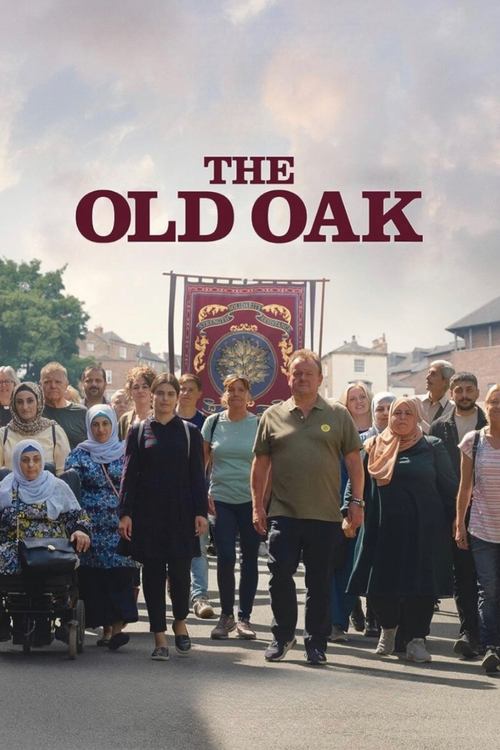





Ken Loach’s films often prioritize emotional impact above plot or narrative development; he seems to have pioneered emotionally driven cinema. Story takes a backseat to feeling, and structure is secondary to truth. It’s undeniable that a Ken Loach and Paul Laverty production leaves a lasting impression—they always resonate deeply. *The Old Oak* continues this tradition. The film unfolds in a struggling former mining town in Northern England, centering on T.J. Ballantyne (Dave Turner), who manages The Old Oak, the last pub and sole communal space for a community facing hardship. When Syrian refugees seeking refuge from war are relocated to the town, conflict arises. Residents, already suffering from deindustrialization and austerity measures, view the newcomers as another burden, one more loss. The refugees, scarred by war and displacement, discover they aren’t welcome in what was meant to be a place of safety. Consistent with Loach's style, many of the actors were not professional performers, including the main cast. Dave Turner, previously involved in a couple of Loach projects, had worked as a firefighter before this role; he received recognition for his performance. Ebla Mari, an actress from the Golan Heights who hadn’t lived in Syria, also delivered a powerful performance, preventing the characters from becoming stereotypes. The film's lasting impact is sharp: those in positions of authority and political power lack compassion and disregard the consequences their actions have on people. They create conditions that dismantle communities and then manipulate survivors into blaming refugees for problems caused by those in control. Loach portrays racism, xenophobia, and cruelty without passing judgment, which is vital if you want to shift someone's perspective. He doesn’t explicitly condemn these individuals; instead, he reveals their desperation, anger, and pain, trusting the audience to recognize that the true adversary isn’t the family escaping bombs but the system that has failed both communities. While firmly rooted in reality, *The Old Oak* incorporates a sense of hope. The ending feels somewhat unrealistic and convenient, but I suspect it would have required an extensive film to portray the situation with greater nuance. Ultimately, viewers are meant to believe that people can form connections and solidarity is achievable even when faced with adversity. This feels like a fitting conclusion to a career. For those who understand history or have traveled extensively, people share commonalities across cultures, so hope remains possible. Loach has dedicated his work to exposing the damage systems inflict on individuals, and he concludes by suggesting that, given the opportunity, people can still choose connection over division. That’s the takeaway. That's what stays with you. And that’s why *The Old Oak* is significant, even as a final film.
On September 26, 2026
#17694
17694th by Pulse movie online21.0PULSEPulse MeterOur daily Pulse Meter measures public activity and popularity signals across the web.How it works →