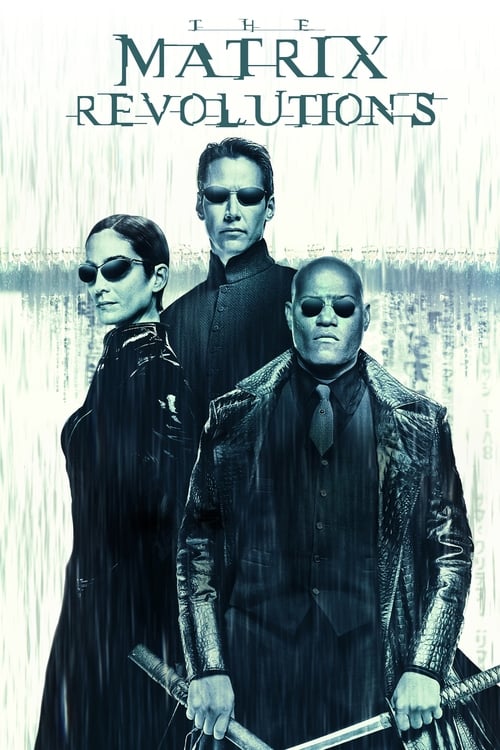




The much-anticipated Matrix trilogy concludes, but honestly, the true "Year of The Matrix" occurred in 1999. That initial film arrived at precisely the right moment, resonating with cultural anxieties surrounding technology and humanity's dependence on machines, fueled by Y2K fears. Beyond its innovative use of slow-motion action—the now-iconic “bullet-time”—it possessed a political relevance that feels somewhat dated given today’s focus on terrorism rather than technological dominance. While *The Matrix Reloaded* attempted to expand the narrative and incorporate more elaborate special effects, *Revolutions* seems content to follow suit, essentially presenting itself as the final two and a half hours of an extended story arc, with the original film relegated to little more than an introductory sequence in the filmmakers’ view. Although there's less philosophical discussion and more emphasis on action sequences in *Revolutions*, the Wachowskis appear trapped by their own ambitions, resulting in a predictable cycle where spectacle and pretension consistently follow one another. Thrilling moments and intellectual stimulation aren’t successfully combined. The extended action sequence depicting the Sentinels' attack on Zion is certainly exciting, yet it doesn’t feel like an organic continuation of the original *Matrix*. Initially, Zion was entirely absent from the first film. More significantly, this pivotal scene sidelines the primary characters; Neo and Trinity are pursuing their own separate mission. Morpheus—now sporting a burgundy sweater that clashes with his image as a cool figure—takes a backseat to Niobe's driving duties. Instead, the focus shifts to the Kid, whose backstory is only accessible through *The Animatrix* animated shorts, and Mifune, who unfortunately has a brief but memorable appearance. It’s disappointing – and detrimental – that such a central scene relies so heavily on secondary characters, as it diverts attention from the protagonists' crucial actions. This sequence is likely what viewers will remember most, overshadowing even Neo’s conversation with the machine’s enigmatic representative or his fight with Smith (a confrontation whose visual impact diminished after *Reloaded*). Some viewers may find complete satisfaction in the ending, their questions answered, but these are those who've done the necessary preparation. Without supplementing the plot through *The Animatrix* or the often-criticized computer game *Enter The Matrix*, a sense of bewilderment is likely to arise. And that confusion prevents emotional investment in the characters, rendering any sacrifices and themes of love meaningless. In contrast, the original film allowed even casual viewers to connect with the plight of enslaved humans yearning for freedom; however, the Wachowskis have seemingly shifted the focus as the story progressed, moving away from what initially served as a central plot element. Essentially, few blockbuster films aimed so deliberately at such a specific and dedicated fanbase. The Matrix trilogy will likely be remembered as an indulgence for enthusiasts, while the original film will remain fondly regarded by a wider audience. Ultimately, what once represented the future of science fiction has become just another competent entry in the genre. But, it wasn’t intended to be a revolutionary experience, was it? Or was it? 3/5 - Empire Magazine
On October 2, 2026
#2595▼ 221
2595th by Pulse movie online5.5PULSEPulse MeterOur daily Pulse Meter measures public activity and popularity signals across the web.How it works →