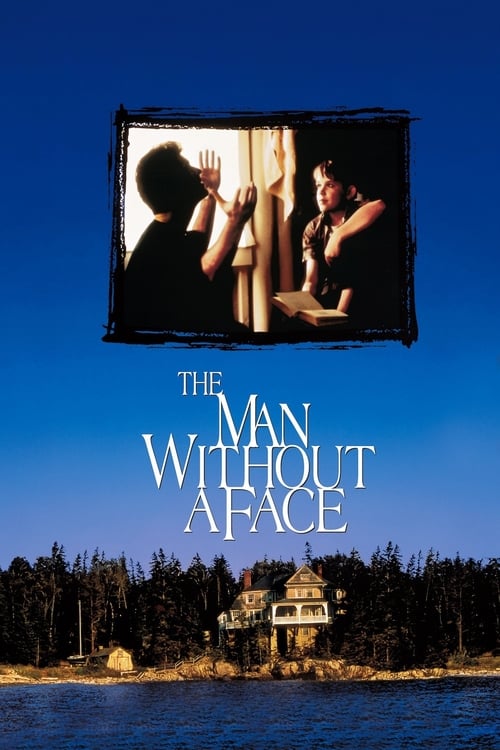





"The Man without a Face" marked Mel Gibson’s directorial debut in 1993, and he also takes on the title role as McLeod, a man bearing severe facial scars. The film unfolds during the summer of 1968 along the Maine coast, where McLeod had retreated years prior to live in seclusion and pursue his unusual work. As expected, rumors began circulating about the mysterious recluse among the local residents, who cruelly nicknamed him "hamburger head.” A young boy named Chuck (Nick Stahl), longing for military school, seeks McLeod’s help, and a positive connection develops between them. Margaret Whitton portrays Chuck's frequently married mother, while Fay Masterson and Gaby Hoffmann play his half-sisters; Geoffrey Lewis appears as the town’s police chief. I initially viewed this movie some time ago, and despite finding it to be a decent drama, I was left with an unpleasant feeling. This stemmed from four issues all related to the third act: First, the story introduces a rumor of a terrible crime involving someone falsely accused, which greatly bothers me for obvious reasons. Second, the alleged crime involves sexual molestation, a topic that is inherently uncomfortable and awkward. Third, there’s a scene where a character has the chance to deny the accusations but instead responds with a question; this felt frustrating because if someone were innocent, they should simply state so. Finally, another moment seemed foolish because people who are thoughtful and discerning typically take care to avoid even the appearance of wrongdoing, regardless of their intentions. The character in question fails to do this, which I found irritating. Upon a second viewing, I’ve gained a greater appreciation for the film because I now understand its true nature. While the plot initially presents a straightforward narrative—a fatherless boy finds a surrogate father and an isolated man experiences acceptance and can fulfill his calling as a teacher—the movie delves much deeper, which explains the third act and how everything leads up to it. The underlying message is a condemnation of gossips who destroy lives with their words; they are judge, jury, and executioners of innocent people, often targeting unconventional individuals or those perceived as threats. These slanderers are arrogant fools who enjoy tearing others down, especially those outside their group, and thrive on creating discord through lies, half-truths, unjust criticism, name-calling, and mockery. They are the real monsters, not someone like McLeod. The more outrageous the accusation, the better; that's why these individuals often fabricate the most horrific lies, such as sexual molestation. Such malicious gossips exist everywhere, and their slander can poison others’ minds unless someone actively confronts them. There is a poignant scene near the end where the accused individual encounters an elderly couple with whom he had previously enjoyed a good relationship, but they have been influenced by the rumors and refuse to hear his explanation before forming a negative judgment. He could do nothing, and it's heartbreaking because this kind of thing happens frequently. While the drama is solid, although not exceptional, it’s the film’s subtext that elevates it. The beautiful coastal scenery is a plus, as is the supporting cast. Despite being weighed down by the sexual molestation subplot, it’s justified because it connects to the movie's powerful theme. The film has a running time of 115 minutes and was filmed in coastal Maine and Nova Scotia. GRADE: B+ **SPOILER ALERT!** Do not continue reading unless you have seen the movie. I’ve encountered inaccurate claims about the film, such as the assertion that McLeod actually had a sexual relationship with Chuck. This is incorrect; the movie thoroughly refutes such suggestions. There's no scene hinting at any abuse, and when Chuck's mother asks if McLeod "touched" him, he replies casually, “Yeah, why?” indicating that any physical contact was appropriate, like a pat on the back. Furthermore, Chuck investigates the rumors about McLeod and then steals his mother’s car to confront him. Instead of offering explanations, McLeod poses a rhetorical question: “Have I ever done anything questionable or abusive around you?” The answer is clearly "No." This explains why McLeod was unconcerned when the police officer arrived looking for Chuck after he went missing one night; he simply said, “Yes, he’s here; he's sleeping upstairs.” He had no worries because nothing improper occurred. Nevertheless, their friendship ends due to legal reasons and McLeod moves away, but he secretly attends Chuck's military school graduation seven years later, where they exchange a friendly wave from afar—behavior that would be inappropriate if McLeod had committed a terrible sex crime against the boy years earlier.
On September 27, 2026
#7575▲ 9066
7575th by Pulse movie online39.1PULSEPulse MeterOur daily Pulse Meter measures public activity and popularity signals across the web.How it works →