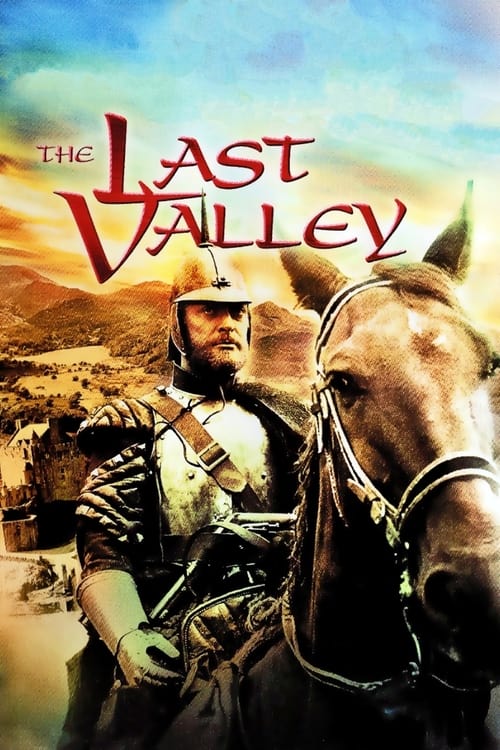




During the Thirty Years’ War in Europe, specifically in 1643, a group of mercenaries and one wanderer stumble upon a secluded vale—a final pocket of peace untouched by the widespread devastation. Vogel, portrayed by Omar Sharif, convinces The Captain (Michael Caine) to spend the winter there instead of destroying it and harming its inhabitants. What initially impresses about James Clavell’s "The Last Valley" (1971) is the striking opening credits sequence accompanied by John Barry's memorable score. Certain sections possess a dreamlike, almost unreal quality, especially at the beginning and end, which brings to mind “Apocalypse Now” (1979). Caine delivers an exceptional performance as The Captain, a man so worn down by war that he has lost his name—he’s simply referred to as "The Captain." He would later take on a similar role in the underrated film "The Eagle Has Landed" (1977), another remarkable portrayal. His usual response was violence, but within this valley, he discovers tranquility and affection. Sharif is also effective as Vogel, who has always reacted to conflict by fleeing. However, he too finds solace and love in the vale, perhaps even a chance at family. The story’s depth—including conversations between characters exploring themes of war, loss, faith, religion, ignorance, superstitions, love, hope, loyalty, duty, and redemption—sets it apart from a typical war adventure. It's also fascinating to see how people lived in a remote village four centuries ago in Europe’s backcountry. It wasn't uncommon for individuals in such circumstances to live their entire lives within a small radius of where they were born. Such people would likely be uneducated, superstitious, naive, ignorant and narrow-minded all at once, and the film illustrates this reality. Unfortunately, some aspects don’t quite work as well. Some dramatic moments and dialogue feel awkward or forced. These parts possibly needed more refinement, which may explain why critics initially dismissed the movie and why it faded into obscurity for decades. Some viewers have suggested the film is critical of religion or even God. However, it's really about pursuing faith, truth, love, and happiness despite the horrors of war—a conflict that lasted three decades and resulted in countless innocent people being killed and cities destroyed, like Magdeburg, Germany, in 1631. The brutality of the war led The Captain to become an atheist, as he states in a powerful scene, and "tore the heart out of" Vogel, according to another revelation. But this isolated valley offers them both renewed hope. Despite its shortcomings, I give the movie a ‘B+’ for effort. It's a unique film, strangely captivating, unlike anything else. It successfully creates an enclosed world of people living four centuries ago in a secluded vale within the Alps' wilderness. A world you can become immersed in for a couple of hours. The story’s originality and its deeper meanings, along with the excellent cast, performances, and surreal elements, elevate it above a simple adventure film. It is unconventional, insightful, thought-provoking, and ultimately moving. If you appreciate films like "Apocalypse Now" and "Runaway Train"—movies that attempt to delve beyond typical action/adventure fare—then I suggest checking this one out. You’ll likely continue to find new things in it with repeated viewings. Since the film relies heavily on dialogue, however, I recommend using subtitles to understand the characters' strong accents. The movie runs for 2 hours and 6 minutes and was filmed in Tyrol, Austria (Trins and Gschnitz and the Gschnitztal Valley).
On October 2, 2026
#36529
36529th by Pulse movie online2.0PULSEPulse MeterOur daily Pulse Meter measures public activity and popularity signals across the web.How it works →














