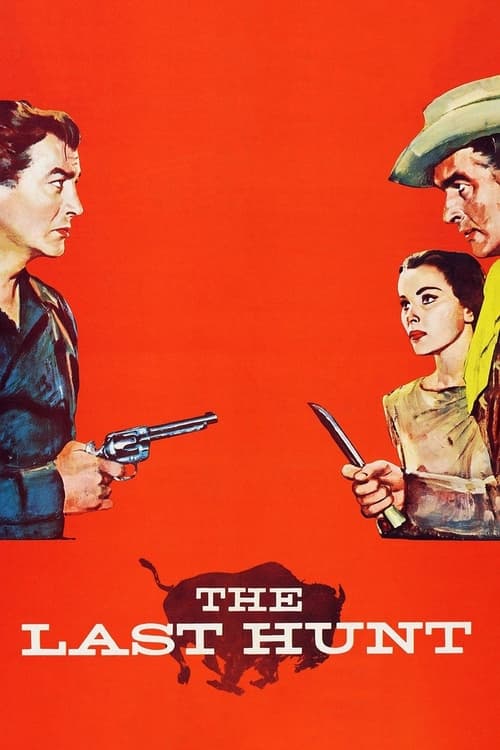




Killing... it’s almost like the only way you know you’re really alive. The Last Hunt was directed by Richard Brooks, who also wrote the screenplay based on Milton Lott's novel. The film stars Robert Taylor, Stewart Granger, Debra Paget, Lloyd Nolan and Russ Tamblyn. It is an MGM production in CinemaScope and Eastman Color, featuring music by Daniele Amfitheatrof and cinematography by Russell Harlan. Buffalo hunter Sandy McKenzie (Granger) has grown weary of the hunt, but financial difficulties lead him to accept Charles Gilson’s (Taylor) invitation to join another profitable expedition. While on the range, however, Charlie reveals a sadistic nature, and after capturing an Indian girl (Paget), their differences become even more pronounced. A resolution seems unavoidable. It's easy to overlook that food can be a powerful weapon. The buffalo held immense significance for Native Americans—providing sustenance, shelter, clothing, and spiritual value. Consequently, eliminating the buffalo became a strategic tactic employed by white settlers during conflicts with Native American tribes. Richard Brooks’ film illustrates that in 1853 there were approximately 60 million buffalo roaming the West; within three decades, their numbers would dwindle to just 30 thousand. What unfolds is a story of men emotionally damaged—though in different ways—by war, and it's colored by issues of racism and environmental destruction. At its core, it’s a conflict between Granger’s world-weary Sandy McKenzie and Taylor’s racist Charles Gilson. Caught in the middle is Paget’s character, an Indian girl desired by McKenzie but held against her will by Gilson, while Tamblyn and Nolan portray Jimmy, a half-breed Skinner, and Woodfoot, observing from the sidelines. McKenzie struggles to fire at buffalo, his inner turmoil evident on his face, whereas Gilson fires rapidly, displaying manic glee with each kill. For Gilson, fewer buffalo equate to fewer Indians; his hatred of Native Americans surfaces whenever he encounters them. Is it a similar feeling to what you experience around a woman? The screenplay demonstrates considerable intelligence and insight into its subject matter, which is particularly important given that the film focuses on just five characters. Brooks understands that the themes explored in his movie require careful handling; a heavy-handed approach would be counterproductive. With the exception of Paget (who delivers a performance as written), he elicits strong performances from his cast, with Taylor and Granger proving to be excellent foils for one another. Taylor portrays Gilson as frightening and unpleasant, but there’s also an element of sympathy intended for the audience, suggesting a troubled mind. When thunder rumbles overhead, Gilson mistakenly believes it signals a buffalo herd and frantically sets off in search of more kills, practically foaming at the mouth. This man clearly needs help, yet on the frontier, there is no aid available for those with battle-scarred minds. Actual footage of buffalo killings—part of a government program to reduce the herd—is incorporated into the film, lending a somber tone. However, Russell Harlan’s cinematography, filmed in Badlands National Park and Custer State Park, reveals stunning beauty. These lands once witnessed immense pain and suffering, but they remain beautiful and offer another reason why The Last Hunt is essential viewing for Western fans. It's a brilliant film, an overlooked classic of 1950s Westerns, and demonstrates that Robert Taylor was capable of delivering a strong performance when given the opportunity. 9/10
On September 29, 2026
#21023▼ 3096
21023rd by Pulse movie online2.2PULSEPulse MeterOur daily Pulse Meter measures public activity and popularity signals across the web.How it works →