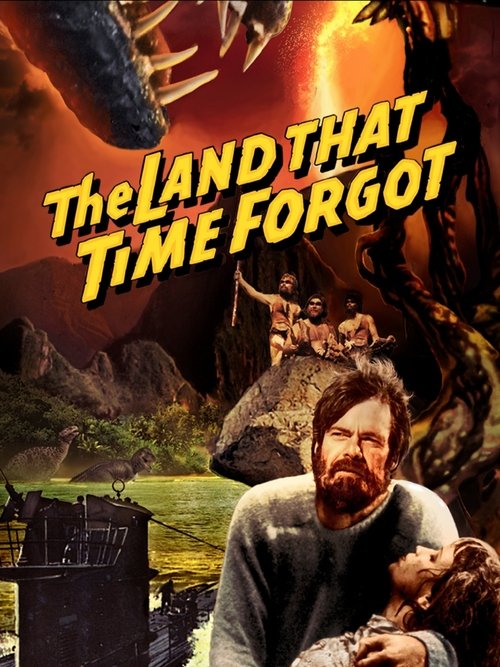





This is an adventure you won’t soon forget! Kevin Connor directed The Land That Time Forgot, with a screenplay adapted by Michael Moorcock & James Cawthorn from Edgar Rice Burroughs’ novel of the same name. Doug McClure, Keith Barron, John McEnery, Susan Penhaligon, Anthony Ainley and Declan Mulholland are in the cast. Douglas Gamley composed the music, and Alan Hume was responsible for the cinematography. It marks the beginning of a series of four films pairing director Kevin Connor and actor Doug McClure. The story takes place during World War I and involves enemies reluctantly joining forces aboard a German U-Boat that has drifted extensively before finding itself in a lost world populated by dinosaurs and cavemen. Any logical reasoning is abandoned, as well as any expectation of good acting, in the kind of cheesy monster movie that delighted many kids during the mid to late 1970s. The film did well enough to inspire three more movies in the same style – At the Earth's Core (1976), The People That Time Forgot (1977) and Warlords of Atlantis (1978). Of these four, this one probably has the most going for it regarding plot and character development. It’s also the highest budgeted of the group. For roughly the first third of the film, it's not really suitable for children, as the story concentrates on characters from opposing sides of the war fighting each other aboard the U-Boat after the ship carrying the allies is torpedoed. However, once the boat reaches arctic waters and moves into a sunnier "other side," it’s all prehistoric puppets, brawling, and heroic actions from McClure. It's ultimately an enjoyable boys' own adventure without any serious elements. It isn’t quite as wildly entertaining as At the Earth's Core, but this film serves as a solid introduction to the 1970s creature feature genre created by Connor and McClure. 6.5/10
On September 29, 2026
#27421▼ 3050
27421st by Pulse movie online1.6PULSEPulse MeterOur daily Pulse Meter measures public activity and popularity signals across the web.How it works →