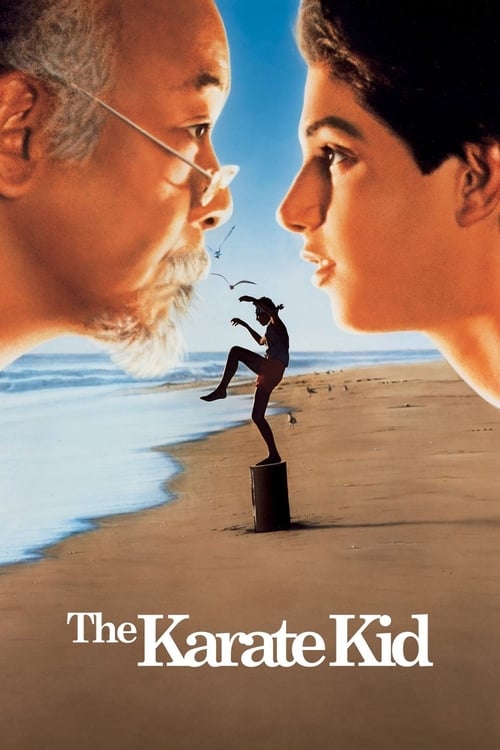





I’m not typically drawn to movies centered on fighting or martial arts; I usually steer clear because they tend to feel dull and exhausting. Still, I was captivated by this film, which is undeniably a cornerstone of 80s cinema—a movie that even after thirty years remains enjoyable to revisit. It's likely for this reason that it continues to appear in television programming rotations. The story is straightforward but engaging, presenting well-developed characters who are easy to root for. Daniel, a young teenager recently relocated to California, is the main character; he’s attempting to adjust to his new surroundings. He quickly finds himself at odds with an older, wealthier, and more aggressive boy because of their shared interest in a girl. Needing to learn karate for self-defense, he connects with the janitor of his building, an elderly Japanese man who becomes his instructor in the martial art. Ralph Macchio is likable and agreeable as Daniel, delivering a performance that will launch him to recognition. In fact, this became his most significant role—an actor who continues to portray the same character in video games and television shows today. Elizabeth Shue made effective use of the relative success she gained from her part in this film. While not outstanding, she performs adequately, which led to other opportunities for her. However, Pat Morita is truly the one who commands our attention whenever he appears on screen. He’s flawless as the wise and thoughtful Japanese man. Through his character, the movie offers a perspective of karate as a peaceful practice, emphasizing defense and being prepared so that fighting becomes unnecessary. The actor received an Oscar nomination for his portrayal. William Zabka and Martin Kove also have memorable appearances in the film. The cinematography is good and refined, with vibrant colors and solid production values, which means it doesn’t feel dated compared to other films from the era. I especially appreciated the depiction of the Japanese house, complete with its gardens and impressive woodwork, as well as the classic cars featured in certain scenes. The fight and action sequences are skillfully arranged, but they retain a sense of authenticity that prevents them from looking artificial. The soundtrack, composed by Bill Conti, is genuinely memorable—a small treasure often overlooked and overshadowed by more famous musical scores.
On September 30, 2026
#4911▼ 224
4911th by Pulse movie online7.7PULSEPulse MeterOur daily Pulse Meter measures public activity and popularity signals across the web.How it works →