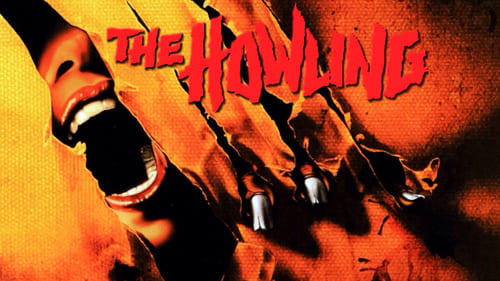





This film presented werewolves to moviegoers unlike anything they’d seen before. Following a disturbing incident while reporting in Los Angeles, a news anchor (Dee Wallace) is sent with her husband (Christopher Stone) to a secluded resort near the coast for therapy, as recommended by her therapist (Patrick Macnee). When strange events begin at this wooded community, she reaches out to a friend (Belinda Balaski), along with the husband’s acquaintance (Dennis Dugan), to come and investigate. “The Howling” (1981) was the first of three significant werewolf films released in 1981; "Wolfen" appeared in July, though it wasn't truly a werewolf movie but more of an artistic exploration of nature gone wrong. “An American Werewolf” arrived last, in August, and proved to be the most successful financially, earning triple its production cost domestically and six times that amount worldwide. However, considering profit relative to budget, "The Howling" was actually more successful due to its surprisingly low production costs compared to a major release. "Wolfen," conversely, was by far the most expensive and also the most serious and artistic, but it failed at the box office. This is my favorite of the three and easily the best in The Howling series, which now consists of eight films, even placing among the greatest werewolf movies ever made. It begins energetically, though somewhat confusingly, with scenes set in a television studio and on the darker side of Hollywood Boulevard. Fortunately, most of the film takes place at the wooded community along the northern coast. Just when you think it’s over, there are a couple of surprises at the end, one of which has become iconic. Remarkably, its cost was only a tenth of what “An American Werewolf in London” required to produce. Rick Baker had initially been slated to do the special effects but opted for that other film instead, leaving the job to assistant Rob Bottin. I believe the visual effects are better here, though both were excellent for their time. Dee Wallace with blonde hair and Belinda Balaski with brunette hair were beginning to show signs of aging, but remained attractive. Elisabeth Brooks, with dark hair, portrays the alluring woman at the camp and has a full-nude scene; she only agreed to do it because she was told that smoke from the campfire would obscure her body, which wasn’t really the case. She had previously refused nude roles due to her religious beliefs. Understandably, she was upset and this ended up being her sole cinematic nude appearance throughout her career. This film and “Howling IV: The Original Nightmare” (1988) were both based on Gary Brandner's novel. While not as good as this one, the fourth installment is a more faithful adaptation of the book. Like this movie, it’s a slow-burn mystery with a full moon atmosphere, but shifts the setting to a remote desert location (filmed in South Africa); unfortunately, the ending feels rushed and awkward. The immediate sequel, “Howling II: Your Sister is a Werewolf,” was released four years later and is a questionable horror film, but at least it included Brandner’s involvement (unlike the other sequels) and its over-the-top nature can be amusing at times. Christopher Lee attempted to maintain his composure while Sybil Danning exaggerated her performance as an enticing werewolf queen in various outlandish costumes. It features a memorable theme song; and the cinematography filmed in the Czech Republic showcases some nice Gothic props. In my opinion, the best sequels are parts VI (“The Freaks”) and V (“The Rebirth”), with a mention of VIII (“The Howling: Reborn”). It runs for 1 hour and 30 minutes and was shot in Los Angeles and Mendocino, Northern California, which is a three-hour, fifteen-minute drive north of San Francisco. GRADE: A-
On September 24, 2026
#9053▲ 1641
9053rd by Pulse movie online28.1PULSEPulse MeterOur daily Pulse Meter measures public activity and popularity signals across the web.How it works →














