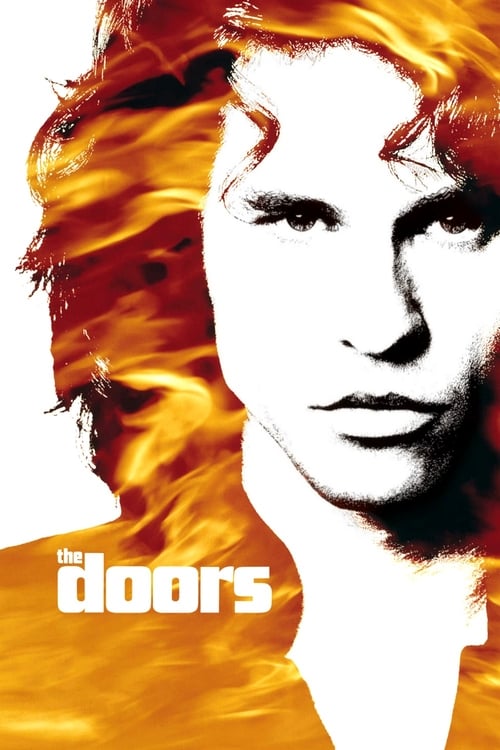





“The Doors,” released in 1991 and directed by Oliver Stone, tells the story of the band The Doors and their journey from 1966 to 1971. The film centers on Jim Morrison (Val Kilmer), the group’s charismatic singer, whose life spirals downward due to alcoholism and drug abuse. After traveling to France with his girlfriend, Pamela Courson (Meg Ryan), in March of 1971, he passed away the following summer as a result of his substance use. The other band members are portrayed by Kyle MacLachlan, Frank Whaley, and Kevin Dillon. I wasn’t old enough to remember The Doors when they were around. I first heard about them from my older brother, who asked if I was familiar with their music. I laughed at him and joked that they should have just called themselves "The Window Sills." It seemed like a silly name until I learned the meaning behind Morrison’s choice: “There is what is known; And there is what is unknown; In between are the doors.” I also gained more respect for the band after discovering their song was used in the opening credits of my favorite film, "Apocalypse Now." After that, I bought a compilation album and initially found their sound dated. However, over time, I’ve come to appreciate The Doors' unique music—they don't resemble any other group; they have an odd, moody feel even in their popular songs, with a carnival-like atmosphere enhanced by Morrison’s distinctive vocals. While I prefer their more artistic tracks like "Riders on the Storm" and "The End," it’s hard to deny how catchy “Light My Fire” is or the amusing charm of “People are Strange.” The film paints Jim Morrison as an unhappy, artistic genius who lacked self-control; he tried to escape his personal struggles through casual relationships, drug use, and rock 'n' roll. His destructive habits eventually affected those around him and led to his early death. He’s now buried in Paris, where fans have left graffiti on nearby monuments—some of which are offensive. The overall impression is that Jim Morrison wasn't someone you'd enjoy being around, even after he was gone. So “The Doors” can be described as the classic story of sex, drugs, and rock 'n' roll. Director Stone claimed to have based his depiction of Morrison on transcripts from people who knew him or were associated with the band. These accounts revealed a picture of excessive behavior during Morrison’s final years, which left me with a negative view of the man—I saw him as an immature and irresponsible person who wasted his life and talents. However, this wasn't the whole story. Fortunately, the 37-minute documentary “The Road to Excess” (1997), included on the disc, offers a different perspective. Patricia Kennealy, one of Morrison’s lovers, along with the guitarist and another member of the band, shared their experiences. They pointed out that Stone's film only showed Morrison’s wild side, emphasizing that while some events were true, they weren't entirely accurate. They consistently described him as genuine, innocent, shy, loving, and supportive—someone who made others feel valued. One musician even stated he was "the most influential person I've ever met." The documentary also includes clips of Morrison himself, showing him to be a fun-loving, good-natured person rather than the troubled character portrayed in the film. It helps provide a more balanced view of his personality. Val Kilmer doesn’t just act as Jim Morrison; he embodies him—a remarkable achievement and crucial to the movie, given how much screen time he has. He deserved an award for that performance. If you're looking for something that captures the late-1960s counterculture vibe, “The Doors” is worth watching, but it tends to exaggerate things in pursuit of creating a legend. For example, Jim never locked Pamela inside a closet with the door lit up, and the Thanksgiving dinner scene didn’t actually happen; the concert antics and bonfire are fabricated. Nevertheless, the film is captivating and features The Doors' music throughout. The first half of the movie is stronger than the second, which becomes too unpleasant and offers a limited and unfavorable portrayal of Morrison. That’s why it’s important to also watch “The Road to Excess” or, even better, the 2009 documentary “The Doors: When You’re a Stranger,” which uses footage and photos from 1966-1971. Another issue with Stone's film is that it loses its dramatic impact in the second half, opting for chaotic visuals instead of a compelling narrative—and containing outright falsehoods. Lastly, Oliver Stone makes some questionable remarks in “The Road to Excess.” He states: "To live life intensely and well and die young and achieve everlasting fame & glory is the greatest." Really? Morrison’s excessive lifestyle led directly to his premature death, not enlightenment. The film runs 2 hours and 20 minutes. GRADE: C (but “The Road to Excess” documentary earns an A-/B+)
On September 29, 2026
#9405▲ 137
9405th by Pulse movie online4.8PULSEPulse MeterOur daily Pulse Meter measures public activity and popularity signals across the web.How it works →














