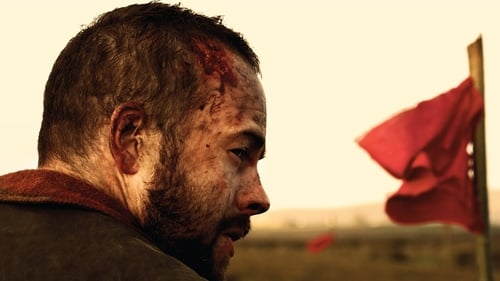





Despite being overshadowed by a blockbuster like _Avengers: Endgame_, _The Dig_ is a worthwhile film that deserves more attention. Written by Stuart Drennan and directed by Andy and Ryan Tohill in their debut feature, it’s primarily an exploration of psychological breakdown and the damage caused by an unending, self-imposed task. The film examines rural Ireland's tendency to personify the land, celebrating its bounty while condemning its harshness, and probes the blurred line between obsession and madness, alongside themes of memory, guilt, and whether those who’ve committed wrongdoings deserve a chance at redemption. It’s a somber and heavy experience, offering few moments of levity. While it functions exceptionally well for roughly three-quarters of its length, the final act falters, abruptly shifting into a murder mystery with an unbelievable twist that clashes with the previously established realistic tone. Nevertheless, the film boasts beautiful cinematography, strong performances, and skillful direction—those who’ve finished their time-traveling adventures with Ant-Man might find it worth watching. The story begins as Ronan Callahan (Moe Dunford, delivering a consistently intense performance) returns to his hometown after serving fifteen years in prison for murdering his girlfriend. Though drunk at the time, he remembers nothing of the incident, but was convicted due to being the last person seen with her and traces of her skin found under his fingernails. Now sober, Callahan intends to sell his dilapidated farm and move on, only to discover that Sean McKenna (Lorcan Cranitch, excellent), the dead girl’s father, has spent every day for fifteen years digging on the bog where her body is believed buried. Driven by obsession bordering on insanity, Sean refuses to stop—not for his living daughter, Roberta (Emily Taaffe, quietly despairing), who fears for his mental state; not for the local constable, Murphy (Francis Magee, intimidating); and certainly not for Callahan himself. However, burdened by crippling guilt over a murder he can’t recall, Callahan unexpectedly decides to assist Sean with the digging, much to Roberta and Murphy's dismay. Like recent Irish films such as _The Lodgers_, _The Devil's Doorway_, and _Black '47_, _The Dig_ operates within genre conventions while imbuing them with a distinctively Irish perspective. While _The Lodgers_ uses a haunted house story to examine aristocratic legacy, _The Devil’s Doorway_ employs demonic possession to explore the Magdalene Laundries' horrific history, and _Black '47_ utilizes a western for a portrayal of the Great Famine, _The Dig_ can be seen as a Revisionist Western—set primarily on a vast bog, featuring whiskey consumed straight from shot glasses in the town’s only bar, a formidable lawman with his own methods, and even a local posse formed to drive out Callahan. The film also notably ignores women, despite their grounded presence. As with those earlier films, genre serves as a springboard for exploring broader themes: the significance of the land, the idea that time doesn't always heal wounds, and how profound grief can push someone to the edge of sanity. The film opens with Callahan returning to his farm, examining the boarded-up house and checking water access before discovering hidden bottles of alcohol which he promptly pours out—a wordless scene reminiscent of the opening in _There Will Be Blood_. This establishes a bleak tone and provides insight into Callahan’s character without resorting to exposition. The cinematography, by Angus Mitchell, creates a perpetually gloomy atmosphere. Dominated by muted earth tones, the film evokes a sense of coldness and dampness. High-elevation shots emphasize the vastness of the bog in relation to the small area that has been excavated, highlighting the seemingly impossible nature of Sean’s task. These visuals also convey that while the characters are exposed, their environment is essentially their prison. Lorcan Cranitch portrays Sean as a man contorted by grief, unrecognizable from his former self. Moe Dunford embodies Callahan's silent brooding and resignation. The film excels in its exploration of grief, bereavement, obsession, and atonement, but the importance of the land remains central throughout. References to folklore—a fairy tree and the remarkably preserved Seanfhear Chruacháin—further emphasize this connection. A more subtle reference highlights the absence of political discourse despite the film’s Northern Ireland setting, drawing parallels with The Disappeared – sixteen people abducted, murdered, and secretly buried by the IRA – and acknowledging the families who have waited decades for answers. This all contributes to a sense that the land itself is sentient, echoing proclamations from _The Field_. However, the film suggests that if Sean’s daughter isn't found, it may be because the land refuses to reveal her, as he states, "_the land decides_." Despite its strengths, the film suffers from a significant flaw. The narrative remains taut and believable for most of its runtime,
On September 23, 2026
#155049▼ 4770
155049th by Pulse movie online0.8PULSEPulse MeterOur daily Pulse Meter measures public activity and popularity signals across the web.How it works →














