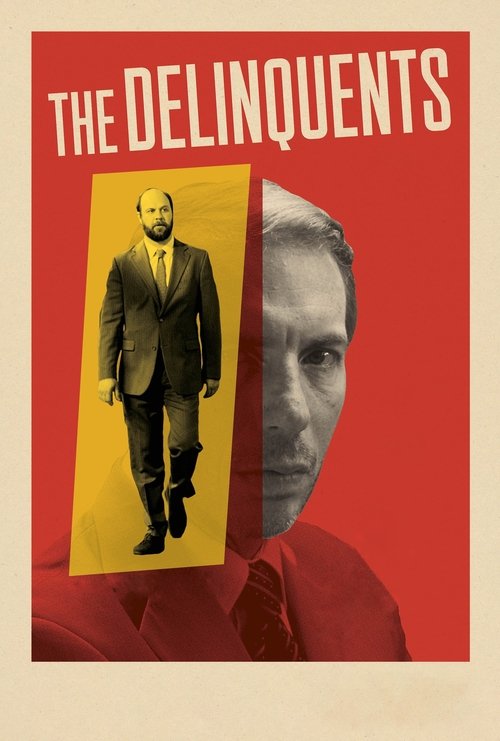





What is the price of liberation when you’re confined within the rigid structures of late-stage capitalism, processing paperwork at a bank while others profit from your efforts? Rodrigo Moreno’s Los Delincuentes explores this question through what appears to be a heist film, though that label feels inadequate; it's akin to describing 2001: A Space Odyssey as simply a movie about astronauts. This is a philosophical exploration disguised as a crime story, an intellectual inquiry wrapped in familiar genre conventions, and ultimately, something far more unusual and radical: a fantasy of escape that may never materialize at all. The film’s length feels somewhat excessive. The extended opening sequence depicting the monotony of the workday surpasses what's typically expected in modern filmmaking; the latter portion could easily have been condensed into the final third. By the time the film reveals its deeper meanings, Moreno’s approach and intentions become clear, and the deliberate pacing can feel a little disrespectful to those who appreciate cinema. However, this is the only significant weakness in a work that's otherwise brilliant in ways I haven't encountered before. The plot seems straightforward initially: Morán, a bank employee, organizes a robbery and then approaches his colleague Román with a proposition over drinks and food. Morán will take responsibility and serve prison time; Román will safeguard the stolen money. They’ll divide everything—time served and cash—equally. What's striking is that these men are hardly close friends, there’s no prior agreement, yet Morán places complete trust in Román with the money. This immediately raises questions; something seems amiss. Román travels to a specific woodland area to retrieve the money that Morán hid before turning himself in. There he encounters three individuals—two women and a man—who convince him to temporarily abandon his mission and relax by the swimming hole. One of them notes that the forest is "a place of apparitions." The film directly signals its intentions, preparing us for events that aren't what they appear to be. The three strangers are named Norma, Morna, and Ramón. Consider those names: Morán, Román, Ramón, Norma, Morna. They’re anagrams of each other, variations on the same letters, different forms of a single theme. This isn't accidental; Moreno is explicitly indicating that we aren't observing distinct individuals but rather fragments of a shared consciousness. The entire narrative is imaginary, even within the film itself. What we are witnessing is a daydream, likely Morán’s, though possibly Román’s—an act of imagination by someone who can’t actually escape. Consider how this fantasy is constructed: Morán controls the story, creates the plan, sets the rules. Román functions as his alternate self, the version of himself who gets to experience freedom while the other serves time. Both men become enamored with Norma; remarkably, she reciprocates their feelings. In a narrative grounded in reality, this would be unbelievable. But within a narrative shaped by a single dreaming mind, it makes perfect sense. The river becomes a place of change. It’s where Román meets the three apparitions, where the distinction between the tangible world of banking and capitalism dissolves into something more fluid, more mystical. At one point, Norma recites a poem in a quiet, almost monotone voice to Morán—a work by Argentine poet Juan Laurentino Ortiz, possibly edited by Moreno: [poem text] The poem traces a spiritual transformation. Initially, the speaker wants to understand nature, standing apart from the river attempting to grasp its language. By the end, the speaker has become the river, experiencing it from within. Those concluding lines, "A river crossed through me," suggest not just being in the middle of the river but becoming the river itself—achieving a kind of mystical enlightenment common in Ortiz’s work. His poetry is often compared to Zen Buddhism, a dissolution of the boundary between self and world. Moreno's films have received similar comparisons, and here the connection becomes explicit. This represents the film’s anti-capitalist critique at its most pointed: the only escape from wage labor is imaginary or within the mind. The robbery, the partnership, the pleasant time by the river, this entire fantasy of opting out exists solely in the mind of someone trapped in that initial concrete jungle. The film doesn't offer easy solutions to systemic oppression; it reveals the limits of personal freedom under capitalism. You can dream your way out, transform yourself mystically through imagination, but the prison remains. Or does it? The final image shows Morán riding a horse across an empty landscape, which echoes the Latin American literary view of vast plains: expansive areas that embody both the fear of the unknown and the possibility of genuine freedom. Has someone actually escaped the confines of banking and the concrete jungle, ridden off into the sunset? Or is this a reflection on how we endure capitalist imprisonment through imagination—through the daydreams that sustain us when material escape proves impossible? Moreno leaves the question unanswered, and that ambiguity is itself the point. Perhaps the mystical transformation Ortiz describes—becoming one with the river—losing the boundary between self and world—is the only freedom available. Maybe imagination isn’t a consolation prize but a form of resistance. Or perhaps the film is even more pessimistic, suggesting our fantasies of escape are shaped by the system that imprisons us, that we can't imagine anything beyond capitalism because it has permeated even our dreams. Los Delincuentes is formally inventive, philosophically complex, occasionally frustrating in its pacing, and unlike anything else currently being made. It requires close attention, rewards repeat viewings, and resists easy answers. In a medium increasingly controlled by predictable algorithms, Moreno has created something genuinely unusual—a film that uses the language of genre to ask questions about consciousness, freedom, and the possibility of transformation under conditions seemingly designed to prevent it. That’s not just a daydream. That's what cinema is capable of.
On October 1, 2026
#34540
34540th by Pulse movie online2.1PULSEPulse MeterOur daily Pulse Meter measures public activity and popularity signals across the web.How it works →