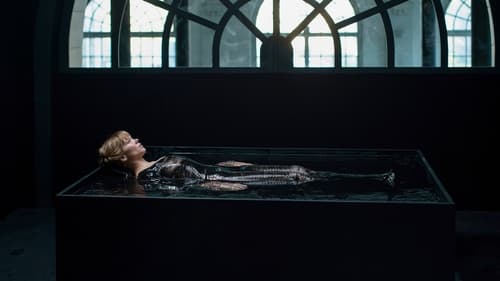





I found myself appreciating the connection that builds between Léa Seydoux's character, "Gabrielle," and George MacKay’s “Louis,” even though the film feels excessively drawn out. The narrative lacks a clear structure; instead, it unfolds primarily through Gabrielle’s perspective as she relaxes in a bath—a relic of the former "Baron Harkkonen"—undergoing a DNA cleansing process. This procedure is intended to enhance her happiness and well-being by smoothing over disappointments and hurts, essentially transforming her into a docile individual. However, while connected to this system, we see that Gabrielle’s mind resists the treatment, generating vivid fantasies involving “Louis,” spanning different eras—historical, modern, and futuristic. The plot itself isn't particularly substantial; it’s more of an episodic journey through their lives, both together and separate. What succeeds is the ambiguity surrounding the possibility that artificial intelligence, whether acting independently or under human direction, could manipulate our thoughts and memories. It possesses the power to fabricate experiences as convincingly as it can erase them, driven by a perception that emotions are erratic, untrustworthy, and therefore pose a risk to a new sense of “natural” stability. The dialogue occasionally drifts into overly technical psychological language, which does somewhat diminish the subtle but discernible direction of the story; still, it presents a genuinely unsettling prediction of what could become reality if we fail to safeguard what is genuine and valuable.
On September 24, 2026
#2687▲ 1706
2687th by Pulse movie online50.6PULSEPulse MeterOur daily Pulse Meter measures public activity and popularity signals across the web.How it works →